Introduction
A well-lit road does more than help people see. It makes streets safer at night, keeps traffic moving smoothly, and creates a more secure environment for residential colonies, factories, and campuses. Today, LED street lights have largely replaced traditional sodium and mercury lamps because of their energy efficiency, long service life, and improved lighting performance.
If you are planning lighting for a road, housing society, industrial area, or parking space, choosing the right fixture is essential. Incorrect wattage or poor build quality can result in dark patches, higher electricity bills, and frequent replacements. This guide explains how LED street lights work, how to choose the right model, and how to maintain them for years.
What Is an LED Street Light?
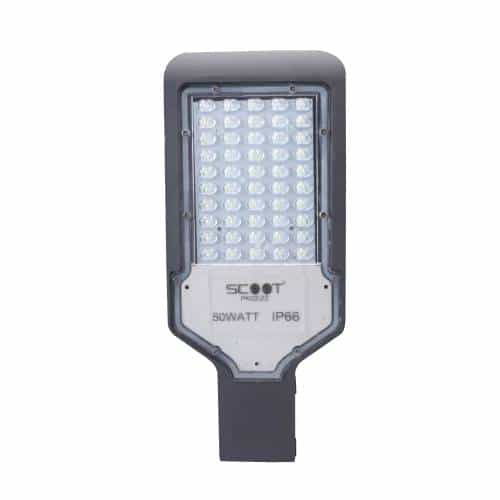
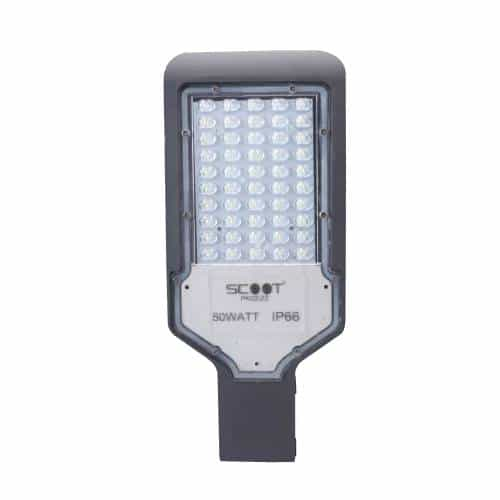
An LED street light is an outdoor lighting fixture that uses light-emitting diodes (LEDs) instead of traditional lamps. It is mounted on a pole or bracket and is designed to illuminate roads, lanes, parking areas, and open spaces from above.
Unlike traditional lamps that produce light by heating a filament or passing electricity through gas, LEDs generate light through a semiconductor chip. This technology is more energy-efficient, allowing you to get more light from every unit of electricity consumed.
The LED chips are mounted on a metal base that helps dissipate heat. A lens distributes the light across the road instead of wasting it on the sky or nearby walls.
How Does an LED Street Light Work?
An LED street light has a simple working mechanism, but every component plays an important role.
Electricity from the mains supply first reaches the driver, which converts it into the controlled electrical current required by the LED chips. The chips then produce light, while the fixture housing dissipates the heat they generate.
A lens or reflector directs the light along the road in a suitable beam pattern. This helps distribute illumination more evenly across the surface.
Many LED street lights also include a photocell or timer that automatically switches the light on at dusk and off at dawn, eliminating the need for manual operation.
Main Parts of an LED Street Light
Understanding the main components makes it easier to compare products and evaluate their quality. Two fixtures may look similar from the outside but can have very different internal components.
Housing: Usually made from die-cast aluminium, the housing protects internal components and acts as a heat sink.
LED Chips: These generate light, and their quality affects brightness, efficiency, and service life.
Driver: The driver regulates electrical current and helps protect the LEDs from voltage fluctuations. Poor-quality drivers can be a common cause of failure.
Lens: The lens directs and distributes light across the intended area.
Glass or Cover: This protects internal components from dust, rain, and other environmental conditions.
Seals, Brackets, and Fasteners: Strong seals, durable mounting brackets, and corrosion-resistant fasteners help the fixture withstand years of outdoor use.
Why Switch from Old Sodium and Mercury Lamps?
For many years, high-pressure sodium and mercury-vapour lamps were commonly used for street lighting. Although they provide illumination, they generally consume more electricity, generate more heat, and may require frequent replacement. Their light can also appear yellowish or dull, making it harder to distinguish colours and details at night.
Energy Savings: LEDs can provide comparable or better illumination while consuming less electricity.
Longer Service Life: Fewer replacements can reduce maintenance costs and labour.
Instant Start: LEDs provide light immediately without the warm-up period required by some traditional lamps.
Improved Visibility: Properly selected LED lighting can improve the visibility of objects and surroundings.
Lower Maintenance: This is especially valuable for municipalities, housing societies, and industrial facilities operating lights for several hours every night.
Key Benefits of LED Street Lights
One of the biggest benefits of LED street lights is energy efficiency. A properly selected LED fixture can provide the required illumination while consuming less electricity than a conventional lamp, helping reduce monthly energy bills.
Another advantage is the long service life and reduced maintenance requirement. Quality LED street lights are designed to operate for tens of thousands of hours. This reduces the frequency of replacements, which is particularly useful for busy roads and tall poles where maintenance can be difficult and expensive.
LEDs do not contain fragile filaments, making them better suited to applications involving vibration. Other advantages include consistent lighting, instant operation, dimming capabilities, and compatibility with automatic lighting controls, depending on the model.
Types of LED Street Lights
LED street lights are available in several types. The right choice depends on the installation location, available power supply, lighting requirements, and maintenance preferences.
1. AC LED Street Lights
AC LED street lights operate using a conventional mains electricity supply. They are commonly used on roads, in residential colonies, housing societies, and industrial areas where a reliable electrical connection is available.
They are suitable for projects that require consistent illumination throughout the night.
2. Solar LED Street Lights
Solar LED street lights use a solar panel and battery to operate independently of the electricity grid. They are useful for remote roads, farms, villages, and open campuses where grid connections are unavailable or difficult to install.
Performance depends on solar panel capacity, sunlight availability, battery capacity, and the required backup duration. Before purchasing, make sure the system can provide sufficient lighting throughout the night.
3. Cobra-Head LED Street Lights
Cobra-head fixtures have a distinctive shape resembling a cobra's head. They are commonly installed on main roads, highways, and residential streets. Their design helps direct light towards the roadway.
4. Flat-Panel and Modular LED Street Lights
These fixtures feature modern, often flat designs. Modular models may allow individual components to be replaced or serviced, making maintenance easier depending on the product design.
5. All-in-One LED Street Lights
All-in-one fixtures integrate the main lighting components into a single housing. In some solar models, the solar panel and battery are also integrated into a compact design. This can simplify installation, although servicing depends on the specific model.
How to Choose the Right Wattage
Wattage is one of the first specifications buyers consider, but it should always be matched to pole height, road width, required illumination, and fixture performance.
A higher wattage is not always better. Excessive lighting can cause glare, waste electricity, and create uneven visual conditions.
18W to 30W: Suitable for narrow lanes, internal pathways, small residential colonies, and garden walkways.
40W to 60W: Suitable for internal society roads, campus roads, and small parking areas.
70W to 100W: Suitable for main residential roads, wider internal roads, and larger parking lots.
120W to 150W and above: Suitable for highways, wide main roads, industrial yards, and large open areas.
These ranges are only general guidelines. The final selection should consider pole height, spacing between poles, road width, lumen output, and the fixture's light distribution pattern.
Pole Height and Spacing
Even a high-quality fixture may not deliver the expected results if the poles are positioned incorrectly. Pole height affects how far the light spreads, while spacing determines whether the road is illuminated evenly or has dark patches between poles.
Lower-wattage fixtures are often used on poles approximately 4 to 6 metres high, while higher-wattage fixtures may be installed on poles 8 metres or taller.
As a rough planning guideline, the distance between poles may be around three to four times the pole height. However, the appropriate spacing depends on the fixture's optical design, road width, mounting arrangement, and lighting requirements.
Poles placed too far apart can create bright spots and dark gaps, while poles placed too close together can increase installation and operating costs unnecessarily.
For large projects, request a lighting layout from the supplier before placing the order.
Colour Temperature and Light Quality
LED street lights are available in different shades of white, measured in kelvin (K). Colour temperature affects the appearance of the environment and the way objects are perceived at night.
3000K – Warm White: Produces a softer, slightly yellowish light that may suit residential streets, gardens, and walkways.
4000K – Neutral White: Provides balanced white light suitable for many roads and public spaces.
5000K to 6500K – Cool White: Produces a cooler, crisp appearance and is commonly considered for highways, industrial areas, and parking lots.
Another important factor is the Colour Rendering Index (CRI). A higher CRI generally means colours appear more natural under the light. This can help people recognise objects, vehicles, and other details in public spaces.
IP Rating and Weather Protection
Street lights remain outdoors throughout the year and are exposed to rain, dust, heat, and humidity. Therefore, the IP rating is an important specification to check before purchasing.
The IP rating indicates the level of protection provided by an enclosure against dust and water. For example, an IP65-rated fixture is dust-tight and protected against water jets under specified test conditions. IP65 or higher is a common starting point for outdoor applications, depending on the site's requirements.
Heat Dissipation: Effective heat management helps control LED temperatures and can support a longer service life.
Strong Housing: A durable body protects internal components from environmental exposure and physical impacts.
Lens Quality: A suitable lens helps maintain the intended light distribution and withstand outdoor conditions.
Corrosion Resistance: Quality powder coating and corrosion-resistant fasteners can help protect the fixture over time.
Things to Check Before Buying an LED Street Light
Price alone is not a reliable way to compare LED street lights. Two fixtures with the same wattage may deliver different levels of illumination, efficiency, and service life.
1. Brightness and Lumen Output
Ask for the actual lumen output rather than comparing wattage alone. Lumens measure the total amount of visible light produced. A fixture with more lumens per watt is generally more energy-efficient.
2. Driver Quality
A reliable driver supplies controlled electrical current to the LEDs. Choose a driver with suitable protection against voltage fluctuations and electrical surges.
3. LED Chip Quality
Quality LED chips that have been properly tested can help maintain light output over time. Ask the supplier for the manufacturer's details and relevant technical information.
4. IP Rating
Consider fixtures rated IP65 or higher for outdoor use. Select the appropriate protection level according to the site's exposure to dust, rain, and water.
5. Housing and Finish
Die-cast aluminium housing and a good-quality protective coating can support heat dissipation and help resist corrosion.
6. Power Factor
A good power factor supports efficient electrical operation. Check the product's technical specifications before purchasing.
7. Warranty and After-Sales Support
Prefer suppliers that offer clear warranty terms and dependable after-sales service. This can make repairs and replacements easier if a problem occurs.
8. Test Reports and Compliance
Request relevant test reports and documentation showing compliance with applicable standards. These documents help you evaluate the product's quality and suitability.
Where Are LED Street Lights Used?
LED street lights are no longer limited to main roads. Their energy efficiency and long service life make them suitable for many outdoor applications, including highways, residential colonies, industrial areas, factories, warehouses, parking lots, shopping malls, schools, colleges, hospitals, parks, stadiums, farms, villages, and rural roads.
LED Street Light Installation Tips
Proper installation helps an LED street light perform as intended and can reduce avoidable failures. Poor wiring or incorrect mounting may shorten the fixture's service life.
Install the fixture at the mounting height recommended by the manufacturer and adjust its tilt so that the light falls on the road rather than into the sky or nearby homes.
Use appropriately sized cables and ensure all electrical joints are properly sealed and insulated. Make sure the pole is correctly earthed.
Where appropriate, install surge protection, especially in areas prone to lightning or voltage fluctuations. Have the installation performed by a qualified electrician.
Test the lights at night after installation to check whether the road is illuminated evenly.
Simple LED Street Light Maintenance Tips
One of the main advantages of LED street lights is that they generally require less maintenance than traditional lighting systems. However, regular inspections can help maintain performance over time.
Clean the Lens: Clean the lens or glass every few months because dust and bird droppings can reduce the amount of light reaching the road.
Inspect Connections: Check wiring, electrical connections, and mounting brackets during routine inspections.
Watch for Flickering or Dimming: Flickering, reduced brightness, or lights remaining on during daylight may indicate a driver or photocell problem.
Trim Obstructing Branches: Remove or trim branches that block the light distribution.
Replace Damaged Components: Address faults early instead of waiting for the entire fixture to fail.
Schedule Annual Inspections: A yearly inspection can help identify common issues before they become major problems.
Common Mistakes to Avoid When Buying LED Street Lights
Choosing Only by Price: Low-cost fixtures may use poor-quality drivers or LED chips that fail prematurely.
Selecting the Wrong Wattage: Incorrect wattage for the pole height and road width can cause dark patches or excessive glare.
Ignoring the IP Rating: Insufficient protection may lead to water ingress during rainy weather.
Overlooking Warranty Terms: Review the warranty duration, coverage, and conditions before purchasing.
Ignoring After-Sales Support: Inadequate service can create problems when repairs or replacements are needed.
Skipping a Lighting Layout: Large projects without a proper layout may suffer from uneven illumination and costly corrections later.
Frequently Asked Questions (FAQs)
1. How long does an LED street light last?
Quality LED street lights are designed to operate for tens of thousands of hours and can last for many years under suitable conditions. Actual service life depends on LED chip quality, driver reliability, thermal management, and the operating environment.
2. How much electricity can I save by switching to LED street lights?
In many applications, LED fixtures consume substantially less electricity than traditional sodium or mercury lamps for comparable lighting levels. Actual savings depend on the wattage of the existing fixture, LED efficiency, operating hours, and lighting requirements.
3. What wattage LED street light do I need?
The required wattage depends on road width, pole height, and the desired illumination level. Narrow lanes and small colonies may use 18W to 30W fixtures, internal roads may use 40W to 60W, and main roads or large open areas may require 100W or more. A lighting assessment is recommended for accurate selection.
4. Which is better: cool white or warm white?
Cool white is commonly considered for highways, industrial areas, and parking lots, while warm white offers a softer appearance for residential streets and gardens. The best choice depends on the location and lighting objectives.
5. Are LED street lights waterproof?
Quality outdoor LED street lights are designed to resist dust and water. Consider an IP65-rated or higher fixture and verify that its enclosure and installation are suitable for the environmental conditions.
6. Do LED street lights require a lot of maintenance?
No. Periodic cleaning and an annual inspection of electrical connections and mounting hardware may be sufficient in many environments. Maintenance needs can vary depending on dust, humidity, temperature, and power quality.
7. Can LED street lights work with a timer or photocell?
Yes. Many LED street lights can be used with a compatible timer or photocell to switch on automatically in the evening and off in the morning. Check compatibility with the selected model before installation.
8. Which is better: AC or solar LED street lights?
AC LED street lights are suitable where a reliable electricity connection is available. Solar LED street lights are useful where grid electricity is unavailable or wiring is difficult. Solar systems should be selected with adequate panel capacity and battery backup.
Conclusion
LED street lights have become a practical choice for roads, residential societies, factories, and public spaces because of their energy efficiency, long service life, and effective illumination. The right fixture can reduce electricity consumption and maintenance costs while providing reliable lighting for years.
The key is to choose carefully. Match the wattage to the pole height and road width, check the quality of the driver and LED chips, verify the IP rating, and select a supplier that offers reliable warranty coverage and after-sales support.
With the right product, proper installation, and regular maintenance, LED street lights can help keep roads and outdoor areas safer and well-lit for many years.