Introduction
A street light is only as reliable as the pole holding it up. You can buy the best LED fixture on the market, but if the pole bends in a storm, rusts at the base or is the wrong height for the road, the whole installation suffers. That is why choosing the right street light pole matters just as much as choosing the light itself.
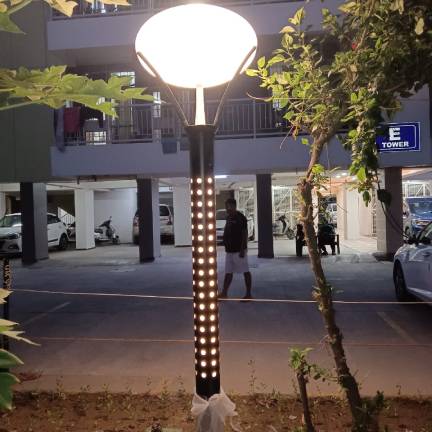
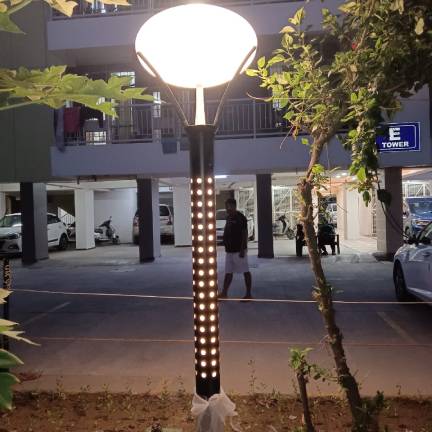
At NHB Lighting Poles, we manufacture street light poles, garden poles and decorative lighting poles from Loni, Ghaziabad, for projects across Delhi NCR and Uttar Pradesh. This guide explains the different pole types, materials, heights and buying points, so you can place an order with confidence.
What Is a Street Light Pole?
A street light pole is a vertical support structure that holds an outdoor luminaire at a fixed height, so the light spreads evenly over a road, pathway, parking area or public space. Most poles also carry internal cabling and a junction box at the base for the electrical connection.
A good pole does three jobs at once: it keeps the light at the right height, it stays stable in wind and rain, and it protects the wiring inside.
Street light poles are not all the same. Depending on the project, you will usually come across these types:
Tubular (Swaged) Poles
These are made from steel tubes of different diameters joined in sections, with the thicker tube at the bottom and the thinner one at the top. They are simple to make, easy to transport and economical, which is why they are widely used on colony roads, society internal roads, industrial lanes and small commercial projects.
Conical Poles
A conical pole tapers smoothly from a wider base to a narrower top. This shape spreads the load evenly along the pole and gives better resistance against wind, so it is a preferred choice for main roads, highways and open areas where wind pressure is higher.
Octagonal and Polygonal Poles
These have eight or more flat sides and are formed from a bent steel sheet with a longitudinal weld. They look clean and modern, and they are strong for their weight. City roads, flyovers, commercial districts and smart city projects often use them.
High Mast Poles
Tall poles of 15 metres and above, which carry a cluster of lights to cover large open areas such as stadiums, rail yards, ports, toll plazas and industrial campuses.
Which Material Is Best?
The material decides how long the pole lasts and how much maintenance it needs.
- MS (Mild Steel) with paint or powder coating: Lower upfront cost, suitable for budget projects and for covered or low-moisture areas. The paint layer needs regular touch-ups to keep rust away.
- GI (Galvanized Iron / hot-dip galvanized): The zinc layer protects the steel from rust, so it lasts much longer outdoors, especially in monsoon-heavy and polluted areas. For most public projects this is the safer long-term choice because maintenance is far lower.
- Aluminium: Lightweight and naturally rust-free, often used for decorative and garden poles where the weight and look matter more than raw strength.
If your project is near a road with heavy dust, moisture or industrial pollution, galvanized poles usually give better value over time even though the starting price is higher. A pole that needs repainting every year can end up costing more than a galvanized one over its full life.
How to Choose the Right Street Light Pole Height
Height depends on where the pole will be used and how wide the area is:
| Application | Typical Pole Height |
|---|---|
| Garden, pathway, lawn | 3 to 4 metres |
| Residential colony, society road | 4 to 6 metres |
| Main city road, commercial area | 7 to 9 metres |
| Highway, wide roads | 9 to 12 metres |
| Stadium, large open yard | 15 metres and above (high mast) |
A taller pole lets one light cover a bigger area, but it also needs a stronger foundation and a higher-output fixture. A pole that is too short creates glare and uneven patches, while one that is too tall can leave the ground under-lit if the fixture is not powerful enough.
As a rough thumb rule, the gap between two poles is often kept at about three to four times the mounting height, though final spacing should always follow the light's photometric data.
Things to Check Before You Buy
- Pole height and thickness: The wall thickness of the steel and the base diameter decide how well the pole handles wind load. A thin pole may look similar on day one but will not hold up for years.
- Coating quality: Ask whether the pole is galvanized or painted, and check that the coating is even, with no bare patches near welds and joints.
- Base plate and anchor bolts: The base plate should be properly welded with gussets for support, and the anchor bolt layout should match your foundation design.
- Arm type: Single arm, double arm or straight pole. Choose according to the road layout, the road width and how many lights are needed.
- Cable entry and door: A neat cable entry and a lockable access door make maintenance easier and keep the wiring safe from tampering.
- Custom size: Good manufacturers can make poles to your required height and specification instead of forcing a standard size on your project.
Installation Basics
Even the best street light pole can fail early if it is installed badly. Most pole problems seen on site, like leaning, loose base plates or water entering the cable path, come from mistakes during installation and not from the pole itself.
A proper installation keeps the pole straight, stable in wind and safe for the people working around it. Here is how it is usually done.
1. Site Survey and Layout Marking
Before any digging starts, mark the exact pole positions as per the lighting plan. Check for underground cables, water pipes and drainage lines, and keep poles at a safe distance from overhead wires, trees and building edges. Even spacing between poles gives uniform light and avoids dark patches.
2. Foundation Digging and Casting
The foundation depth and size depend on the pole height, the weight of the fixture and the soil type. Taller poles and loose or sandy soil need a deeper and wider foundation.
Place the anchor bolt cage (or base template) in the pit, keep it level, and pour the concrete around it. Keep a conduit pipe in the foundation so the cable can come up through the base of the pole.
3. Curing Time
Let the concrete cure fully before the pole is mounted, usually a week or more depending on the mix and the weather. Mounting a pole on a foundation that is still weak is one of the most common reasons for poles leaning after a few months.
4. Pole Erection and Alignment
Lift the pole carefully with a crane or a suitable lifting arrangement, so the pole body and the coating do not get damaged. Fit the base plate over the anchor bolts, then use a spirit level or plumb line to keep the pole perfectly vertical.
Tighten the nuts evenly in a cross pattern and not one side at a time. Use leveling nuts and washers so the base plate sits flat.
5. Wiring and Earthing
Run the cable through the conduit and up the pole to the fixture, with a proper junction box and fuse at the base door. Earthing is very important for safety, especially in monsoon months, so connect the pole to a proper earth pit as per the electrical norms of your area.
All wiring should be done by a trained electrician.
6. Fixing the Luminaire and Arm
Mount the arm and the light fixture only after the pole is firmly secured. Check the angle of the fixture so the light falls on the road or pathway and not into the eyes of drivers or neighbouring windows.
Fit weather-resistant connectors and seal the cable entry points, so that rainwater cannot get inside the pole.
7. Final Testing
Switch on the light and check for correct working, even light spread and proper earthing. Check the pole once more for any tilt, loose bolts or exposed wires.
Finally, close and lock the base door and keep a note of the installation date for future maintenance.
A Few Extra Tips
- Avoid installing poles on windy or rainy days, as lifting becomes unsafe.
- Keep the zinc or paint coating undamaged during transport and lifting, and touch up any scratch immediately.
- For tall poles and high mast poles, always use trained crews and proper lifting equipment.
- For large projects, follow the pole manufacturer's foundation drawing instead of guessing the size on site.
Maintenance Tips
Inspect poles once or twice a year. Look for rust near the base, loose bolts, cracked welds and damaged cable entries.
Touch up any paint damage quickly, because small scratches become rust patches during the monsoon. Clean the fixture and check the electrical connections at the same time.
A little regular care adds many years to the life of the pole.
Street Light Pole Price: What Affects It?
There is no single fixed rate, because the price changes with:
- Pole height and steel thickness
- Material (MS, GI or aluminium)
- Coating type (paint, powder coat or galvanizing)
- Design (plain, conical, octagonal or decorative)
- Quantity ordered
- Customisation and transport distance
The best way to get an accurate figure is to share your height, quantity and site details with the manufacturer and ask for a quote.
Why Buy Street Light Poles From NHB Lighting Poles?
- Manufacturing based in Loni, Ghaziabad, so delivery across Delhi NCR is quick
- Range covering street light poles, garden poles, bollard lights and decorative poles
- Custom heights and designs to match your project
- Direct manufacturer pricing for bulk and project orders
- Support from enquiry to dispatch
Frequently Asked Questions
What is the standard height of a street light pole?
It depends on the use. Garden poles are around 3 to 4 metres, colony roads 4 to 6 metres, city roads 7 to 9 metres, and highways 9 to 12 metres.
Which is better, MS or GI street light pole?
GI (galvanized) poles resist rust better and last longer outdoors. MS poles cost less upfront but need regular repainting.
Can street light poles be made in custom sizes?
Yes. Height, arm length, base plate and finish can be made as per your project requirement.
Do you supply poles for solar street lights?
Poles can be made to suit solar street light fixtures, including the bracket arrangement for the panel and light.
How do I get a quote for street light poles?
Send us your required height, quantity and location through the contact form or call us, and we will share a quotation.
Conclusion
A street light pole is a long-term investment, and the right choice saves money, effort and repair work for years. Start by matching the pole type to your road or area, then pick a material that suits the local weather, and finally confirm the height, thickness and coating before you place the order.
For roads and public spaces exposed to rain and dust, galvanized poles are usually the smarter pick, while decorative poles work best where appearance matters.
Whether you need plain poles for a colony road, conical poles for a highway or decorative poles for a park, working directly with a manufacturer gives you better pricing, custom sizes and quicker support.
NHB Lighting Poles makes street light poles, garden poles and decorative lighting poles in Loni, Ghaziabad, for projects across NCR and beyond.