Introduction
Step outside your home or property after sunset and ask yourself three things. Can you see the gate clearly? Can you walk to the door without watching your feet? Does the place feel safe and welcoming? If the answer to any of these is no, the problem is usually not the lack of lights. It is that the lights were chosen one by one, without a plan.
Good outdoor lights work together. Some give general brightness, some guide your steps and some simply make the place look good. When each light has a clear job, you need fewer fixtures, the power bill stays low and the whole property looks more complete.
At NHB Lighting Poles, we make garden pole lights, bollard lights, street light poles and decorative poles in Loni, Ghaziabad, and supply them to homes, farmhouses, resorts, societies and industrial sites across Delhi NCR. This guide shows how to plan outdoor lighting properly before you buy.
What Counts as Outdoor Lighting?
Outdoor lighting covers every light fitted outside a building, from the lamp on your gate to the poles along a society road. In practice, most properties use a mix of the following:
- Gate and boundary wall lights at the entry and along the compound wall
- Wall lights on the house, shop or factory facade
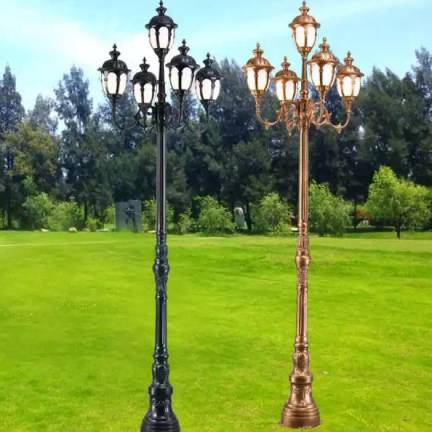
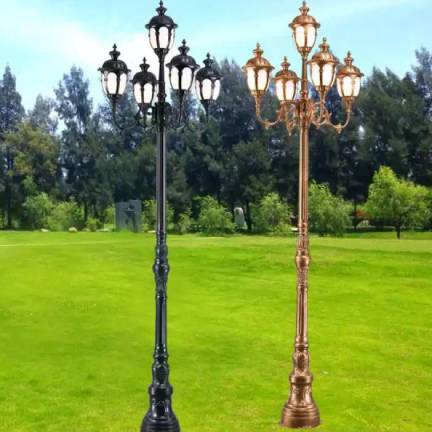
- Garden pole lights and lamp posts for lawns, courtyards and driveways
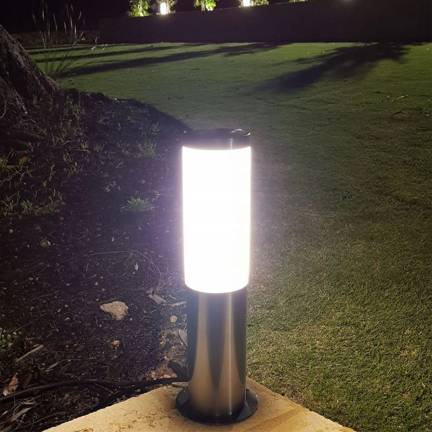
- Bollard lights for paths and edges
- Path and spike lights for flower beds and small walkways
- Hanging lights for porches, verandas and pergolas
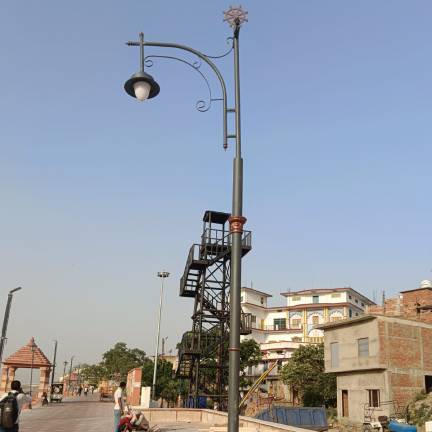
- Street light poles for internal roads and larger campuses
You rarely need all of them. The trick is to pick the ones that match what your property actually needs.
Why Outdoor Lighting Deserves a Proper Plan
Safety for people. Dark steps, uneven ground and unlit corners are where most evening accidents happen. A few well-placed lights make movement easy for children, elders and visitors.
Security for the property. An evenly lit boundary and entrance makes it harder for anyone to approach unnoticed, and it helps cameras capture clearer footage.
More usable space. A lit lawn, terrace or courtyard lets you use the outdoor area after dark, which is especially valuable in the Indian summer when evenings are the only comfortable time outside.
A better first impression. Visitors, customers and guests see your gate and facade first. Lighting decides whether that first look feels neat and premium or dull and neglected.
Lower running cost. LED fixtures use far less power than older lamps, and a planned layout avoids over-lighting.
The Three-Layer Approach to Outdoor Lighting
Instead of asking "how many lights do I need?", think in layers. Each layer has its own job.
Layer 1: Security and general light
This is the base. It covers the gate, the main entrance, the driveway and the boundary. Fixtures here should give clear, even light and be tough enough to run every night. Garden pole lights, gate lights and wall lights usually form this layer.
Layer 2: Path and task light
This layer guides movement. It lights steps, walkways, garden paths and parking lines. Low fixtures such as bollards and path lights work best because they keep light near the ground and avoid glare.
Layer 3: Accent and mood light
This is the finishing touch. It highlights a tree, a wall, a water feature or the front elevation. Keep it soft and limited. Too many accent lights can make the area look cluttered.
If budget is tight, build Layer 1 first, then Layer 2, and add Layer 3 later. This order gives you the most benefit for each rupee spent.
Choosing Outdoor Lights by Area
Main gate and boundary wall. Choose sturdy gate lights or wall lights in metal with a sealed body. Place them on gate pillars and at regular gaps along the wall. Neutral to cool white works well here since visibility is the priority.
Front lawn and garden. A mix of garden pole lights for general light and a few low lights near plants gives a balanced result. Warm white makes lawns look natural and calm.
Driveway and parking. Use garden poles or taller bollards with enough brightness to show the lane edges, steps and obstacles. Keep fixtures out of the direct path of vehicles.
House facade and porch. Wall lights and hanging lights flatter the building and light up the doorway. Pick a style that matches the architecture, whether modern or traditional.
Farmhouses and large plots. Distances are bigger here, so taller garden poles and decorative poles help cover more ground, with bollards guiding the main walking routes.
Housing societies and campuses. Combine street light poles for roads, garden poles for parks and bollards for internal paths so that every zone has the right level of light.
Hotels, banquet lawns and resorts. Decorative poles, hanging lights and designer fixtures turn the lighting into part of the experience, so finish and shape matter as much as brightness.
Factories and warehouses. Rugged, well-sealed fixtures along walls, gates and loading zones keep staff and goods safe after dark.
Materials That Suit Indian Weather
Outdoor lights face harsh sun, heavy monsoon and dusty air. The material decides how long they stay good-looking.
- Aluminium: Lightweight and naturally rust-free, a strong all-round pick for gardens, walls and gates.
- Mild steel with powder coating: Strong and cost-effective, and the coating must be of good quality to keep rust away.
- Cast iron: Heavy and traditional, suited to classic lamp posts and heritage-style gardens.
- FRP (fibreglass): Does not rust and comes in decorative shapes, good for damp or coastal conditions.
- Stainless steel: Neat and corrosion-resistant, popular for gate and entrance lights.
If you are unsure, aluminium is the safest choice for most outdoor fixtures, and a thicker metal body is better for places where bumps or tampering are possible.
Brightness and Colour: Getting the Feel Right
Brightness. More light is not always better. Over-bright outdoor lights create glare, harsh shadows and complaints from neighbours. Match the strength of the light to the job: low wattage for paths and gardens, higher for gates, driveways and parking.
Colour of light. Warm white (around 3000K) is soft and inviting, good for homes, gardens and hospitality spaces. Cool white (4000K and above) is crisp and clear, good for security, gates and work areas. Stick to one colour family across the property so the lighting feels consistent.
Light direction. Look for fixtures that send light downward and outward, with proper shielding. Light that shines up into the sky or into windows is wasted and irritating.
Weatherproofing: What to Look For
Outdoor lights live in the rain, so protection matters more than looks.
- IP rating: IP65 is a common choice for outdoor fixtures, as it protects against dust and water jets.
- Sealed cable entry: Water usually gets in through the wire opening, not the glass.
- Good gaskets and tight fitting: Loose covers let in moisture and insects.
- Heat handling: In hot weather, a well-designed body helps LEDs run cooler and last longer.
- Protective finish: Powder coating or anodising keeps the surface from fading and peeling.
Mistakes People Often Make
- Buying indoor-grade fixtures for outdoor use.
- Choosing every light separately, so the styles and colours do not match.
- Over-lighting the garden and losing the calm evening feel.
- Ignoring glare, so lights shine into eyes and neighbouring windows.
- Skipping a proper base or mounting, which leads to tilted poles and loose fixtures.
- Leaving dark gaps between lights because spacing was not planned.
- Forgetting maintenance access, so changing a light later becomes a big job.
Buying Checklist for Outdoor Lights
- Material and finish: Confirm what the body is made of and how it is coated.
- Weather protection: Ask for the IP rating and check the cable entry.
- Light quality: Check the colour, the brightness and the direction of the light.
- Size and height: Make sure it suits the area and the scale of the building.
- Mounting: Look at the base plate, the bolts and how it will be fixed.
- Matching set: If you are buying many, check that every piece is the same in size, finish and shade.
- Customisation: Ask whether the manufacturer can adjust height, shape or finish for your project.
Keeping Outdoor Lights in Good Shape
A little regular care keeps outdoor lights working for years. Wipe the glass or cover every few months, since dust and bird droppings cut the light. Before the monsoon, check for loose bolts, rust spots, cracked covers and water marks inside the fixture. Touch up scratches in the paint right away. If a light flickers or dims, get it checked early before the fault spreads.
Why Choose NHB Lighting Poles for Outdoor Lights?
- Garden pole lights, bollard lights, street light poles and decorative poles from one supplier
- Custom heights, shapes and finishes for project needs
- Direct manufacturer pricing for bulk and project orders
- Layout and placement guidance before you order
Frequently Asked Questions
What are the main types of outdoor lights?
The most common types are gate lights, wall lights, garden pole lights, bollard lights, path lights, hanging lights and street light poles.
Which outdoor light is best for a home garden?
Garden pole lights for general light, combined with a few bollards or path lights near walkways, suit most home gardens.
Which colour is better for outdoor lights, warm or cool white?
Warm white suits gardens, homes and hospitality spaces. Cool white suits gates, parking areas and security zones.
What does IP65 mean?
It means the fixture is protected against dust and low-pressure water jets, which makes it suitable for most outdoor use.
How many outdoor lights do I need?
It depends on the size of the area and the job of each light. Plan by layer: general light first, path light second and accent light last.
Which material is best for outdoor light fixtures?
Aluminium is a safe all-round choice. Powder-coated steel is a good budget option, and cast iron or FRP suit decorative and damp settings.
Can outdoor lights be made to a custom design?
Yes. Height, shape, material and finish can be made as per project needs.
How can I get a quote for outdoor lights?
Share the type of lights, quantity and the place of use, and we will send a quotation.
Conclusion
Good outdoor lighting is not about having more lights. It is about giving each light a clear job. Start with the base layer for gates, entrances and driveways, add path lights to guide movement, and finish with a few accent lights where they truly add value. Choose materials that can handle Indian weather, keep the colour of light consistent, and always check the weather protection before you buy.