Introduction
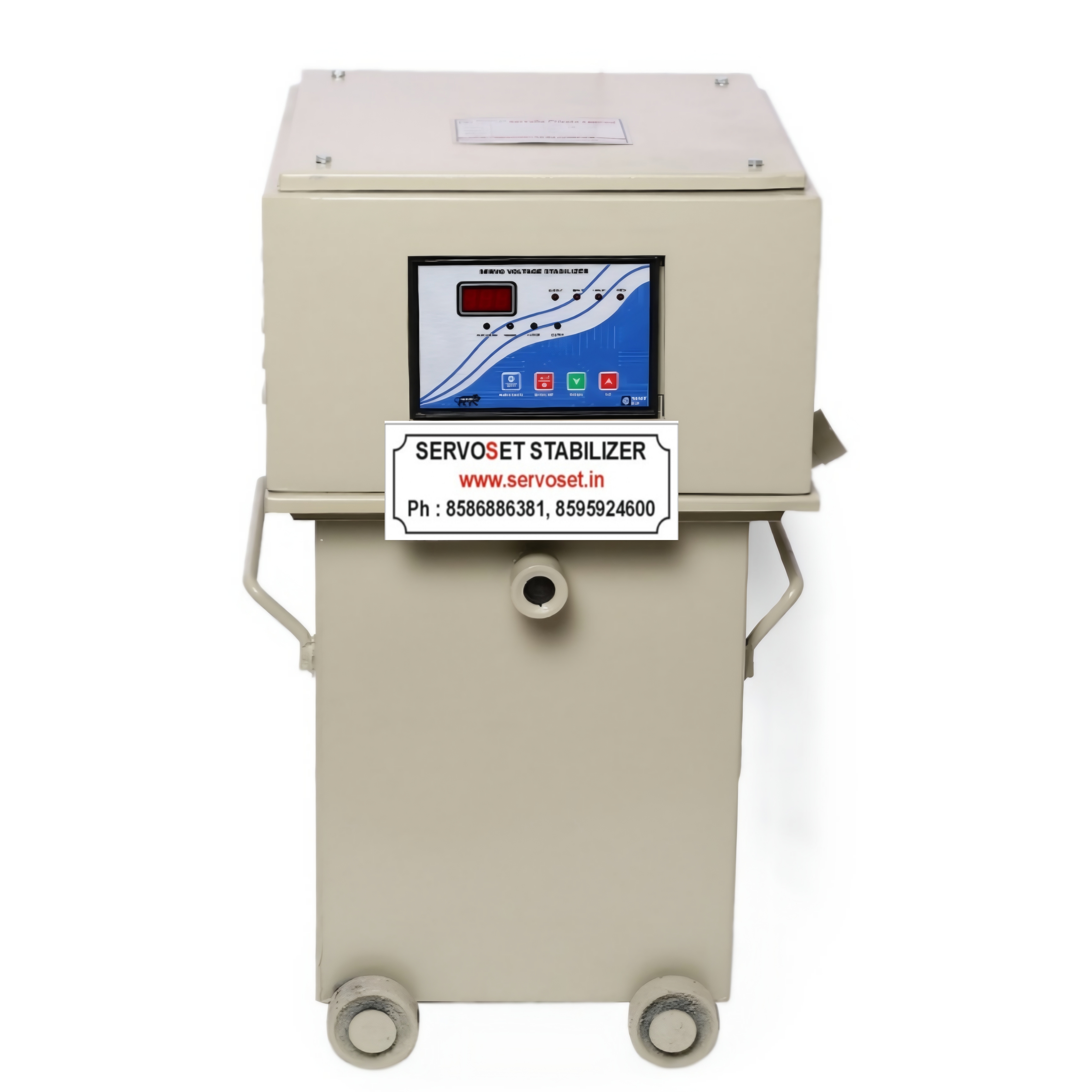
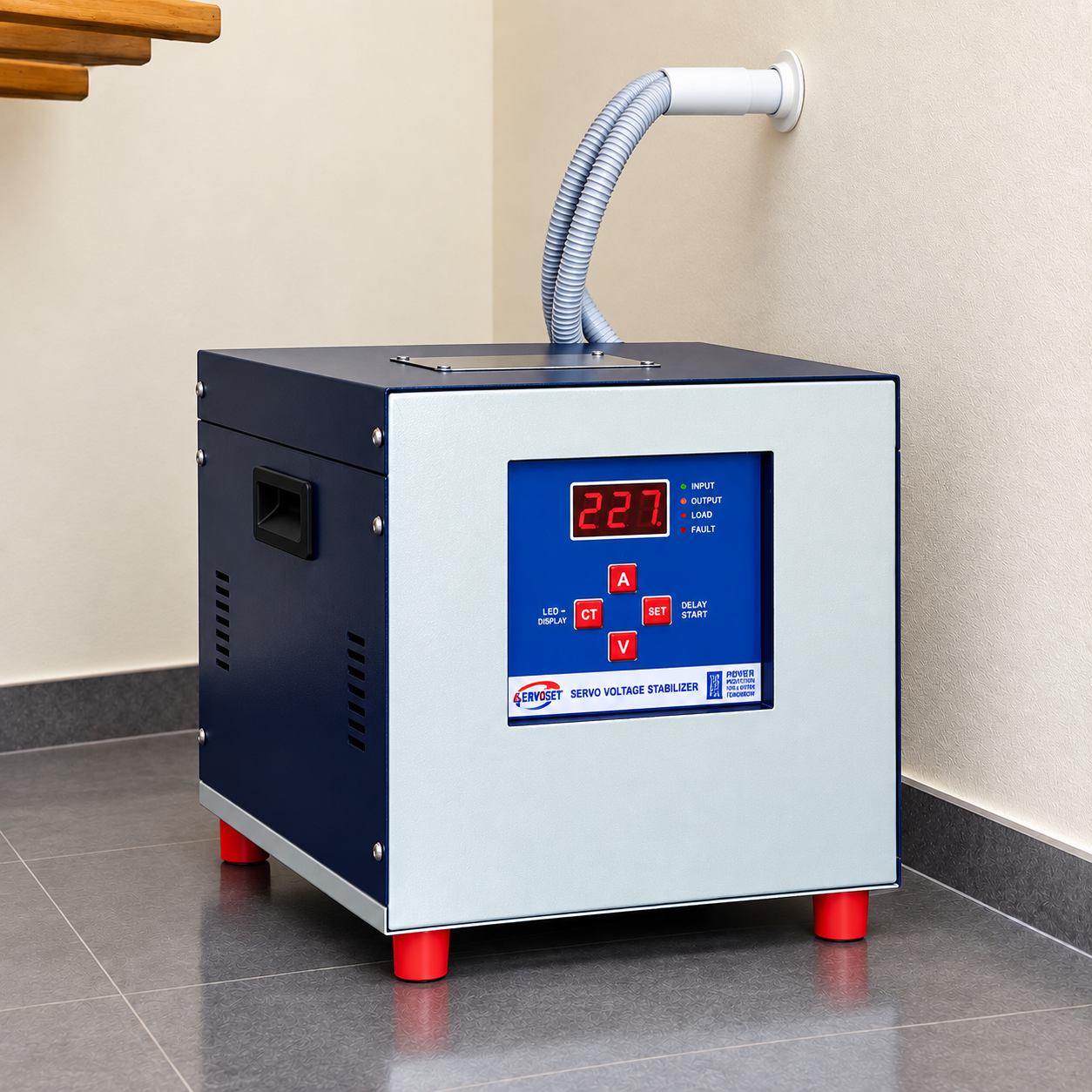
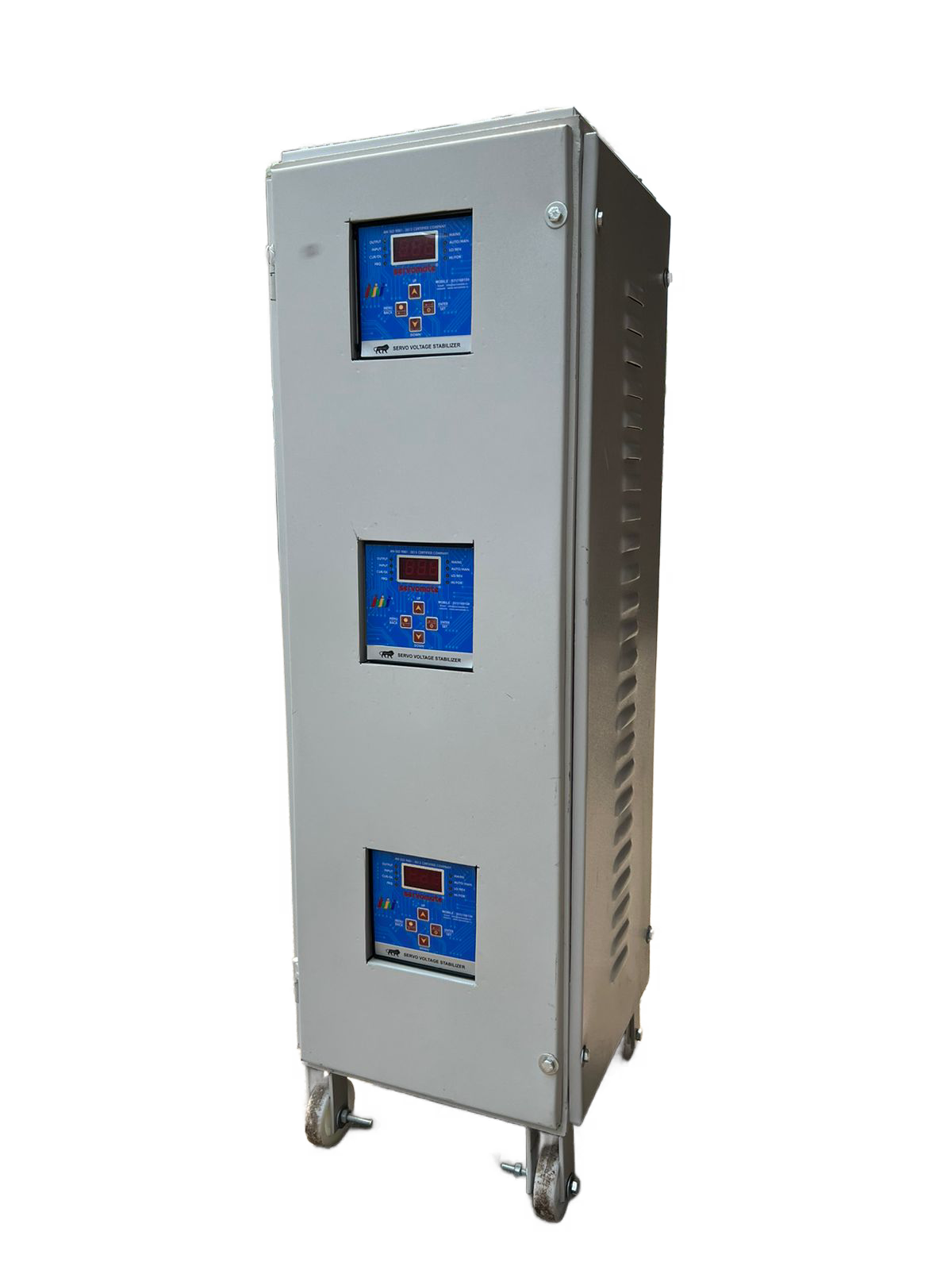
Jaipur's power grid sees frequent voltage fluctuations — especially during peak summer months when air conditioner and cooler load spikes across the city. Anyone who has watched their AC compressor struggle to start on a 40°C afternoon, or seen a refrigerator hum louder than usual during peak evening hours, has already experienced what unstable voltage does to home appliances. For homes, shops, and small offices running single-phase equipment, an air cooled single phase servo voltage stabilizer is one of the most reliable ways to protect appliances from voltage swings without the added cost and maintenance of an oil-cooled unit.
This guide covers what these stabilizers do, why Jaipur's grid conditions make them worth considering, how they actually work internally, how to size one correctly, what to check before you buy a servo voltage stabilizer online or from a local voltage stabilizer dealer in Jaipur, typical voltage stabilizer price in Jaipur, and how to keep one running well for years. Whether you're comparing a servo stabilizer for AC, a servo stabilizer for refrigerator, or a general automatic voltage stabilizer for home appliances, the fundamentals below will help you choose correctly.
What Is an Air Cooled Single Phase Servo Voltage Stabilizer?
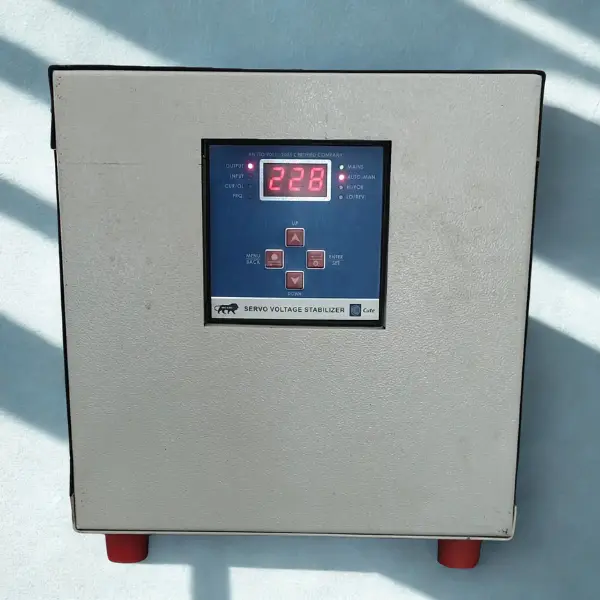
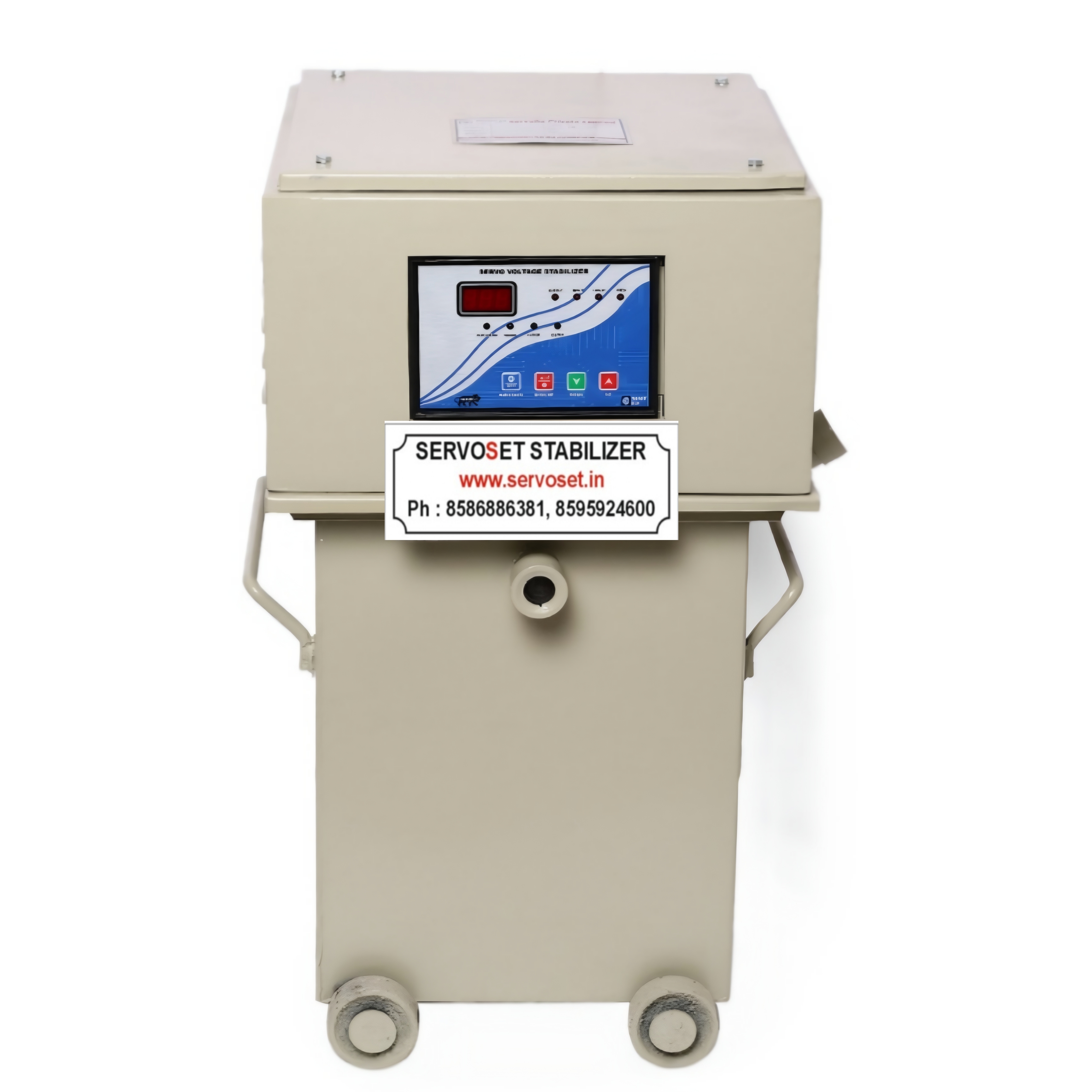
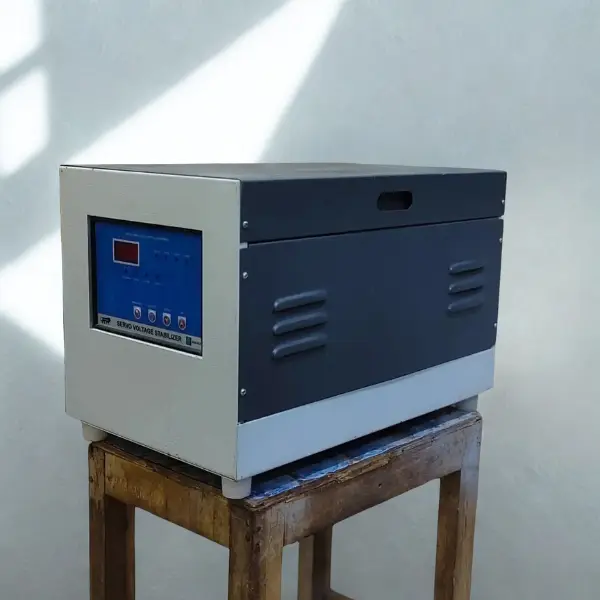
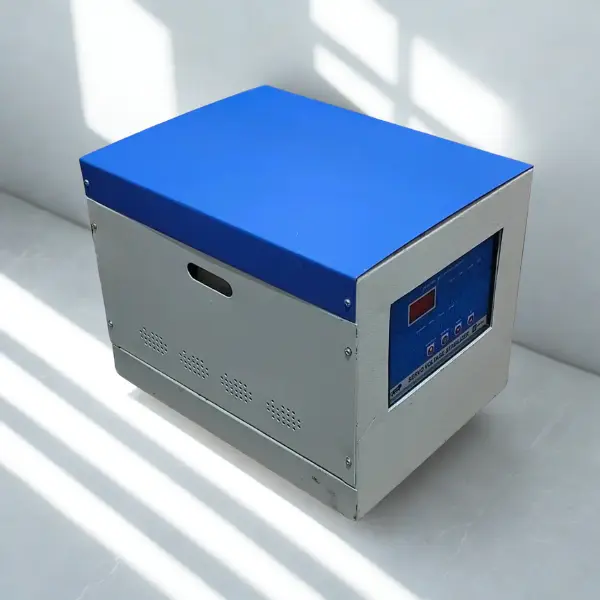
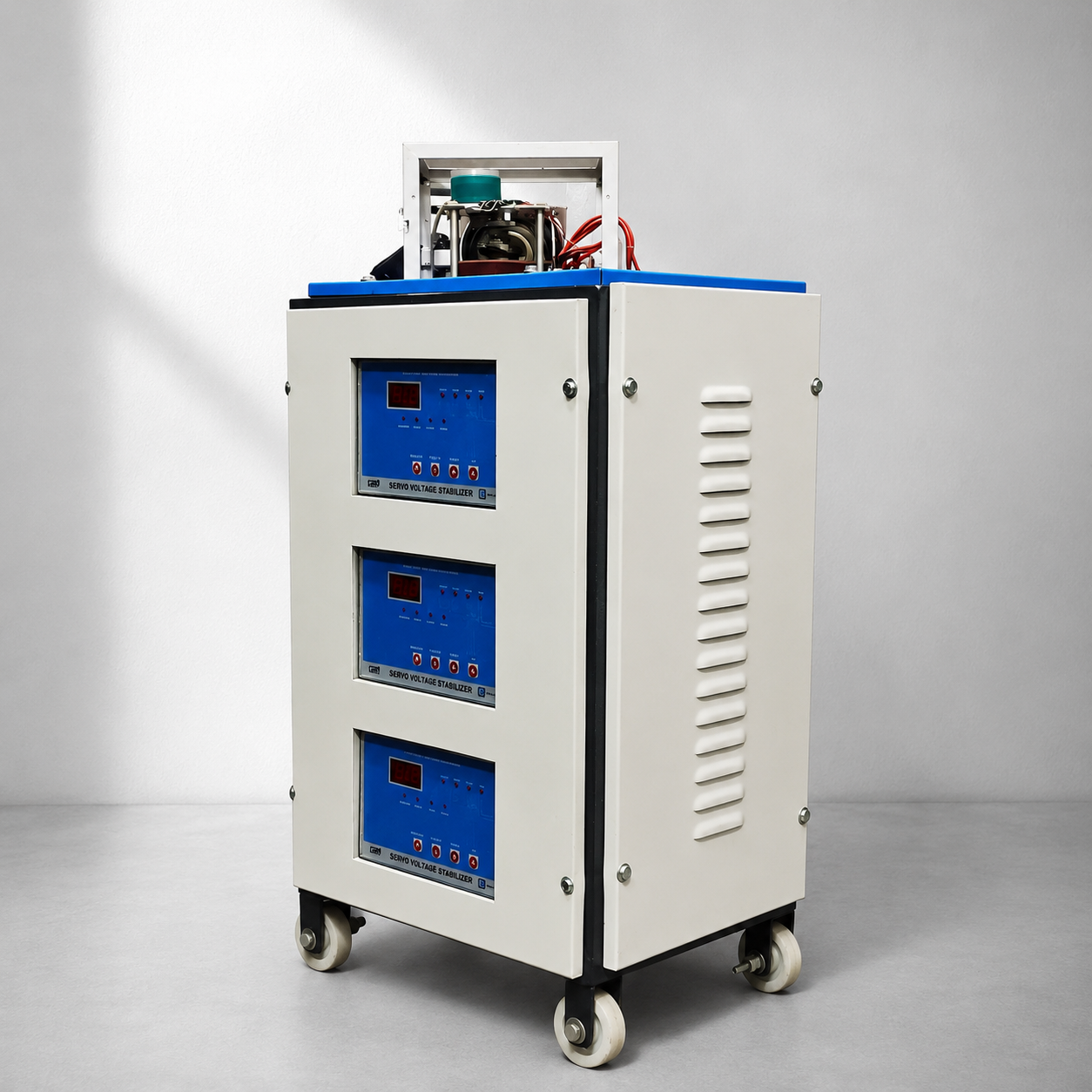
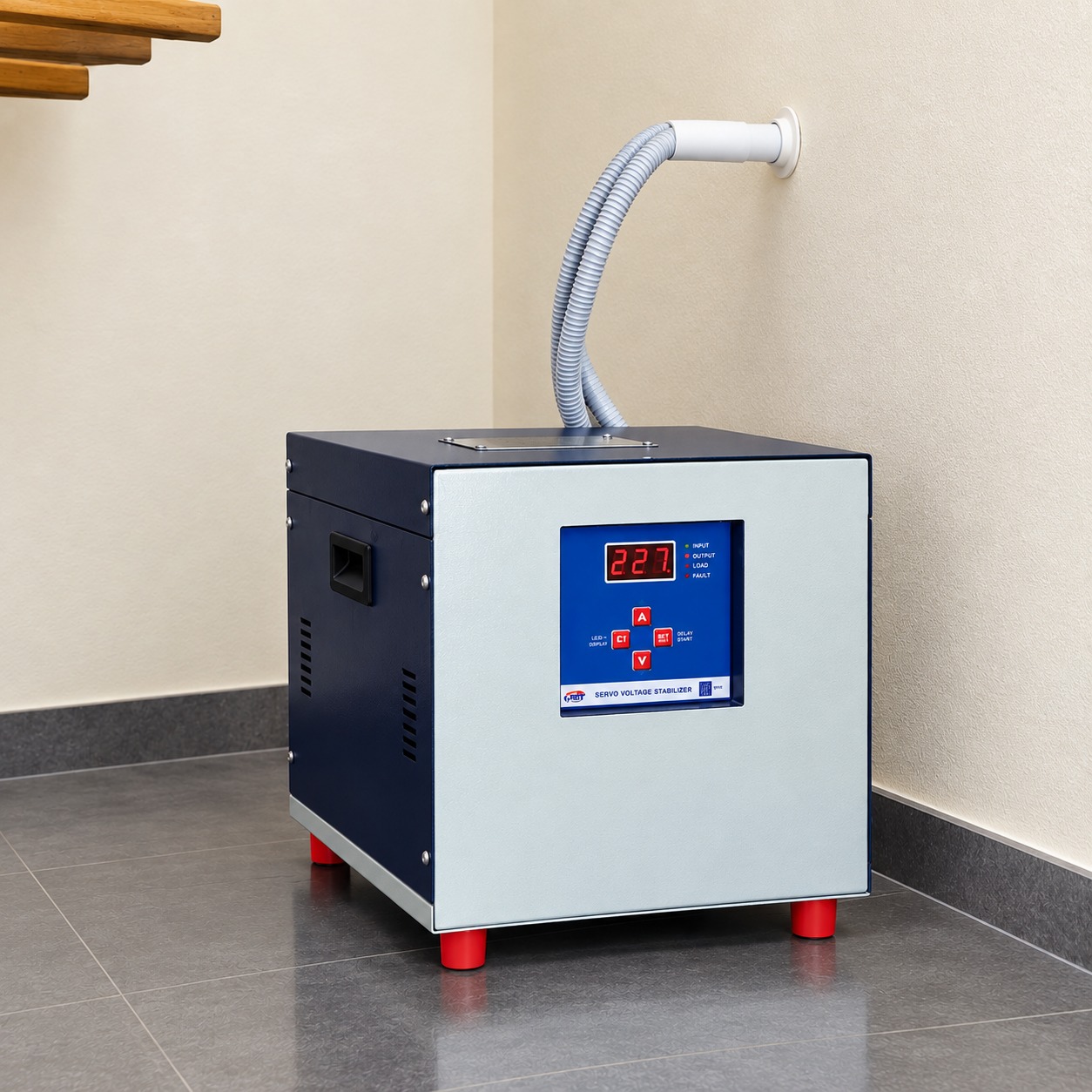
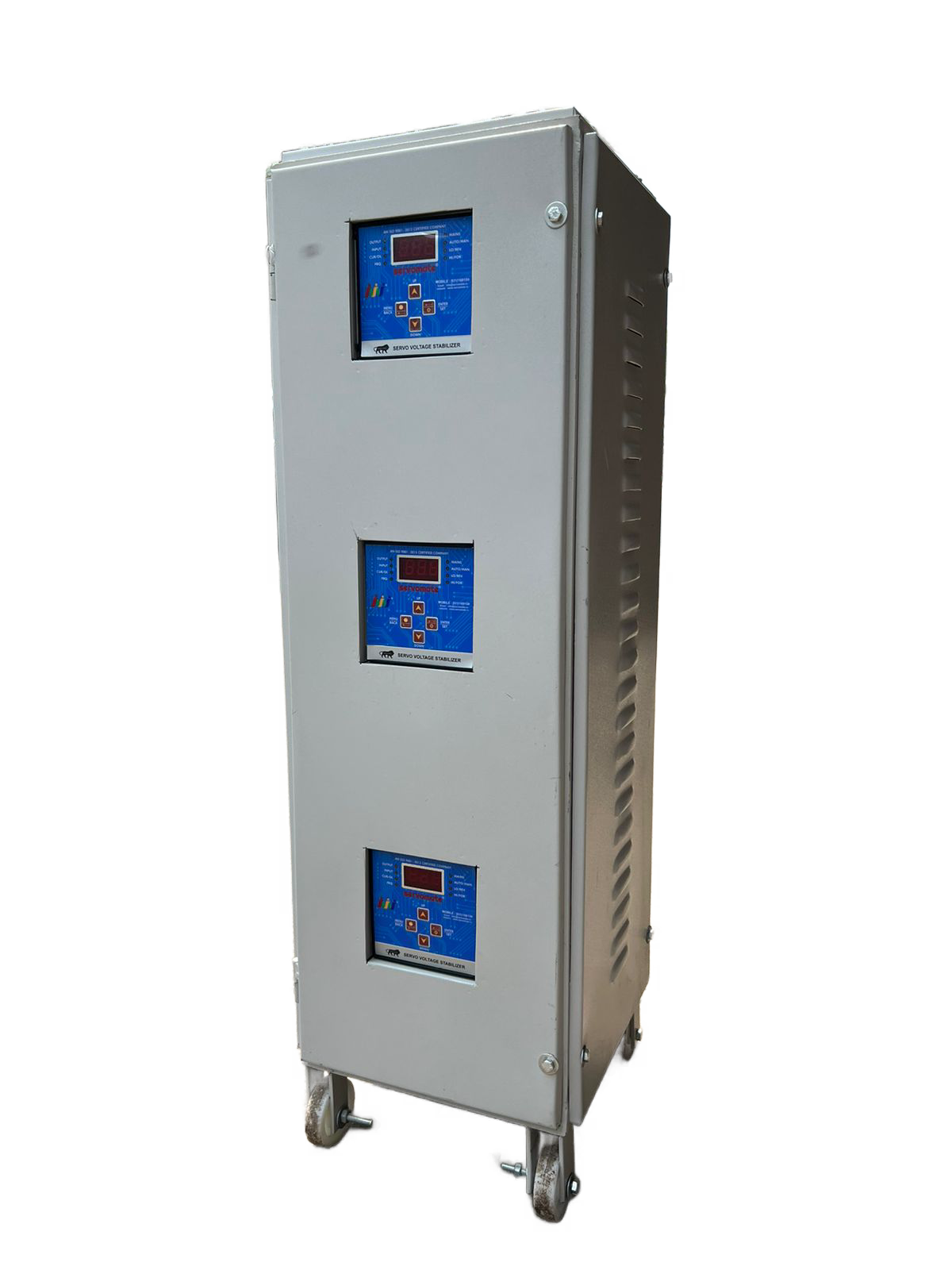
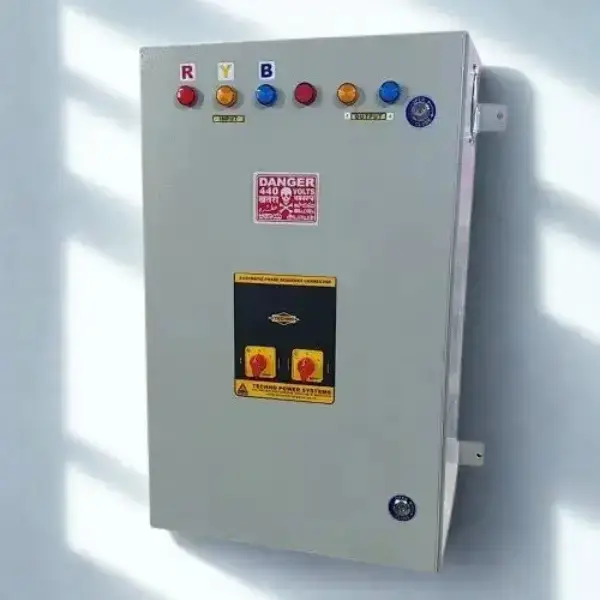
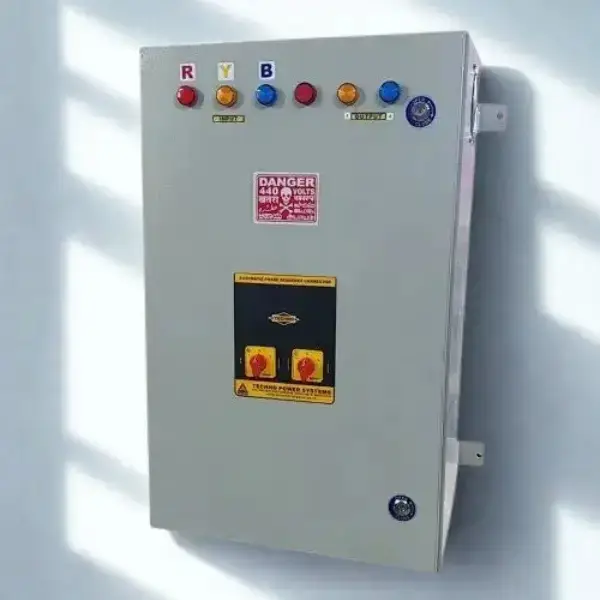
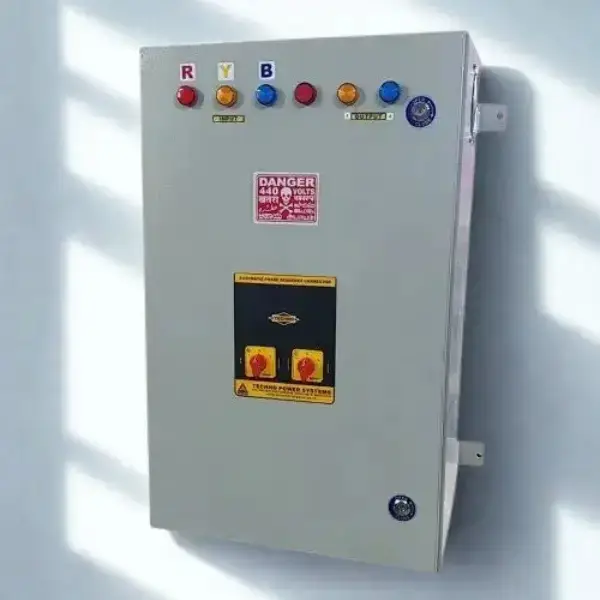
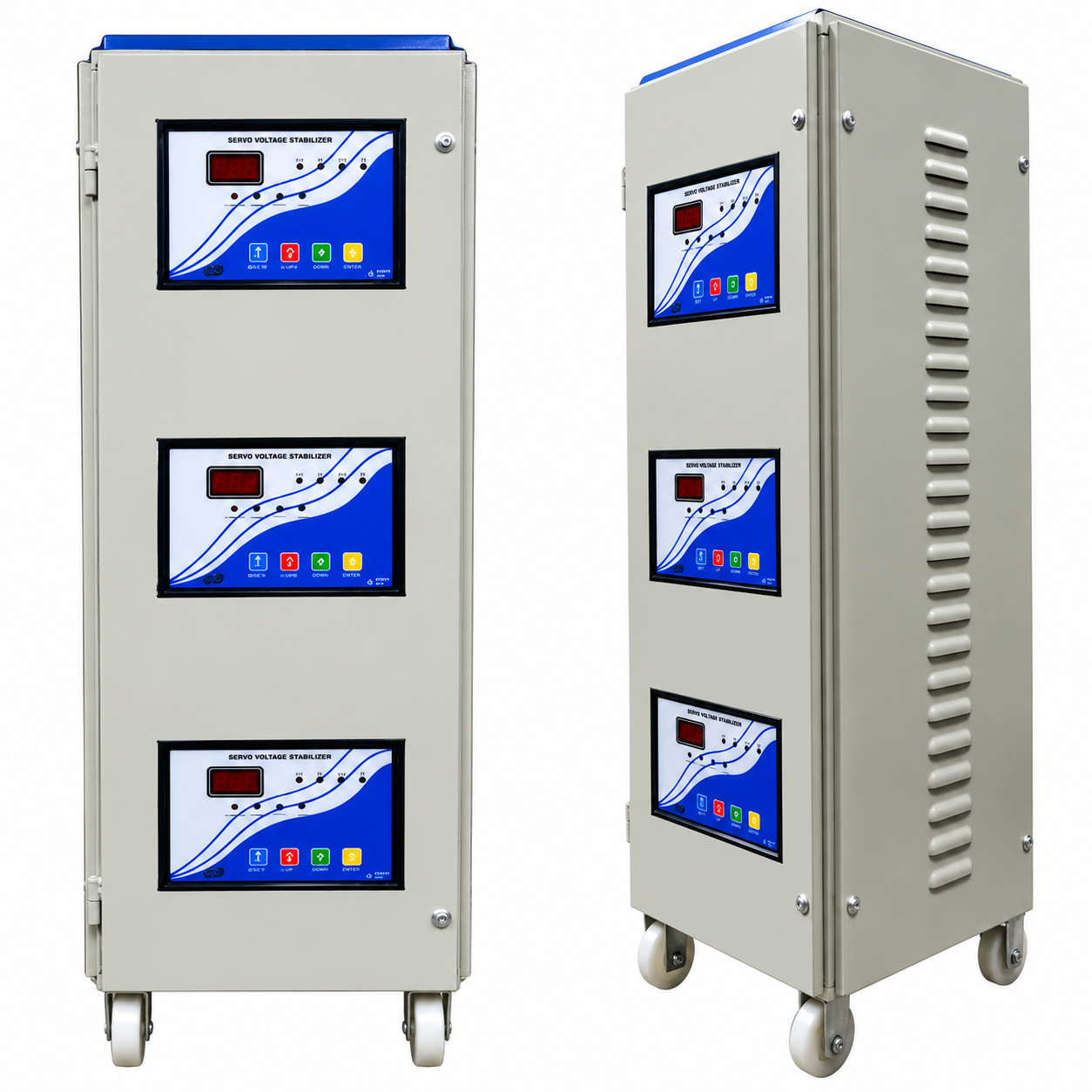
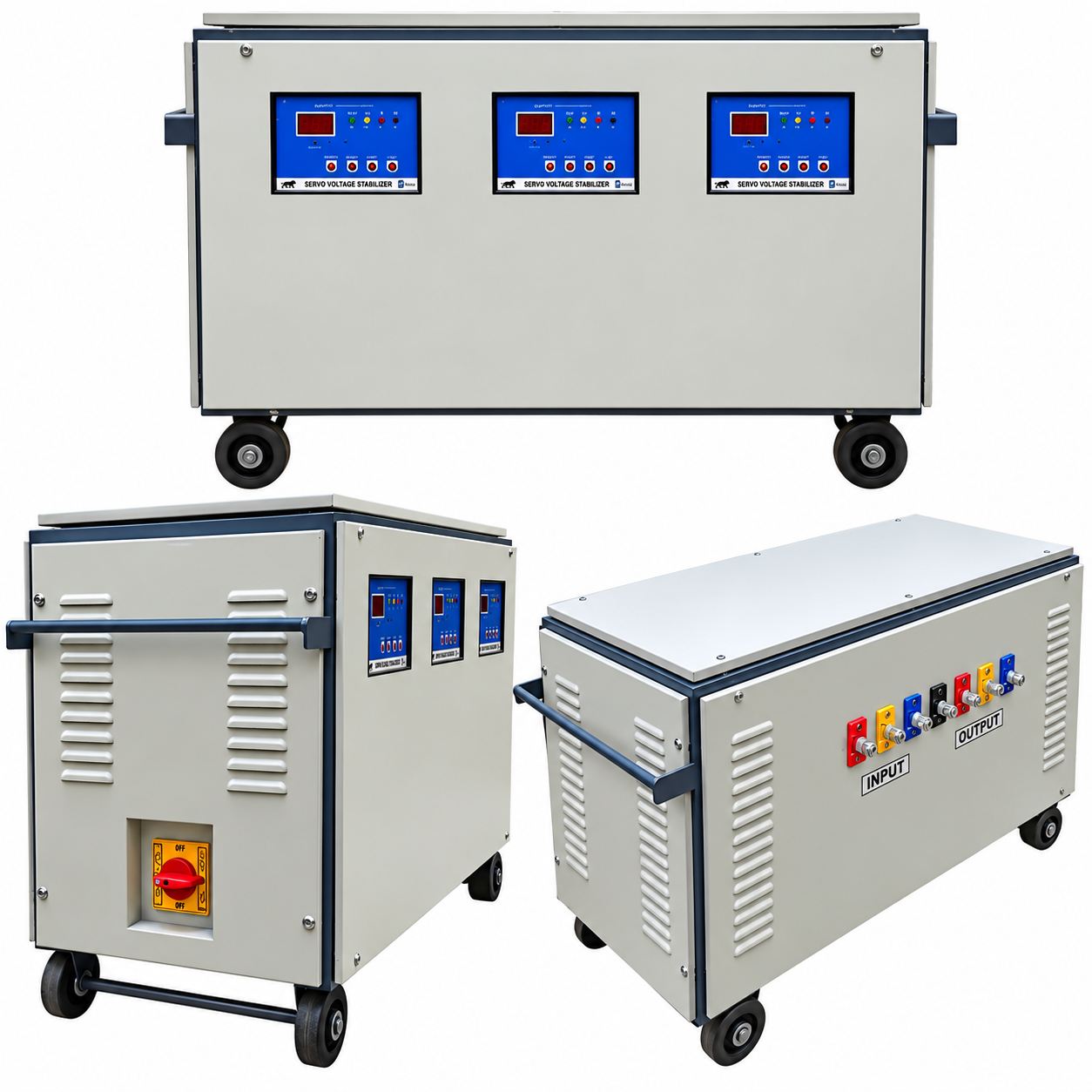
If you've searched "what is a servo voltage stabilizer," the short answer is this: it's a device that uses a servo motor to continuously drive a variable auto-transformer (variac), correcting incoming voltage in real time and delivering a stable 230V servo voltage stabilizer output — typically within ±1% accuracy. This is a meaningfully tighter tolerance than a servo stabilizer vs relay stabilizer comparison would suggest for older relay-based or static stabilizers, which correct voltage in fixed steps rather than continuously. "Air cooled" means the unit dissipates heat using natural or fan-assisted airflow rather than oil immersion, which is the traditional cooling method used in larger industrial-grade stabilizers.
In practical terms, the stabilizer sits between your electricity meter (or a specific appliance circuit) and your equipment. It constantly measures incoming voltage, compares it against the target output voltage, and instructs the servo motor to rotate the variac brush up or down until the output settles at the correct level. This happens continuously and automatically, with no manual intervention needed.
Key characteristics:
- Single phase: Designed for standard 230V AC residential and light-commercial supply, as opposed to three-phase industrial units that handle 415V systems and heavier machinery.
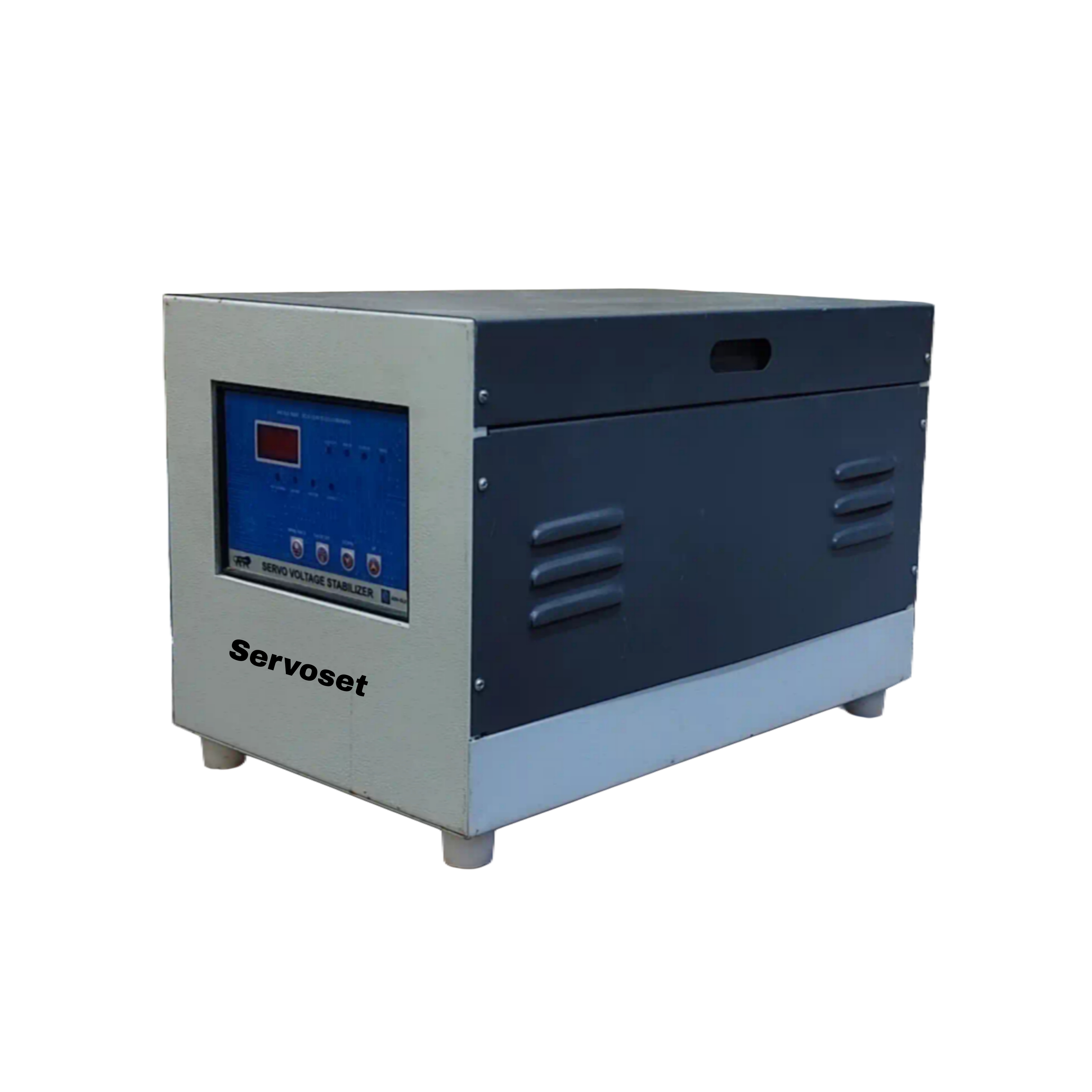
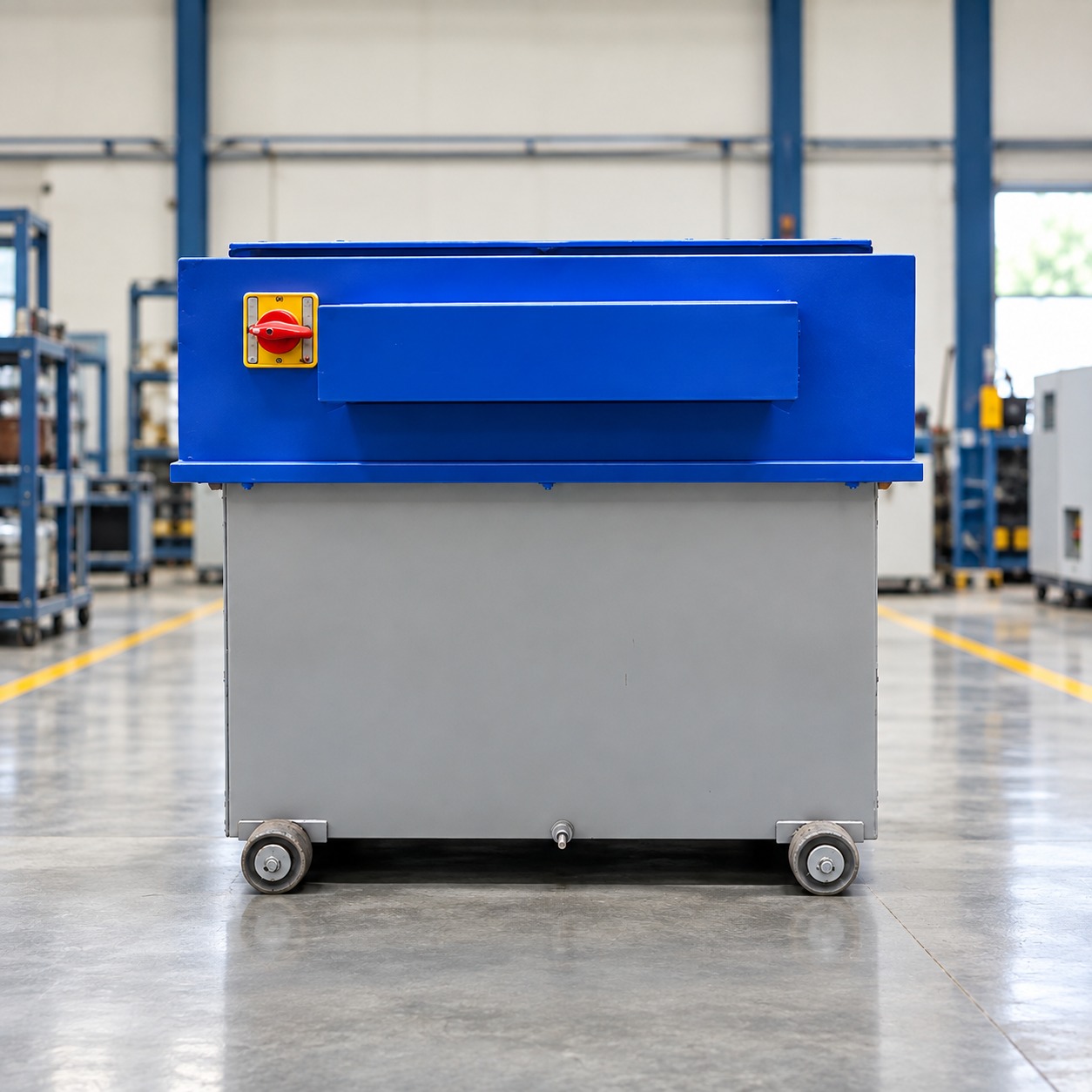
- Air cooling: Lower maintenance, no oil top-ups or leakage risk, and generally lighter and more compact than oil-cooled models of equivalent capacity.
- Servo-controlled correction: Continuous, motorized adjustment rather than the step-based correction used in relay-type stabilizers, giving smoother, more precise output with fewer voltage "jumps" that can stress sensitive electronics.
- Wide operating range: Most air cooled servo units can accept a much wider range of input voltage than basic stabilizers, which matters a great deal in a city like Jaipur where dips and surges both occur.
Why Jaipur Homes and Businesses Need One
If you're searching for a voltage fluctuation solution Jaipur residents can rely on, it helps to understand why: Jaipur's power supply, like much of Rajasthan, is subject to distinct seasonal and infrastructure-driven fluctuations. Understanding these patterns helps explain why a servo stabilizer is not a luxury purchase but often a practical necessity.
- Summer peak load (April–June): Heavy AC and cooler usage across the city pulls grid voltage down during peak afternoon and evening hours, sometimes well below the standard 230V. This is when compressor-driven appliances are most vulnerable, since low voltage forces motors to draw higher current to compensate, generating excess heat.
- Monsoon and grid switching fluctuations: Voltage spikes can occur during load-shedding recovery, transformer switching, and sudden reconnections after outages — conditions common during Jaipur's monsoon season when localized faults are more frequent.
- Older residential wiring in parts of the city: Some areas, particularly older colonies and the historic core, still see voltage drops during peak hours due to aging transformers and distribution infrastructure that wasn't designed for today's appliance load.
- Industrial and commercial clusters drawing shared load: Areas near industrial zones or dense commercial markets sometimes see voltage dip further during business hours when many establishments draw power simultaneously.
An air cooled single phase servo stabilizer protects against both under-voltage, which strains motors and compressors and shortens their working life, and over-voltage, which can damage sensitive electronic components outright. This makes it a practical addition for:
- A servo stabilizer for AC and a servo stabilizer for refrigerator use case, since compressor-driven appliances are the most sensitive to voltage strain
- Shops running computers, POS systems, or refrigeration units where downtime means lost business
- Small offices and clinics with sensitive electronic equipment, including diagnostic machines and computers
- Home theatre and appliance-heavy households where multiple electronics share one circuit
- Water purifiers and inverter-battery charging setups, which can be damaged by voltage spikes during charging
How These Stabilizers Actually Work
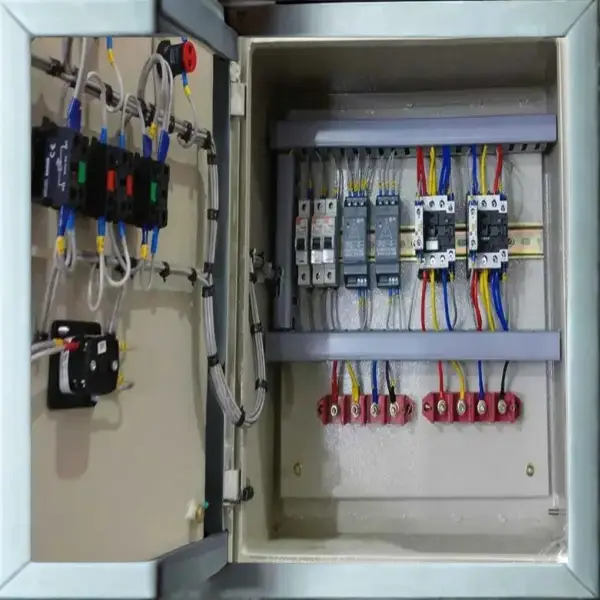
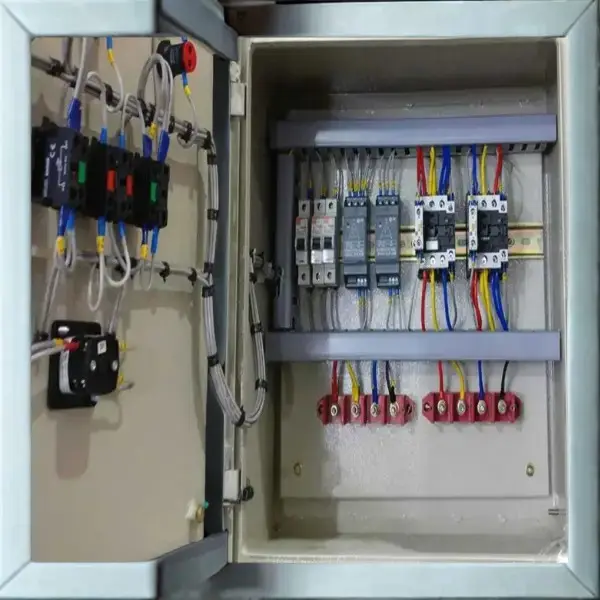
It helps to understand the mechanism before deciding what to buy, because the internal design directly affects reliability and lifespan. Inside an air cooled servo stabilizer, a buck-boost transformer works alongside the variac. As the servo motor rotates the variac's wiper arm, it changes the transformer's turns ratio, which either adds to or subtracts from the incoming voltage to bring the output back to the target level.
Because this correction is mechanical and continuous rather than instantaneous, there is a small correction time — usually a few seconds — between a voltage change and full correction. This is why the "correction speed" specification matters: a faster correction rate means your appliances spend less time exposed to out-of-range voltage during a sudden grid fluctuation.
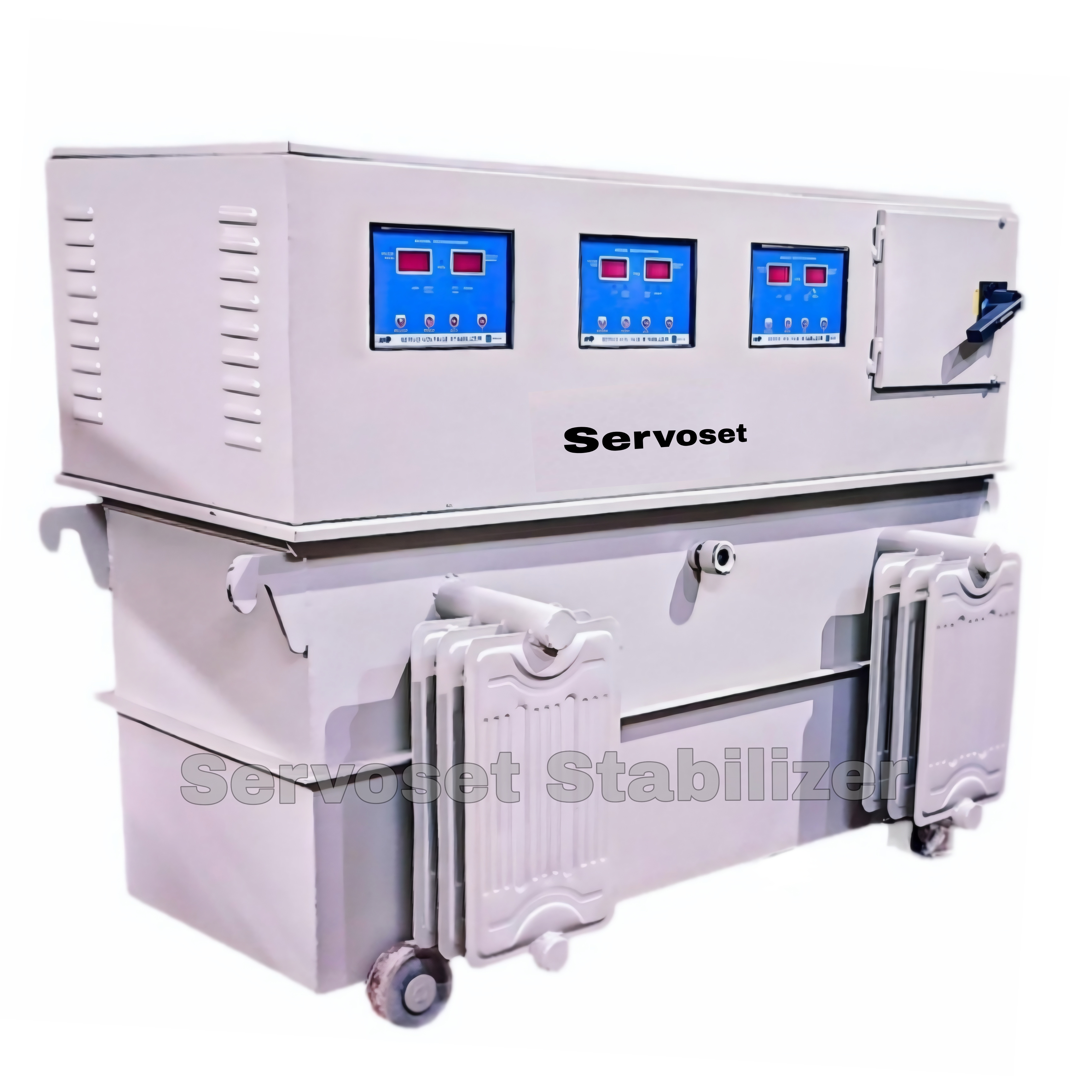
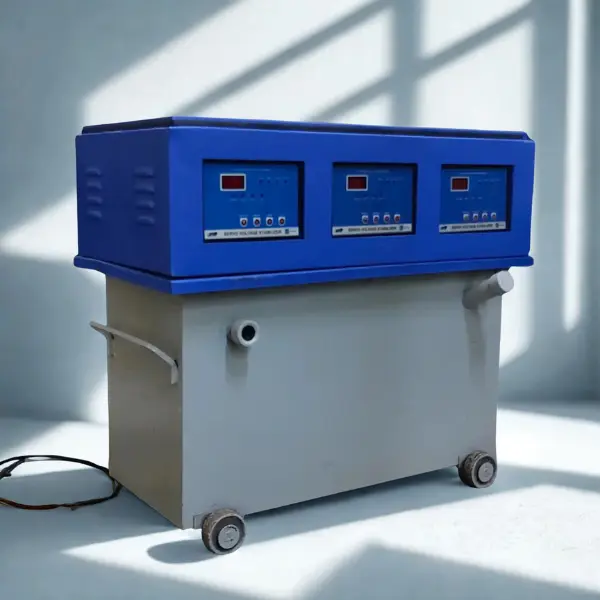
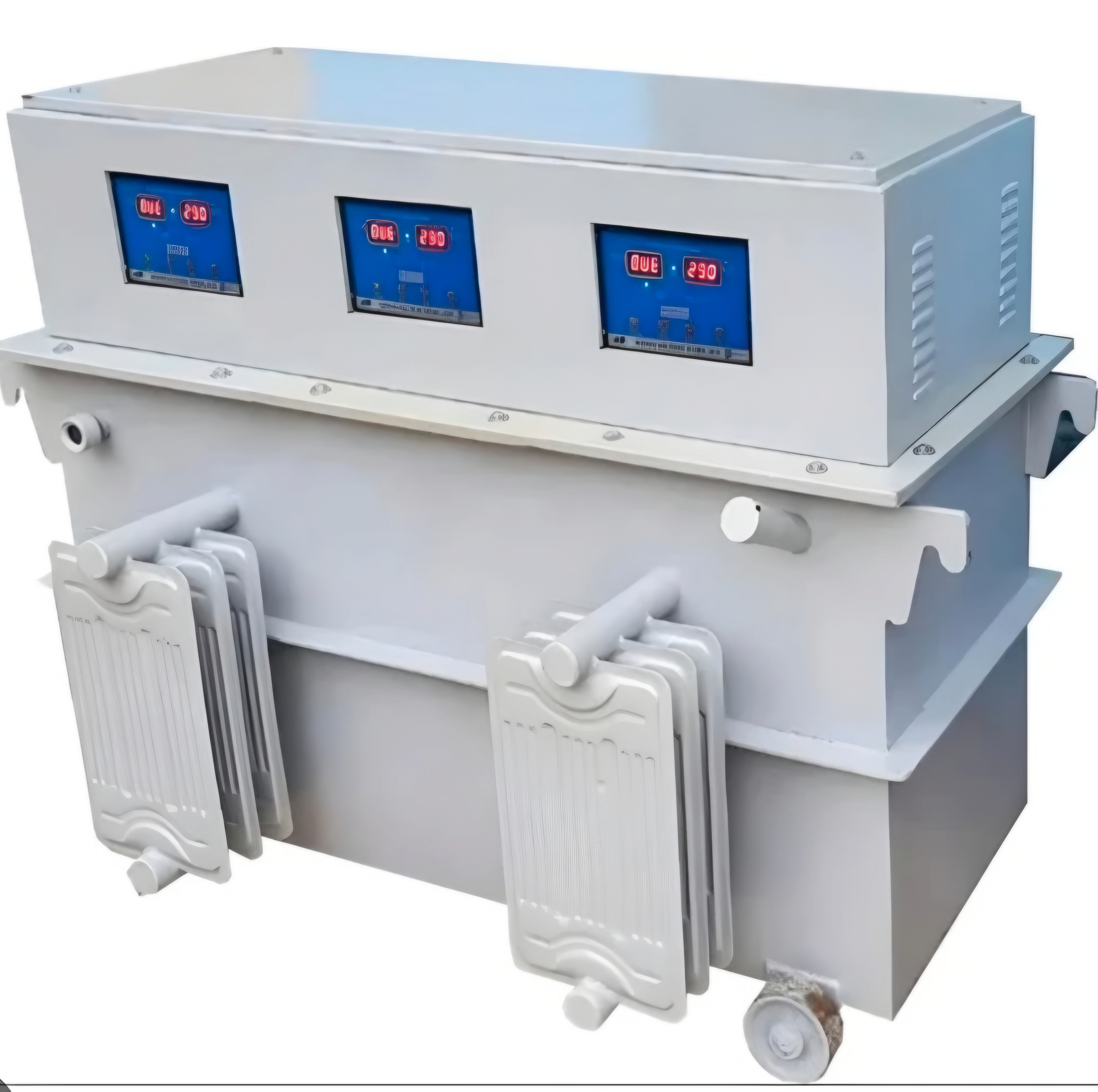
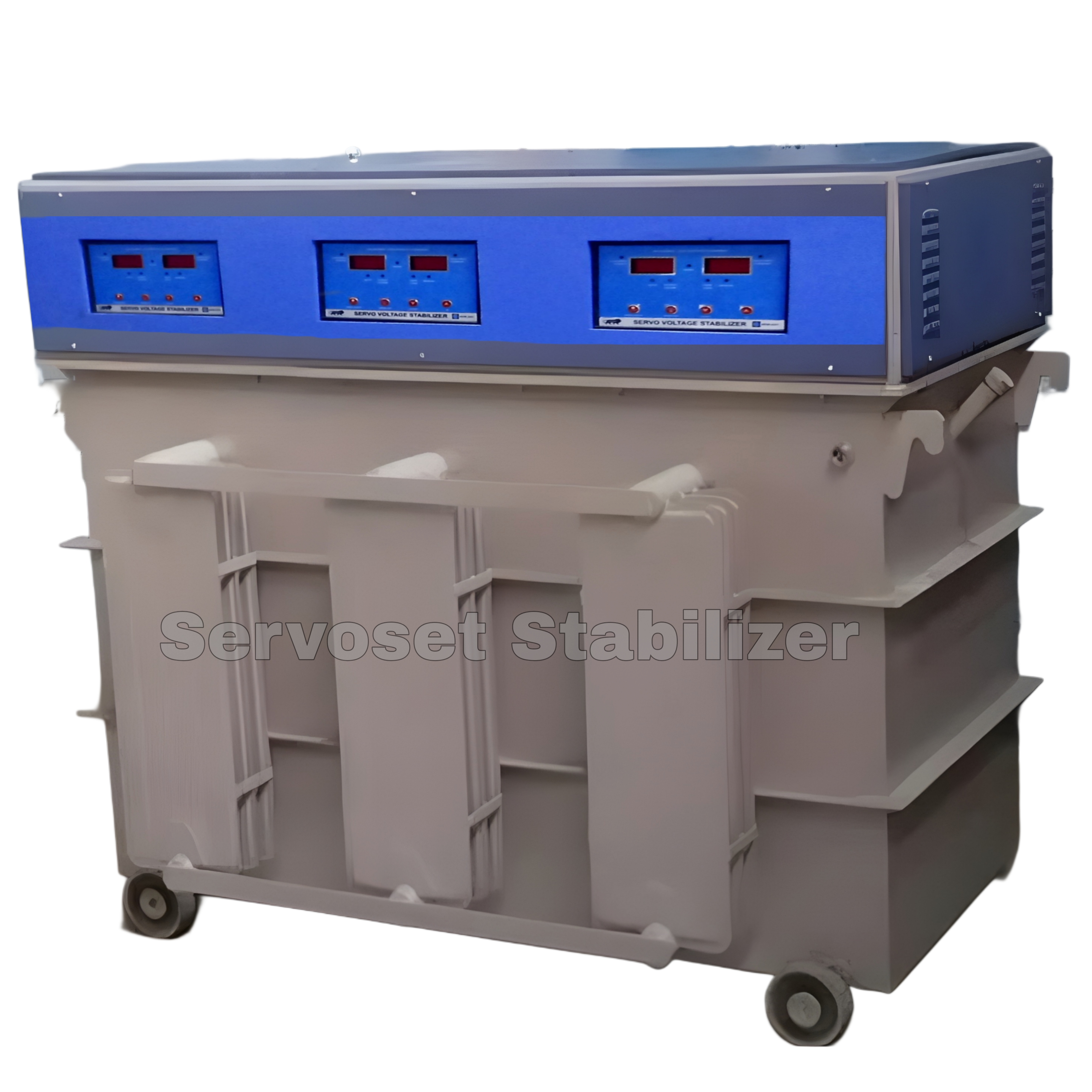
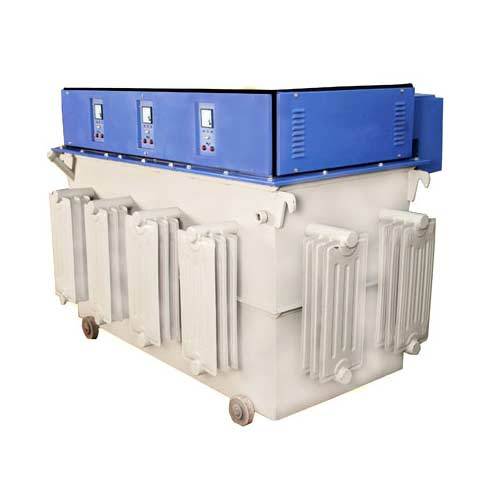
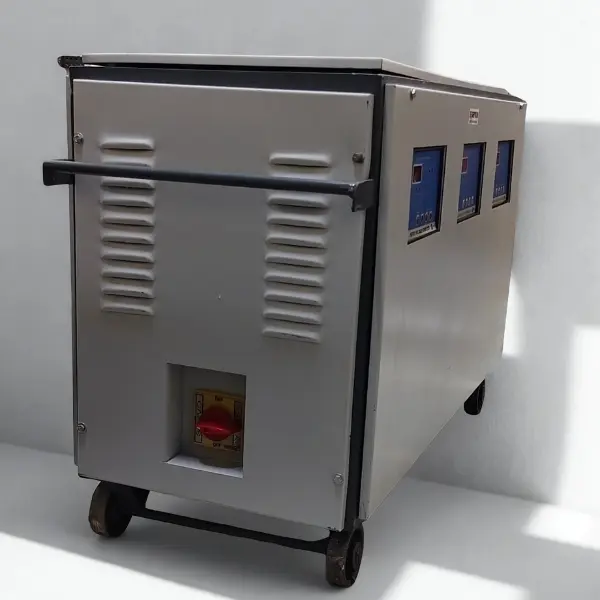
The "air cooled" design uses either natural convection (for smaller capacities) or a cooling fan (for mid-to-larger capacities) to keep the transformer and servo motor from overheating during continuous operation. This is different from oil-cooled stabilizers, which submerge the core components in mineral oil for heat dissipation — a method more common in higher-capacity industrial units where heat loads are much greater.
How to Choose the Right Capacity (kVA Rating): How Much kVA Stabilizer Is Needed for AC
If you've wondered how to choose stabilizer capacity for AC or other appliances, sizing is the most common mistake buyers make, and it has real consequences — an undersized stabilizer will trip or fail under load, while an oversized one wastes money without added benefit. To size correctly:
- List all connected loads in watts, including AC, fridge, TV, computers, mixers, water purifiers, and any other equipment that will run through the stabilizer.
- Add up total wattage and apply a safety margin of 20–25% for motor-starting surges, since ACs and fridges draw significantly higher starting current than their running current.
- Convert to kVA: Divide total watts, including the safety margin, by 800 (a typical power factor assumption of 0.8) to get an approximate kVA rating you should look for.
- Round up to the next standard capacity, since manufacturers typically offer stabilizers in fixed steps (such as 4, 5, 8, and 10 kVA) rather than arbitrary sizes.
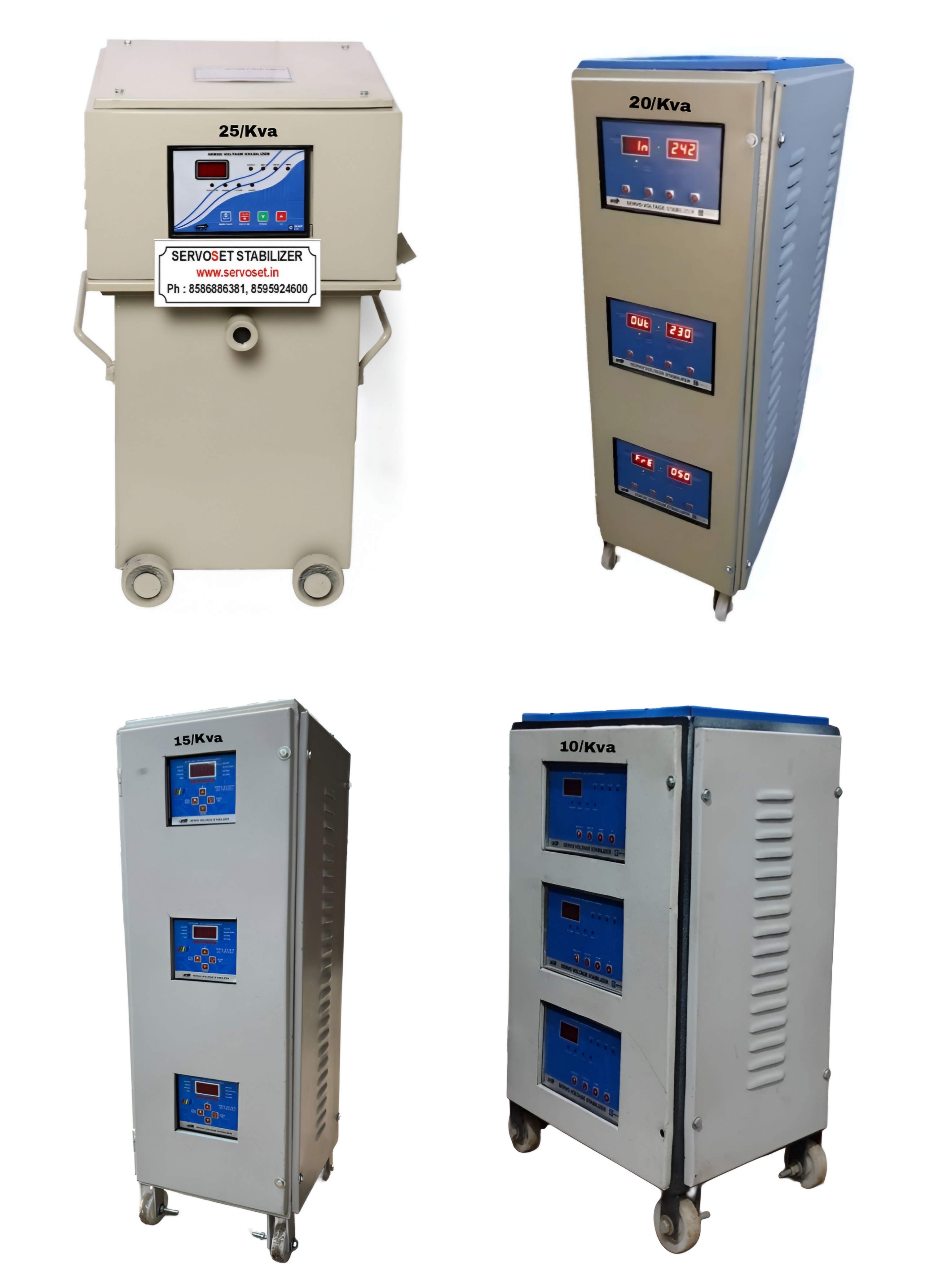
Common household ranges in Jaipur, using a single phase voltage stabilizer 4 kVA, 5 kVA, or 10 kVA as reference points:
- Single AC (1–1.5 ton), best matched to a voltage stabilizer for 1.5 ton AC: typical running load of 1.5–2 kW, which translates to a recommended 4 kVA stabilizer once starting surge is accounted for.
- Home with AC, fridge, and TV running together: typical combined load of 3–4 kW, which usually calls for a 5–6 kVA stabilizer.
- Small shop or office, a common case for a voltage stabilizer for shop, with computers, a small AC unit, and lighting: typical load of 4–6 kW, which generally needs an 8–10 kVA stabilizer.
- Larger household with two ACs, a fridge, and multiple electronics: often needs a 10 kVA or higher unit, at which point it's worth comparing against oil-cooled options as well.
If your load is likely to grow — for example, you're planning to add a second AC or upgrade appliances soon — it's generally worth buying one capacity step higher than your current calculation to avoid replacing the unit in a year or two.
Voltage Input Range to Look For
Given Jaipur's fluctuation pattern, prioritize a stabilizer with a wide input range — ideally 90V–280V or 130V–280V — rather than a narrow-range unit such as 170V–270V, which will cut off supply more often during deep summer voltage dips. A wider range means the stabilizer keeps working through more extreme conditions instead of shutting down and leaving your appliances unprotected exactly when they need it most.
It's worth noting that a wider input range sometimes comes with a marginally higher price, but the trade-off is almost always worthwhile in a city where summer voltage dips are common and unpredictable.
Key Features to Check Before Buying
Beyond capacity and voltage range, several features distinguish a reliable stabilizer from one that will cause problems down the line:
- Correction speed: Look for a rated correction rate, commonly around 20–30V per second, so voltage recovery is fast enough for sensitive equipment during sudden fluctuations.
- Overload and short-circuit protection: Built-in MCB or fuse protection is essential, since it protects both the stabilizer and connected appliances from damage during faults.
- Time-delay function: This protects compressors in ACs and fridges from rapid on-off cycling during brief outages, which is one of the most common causes of premature compressor failure.
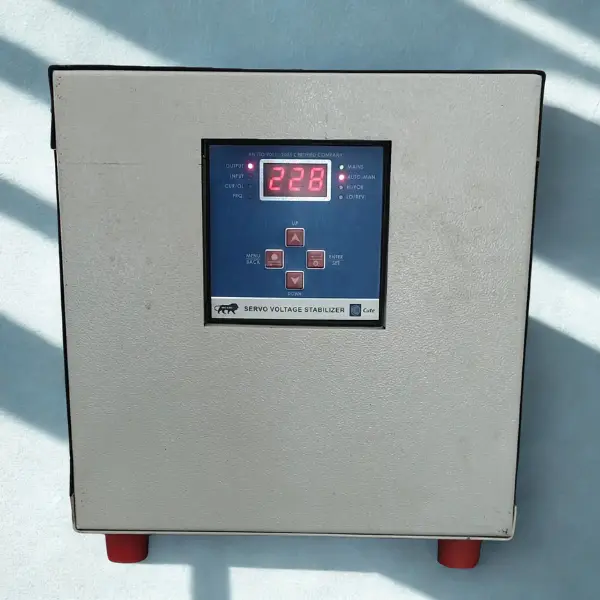
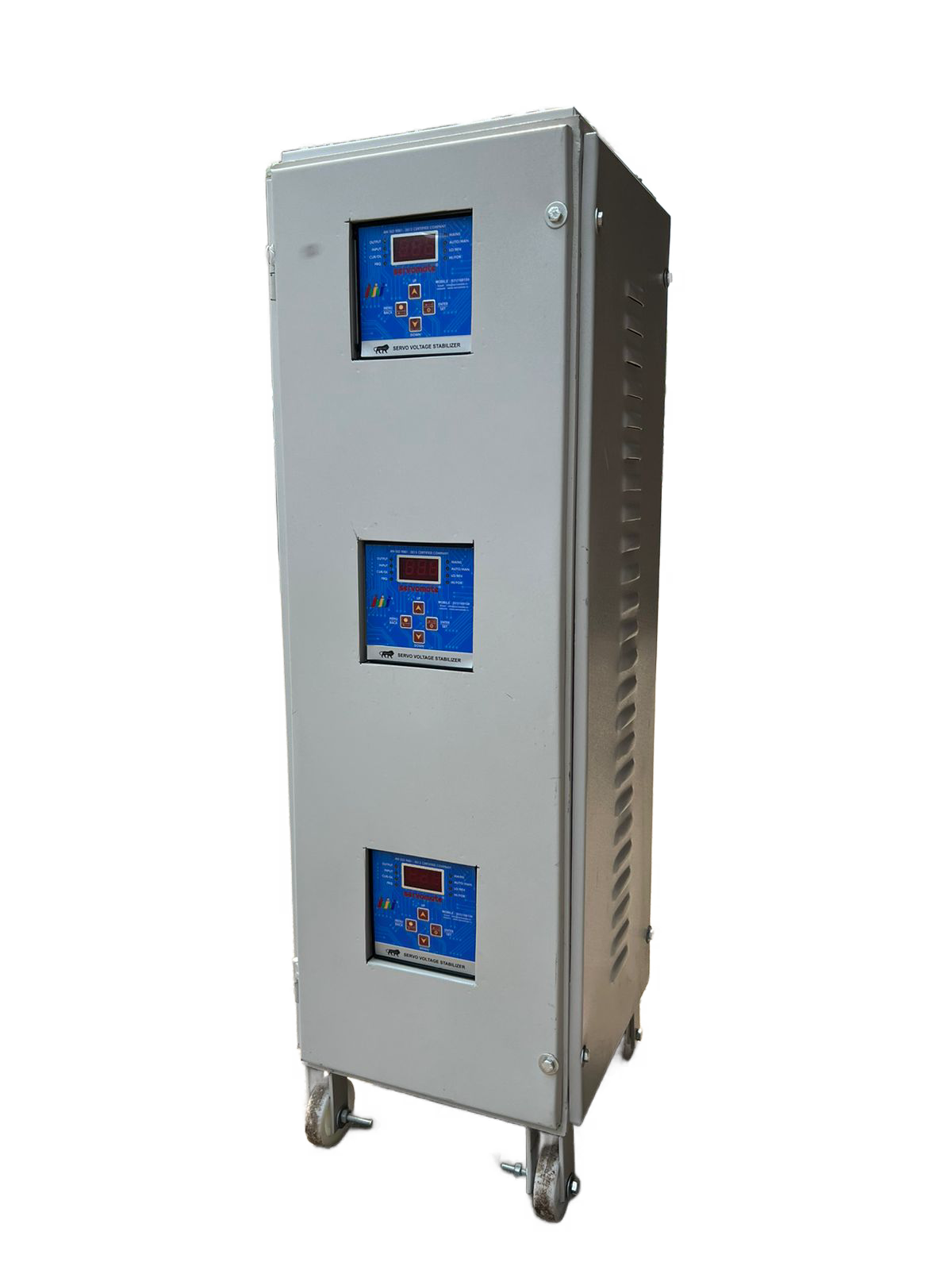
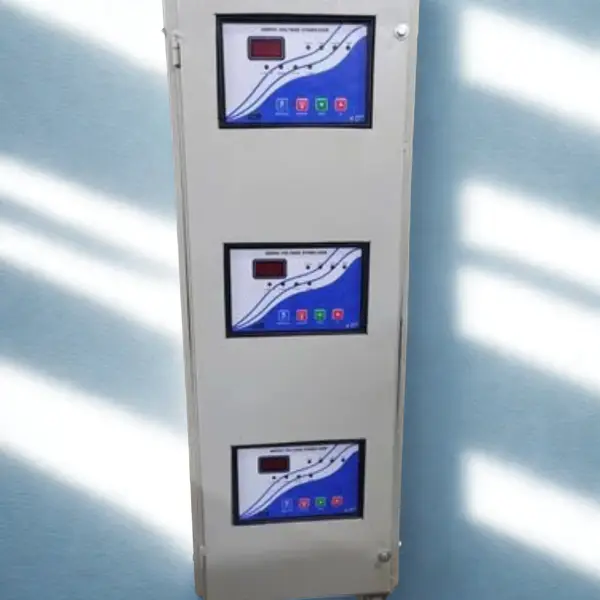
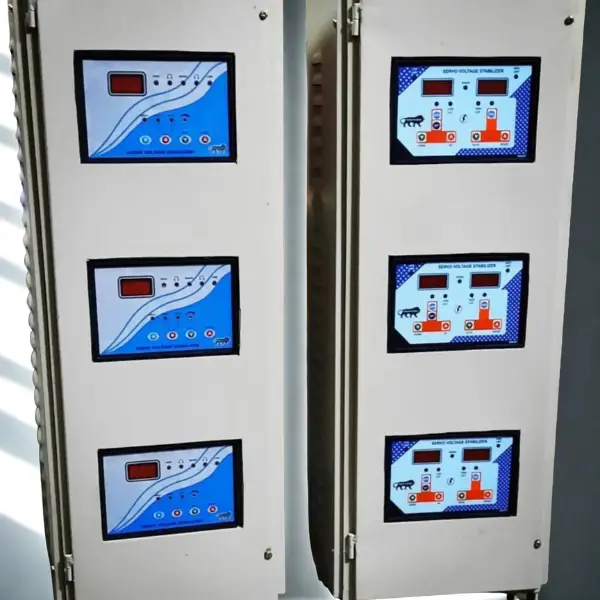
- Digital display: A real-time input and output voltage readout makes it much easier to monitor performance and spot early signs of a problem, such as unusually frequent correction activity.
- Spike and surge protection: Some models include additional surge suppression beyond basic servo correction, which is a useful extra layer of protection during lightning-prone monsoon weather.
- Build quality of the variac and brushes: Since these are electromechanical parts subject to wear, better-built units last noticeably longer between servicing intervals.
- Local service support: Since these are electromechanical units, having an authorized service center or a voltage stabilizer dealer in Jaipur — ideally one you can find as a "voltage stabilizer shop near me" search — for annual servicing and carbon-brush replacement matters more than the brand name alone. A well-known brand with no local service presence can be more inconvenient than a lesser-known one with a responsive local dealer network.
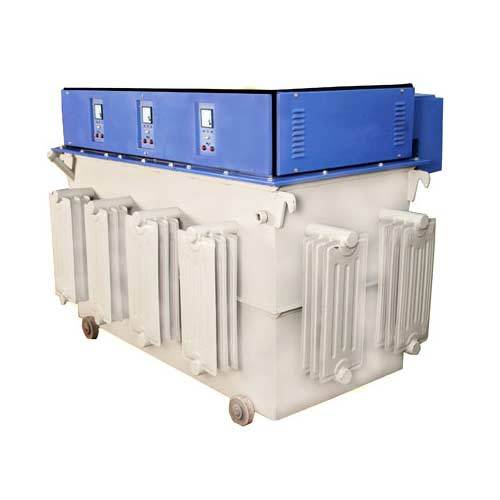
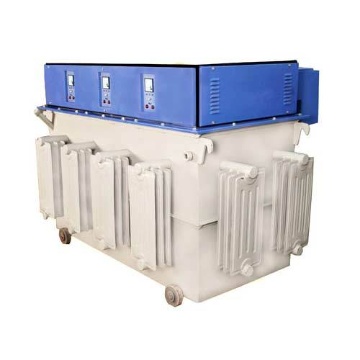
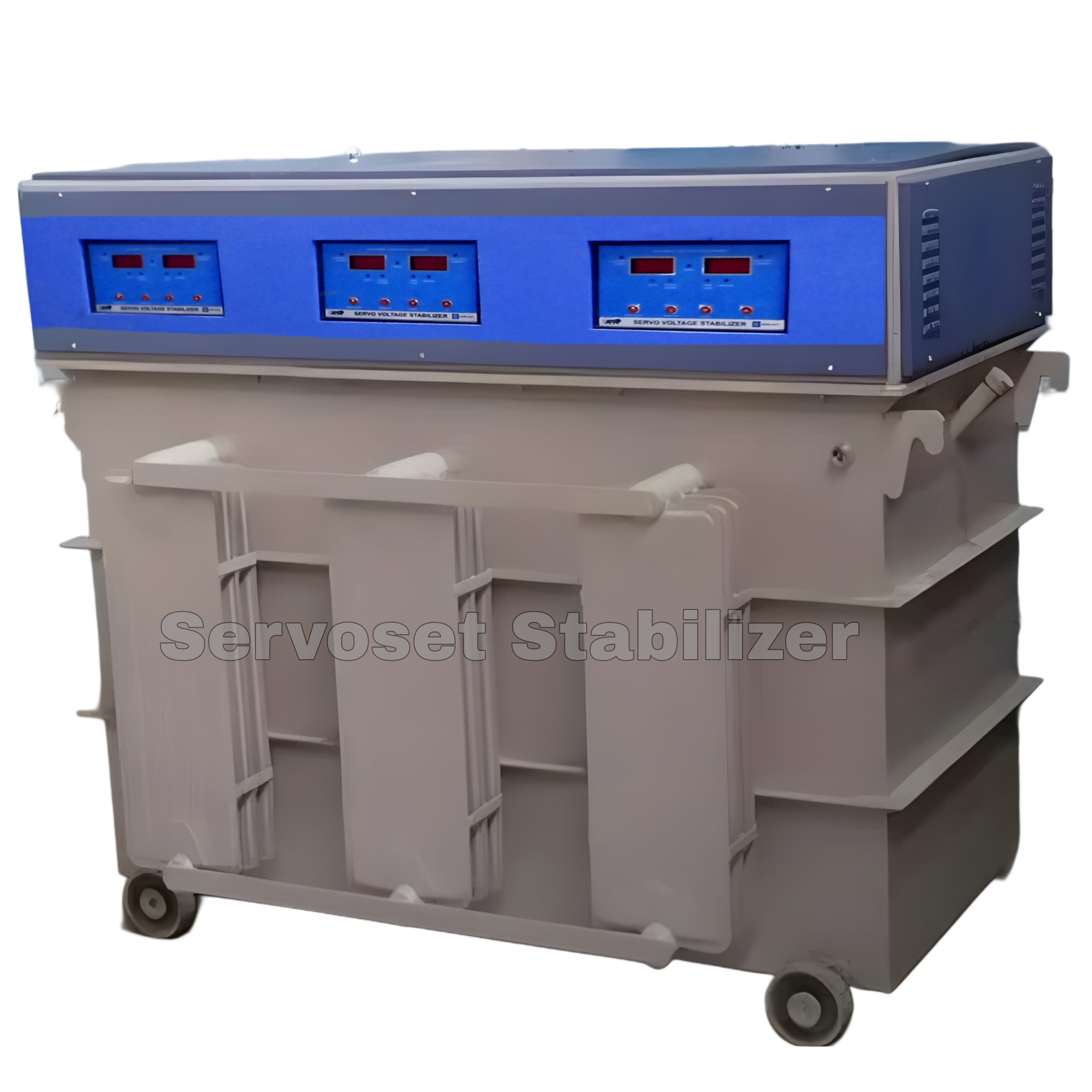
Oil Cooled vs Air Cooled Stabilizer: Which Should You Choose?
This is one of the most common questions buyers ask — "is an air cooled stabilizer good for home use?" — and the answer depends mainly on capacity and use case rather than one being universally "better" than the other.
- Maintenance: Air cooled units are low-maintenance and need no oil checks; oil cooled units require periodic oil-level checks and occasional top-ups or replacement.
- Size and weight: Air cooled units are generally more compact and lighter, making them easier to install in tight spaces such as balconies or utility rooms; oil cooled units are bulkier and heavier, often requiring a dedicated floor space.
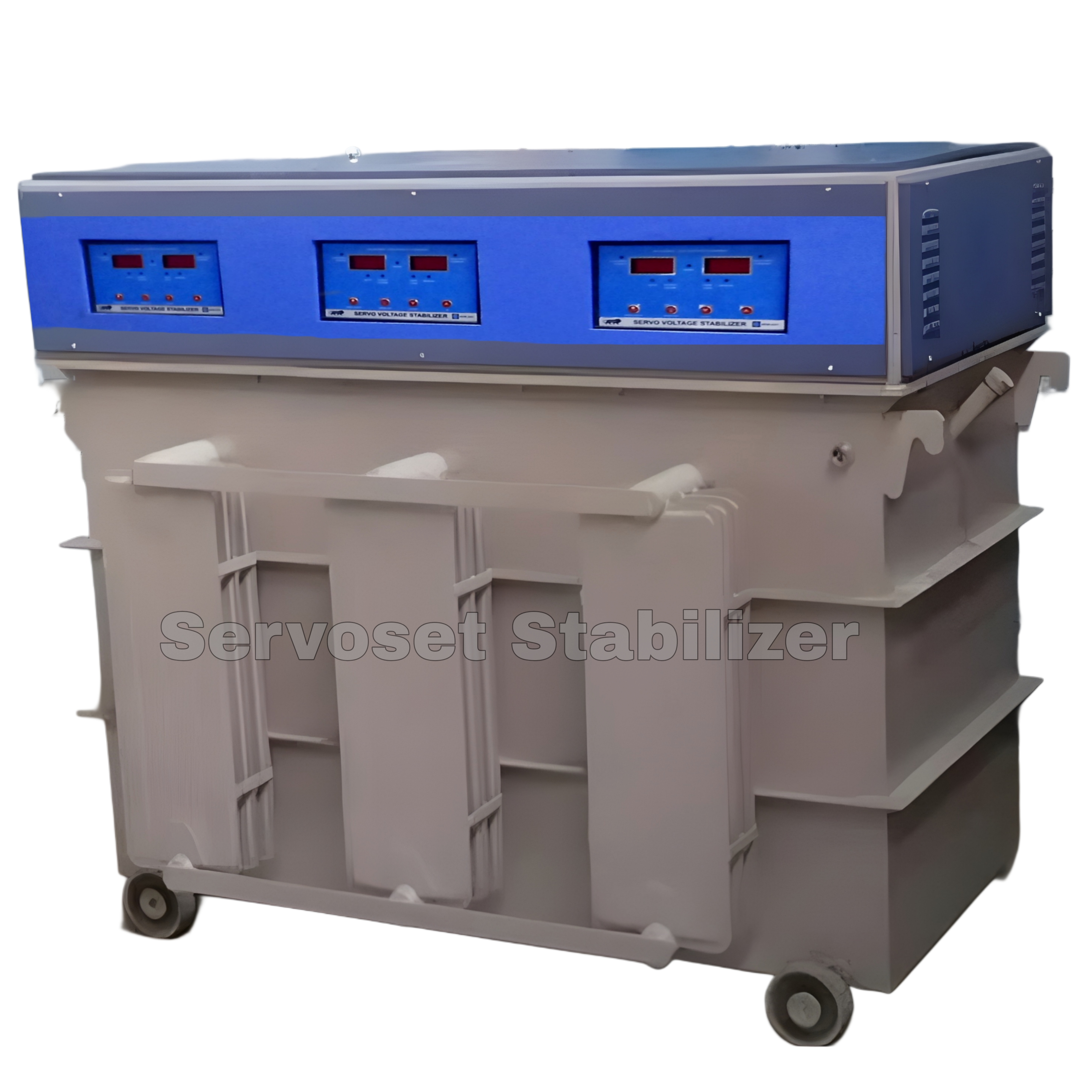
- Best use case: Air cooled units are well suited to home and light-commercial use, typically up to around 10–15 kVA; oil cooled units are more common in higher-capacity industrial applications where heat loads are much greater and continuous high-load operation is expected.
- Cost: Air cooled units are generally lower in upfront cost for equivalent capacity, though this narrows at higher kVA ratings.
- Noise: Air cooled units with cooling fans can produce a mild hum during active correction, while oil cooled units tend to run quieter since oil absorbs vibration and heat more passively.
- Longevity under continuous heavy load: Oil cooled units can typically sustain very high continuous loads for longer periods without derating, which is why they remain the standard choice for larger commercial and industrial installations.
For most single-phase home and small-business use cases in Jaipur, an air cooled unit offers the best balance of protection, upkeep, and cost, and is the more practical choice unless your total connected load pushes well beyond 15 kVA.
Voltage Stabilizer Price in Jaipur and What Affects It
If you're comparing a servo stabilizer price list before you buy servo voltage stabilizer online or in person, pricing for air cooled single phase servo stabilizers in Jaipur varies based on capacity, input voltage range, and brand, but as a general guide, smaller 4–5 kVA units aimed at single-AC homes tend to sit at the more affordable end of the market, while 8–10 kVA units for shops or multi-appliance homes cost proportionally more due to the larger transformer and servo assembly involved. Units with a wider voltage range or additional surge protection typically carry a modest premium over base models of the same capacity. When researching the best voltage stabilizer for home use or the best servo stabilizer brand India has to offer, it's worth getting quotes from two or three local dealers, since installation, warranty terms, and after-sales service can vary even when the base unit price looks similar.
Installation and Maintenance Tips
Proper installation and basic upkeep significantly extend the working life of a servo stabilizer:
- Install in a well-ventilated, dust-free area, avoiding direct sunlight and damp spaces, since both heat buildup and moisture accelerate wear on internal components.
- Keep at least 15–20 cm of clearance around the unit for airflow, particularly around the ventilation grilles.
- Get carbon brushes and connections inspected once a year, ideally before the summer peak season begins, since this is when the servo motor works hardest.
- Avoid overloading beyond the rated kVA capacity, even briefly, as repeated overload stresses the transformer windings and shortens overall lifespan.
- Keep the unit away from areas prone to flooding or waterlogging during monsoon, particularly in ground-floor installations.
- Avoid placing the stabilizer directly against a wall with no gap, since this restricts airflow and can cause it to run hotter than intended.
How to Protect AC from Voltage Fluctuation in Jaipur: Signs You Need a Stabilizer
If you're unsure whether you actually need one, especially if you're dealing with a servo stabilizer for frequent power cuts, a few practical signs are worth watching for: appliances that struggle to start or make unusual noises during peak evening hours, lights that visibly dim when the AC compressor kicks in, electronics that occasionally reset or behave erratically without an obvious cause, or a fridge or AC that has needed more frequent repairs than expected for its age. Any of these patterns point toward voltage instability as a contributing factor, and a correctly sized stabilizer is often a more cost-effective fix than repeatedly repairing strained appliances.
FAQs
Q1. What is a servo voltage stabilizer? It's a device that uses a servo motor to continuously adjust a variac and correct incoming voltage in real time, keeping output within about ±1% of the target level.
Q2. How much kVA stabilizer is needed for AC? A 4 kVA air cooled single phase stabilizer is typically sufficient for a voltage stabilizer for 1.5 ton AC, accounting for compressor starting surge.
Q3. How to choose stabilizer capacity for AC or other appliances? Add up connected loads in watts, apply a 20–25% safety margin for starting surges, divide by 800, and round up to the nearest standard kVA size.
Q4. Is air cooled stabilizer good for home use? Yes — for single-phase home and small-commercial loads up to roughly 10–15 kVA, air cooled units correct voltage just as effectively as oil cooled ones with lower maintenance.
Q5. Servo stabilizer vs relay stabilizer — what's the difference? A servo stabilizer corrects voltage continuously and smoothly, while a relay stabilizer switches in fixed steps, which is less precise for sensitive electronics.
Q6. What input voltage range is best for Jaipur's power fluctuations? A wide range like 90V–280V is recommended, since it handles both deep summer voltage dips and occasional spikes without cutting supply.
Q7. How often does a servo stabilizer need servicing? Annual servicing is recommended, mainly to check carbon brushes and connections, ideally done before the summer peak season begins.
Q8. Can one stabilizer protect multiple appliances at once? Yes, as long as the combined load, including a safety margin for starting surges, stays within the stabilizer's rated kVA capacity.
Conclusion
For Jaipur's voltage conditions — wide summer dips, occasional spikes, and peak-season grid stress — an air cooled single phase servo voltage stabilizer is a practical, low-maintenance way to protect home and small-business electronics. The right choice comes down to correctly sizing the kVA rating for your actual load, choosing a wide input voltage range, checking for reliable local service support, and following basic installation and maintenance practices. Get these fundamentals right, and the stabilizer will quietly do its job for years with minimal upkeep, protecting everything from a single AC unit to a shop full of sensitive electronics.