Introduction
Voltage fluctuations can create serious challenges for industrial machinery, commercial equipment, automation systems, and other electrical loads. A Servo Voltage Stabilizer helps regulate changing input voltage and provides a controlled output supply to connected equipment.
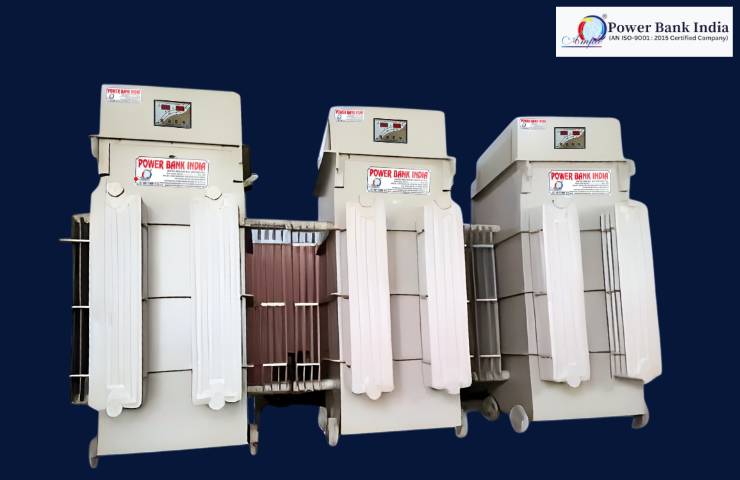
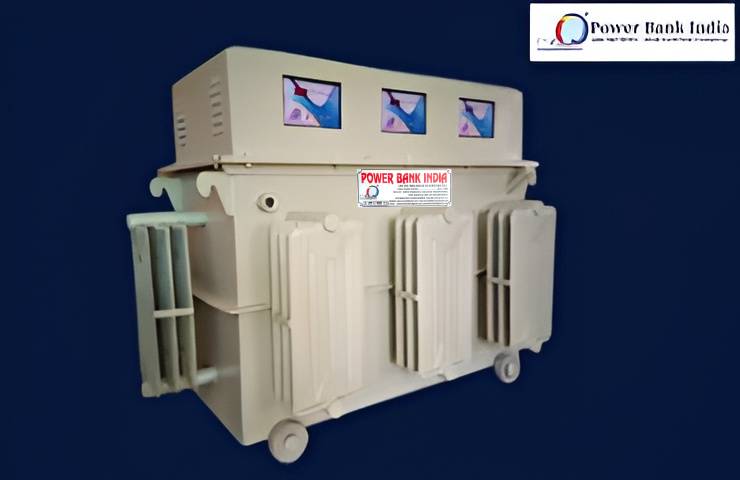
When selecting a stabilizer, one important decision is the cooling arrangement. Air Cooled Servo Voltage Stabilizer and Oil Cooled Servo Voltage Stabilizer both use servo-based voltage regulation, but their cooling methods, installation requirements, maintenance considerations, and typical applications can differ.
Power Bank India offers both air-cooled and oil-cooled servo stabilizers across a broad capacity range, including models from 20 kVA to 2500 kVA. The appropriate option depends on factors such as load capacity, operating environment, voltage requirements, installation conditions, and application. :contentReference[oaicite:1]{index=1}
The Core Difference: Cooling Method
The main difference between these two stabilizer types is the method used to manage heat generated during operation.
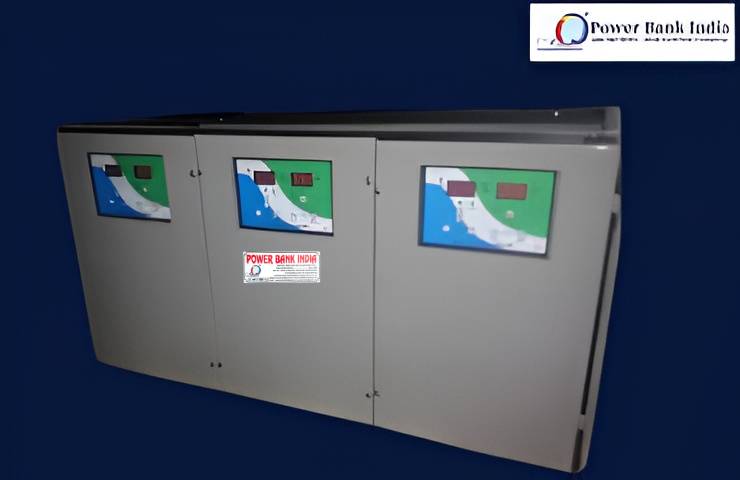
An Air Cooled Servo Stabilizer uses air circulation to dissipate heat from its internal components. Depending on the design and capacity, heat may be removed through natural ventilation or forced air circulation.
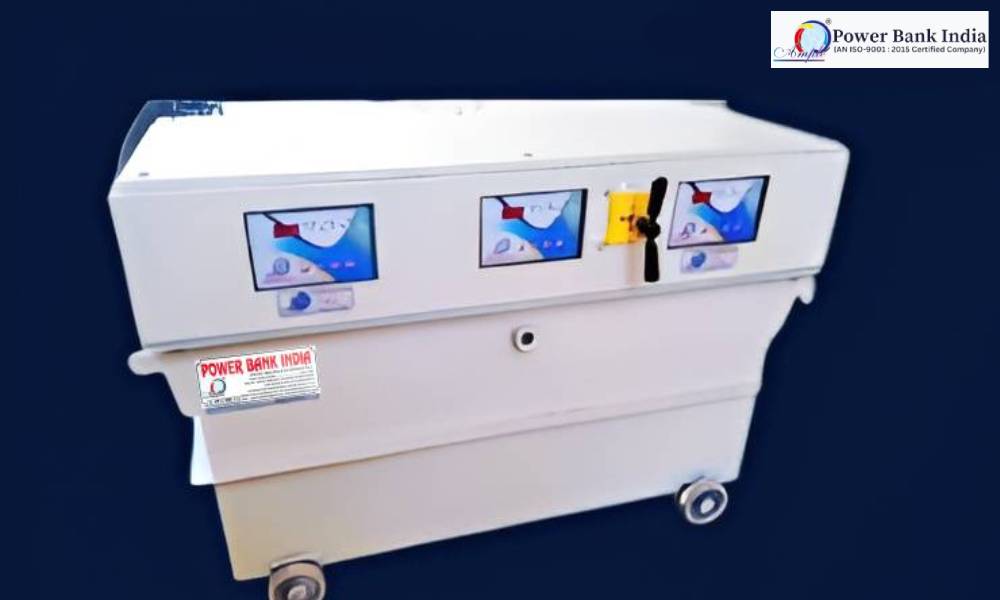
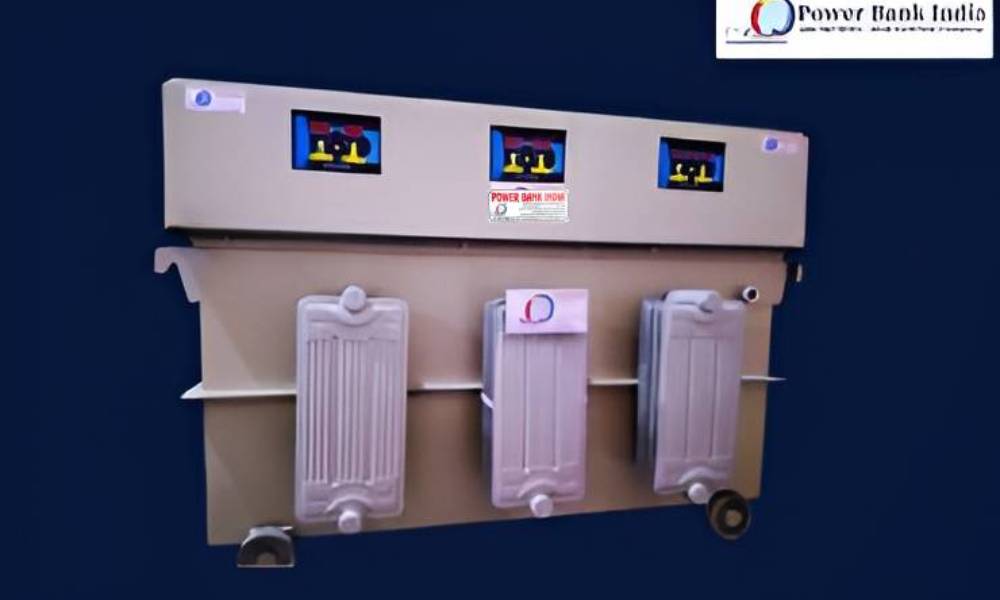
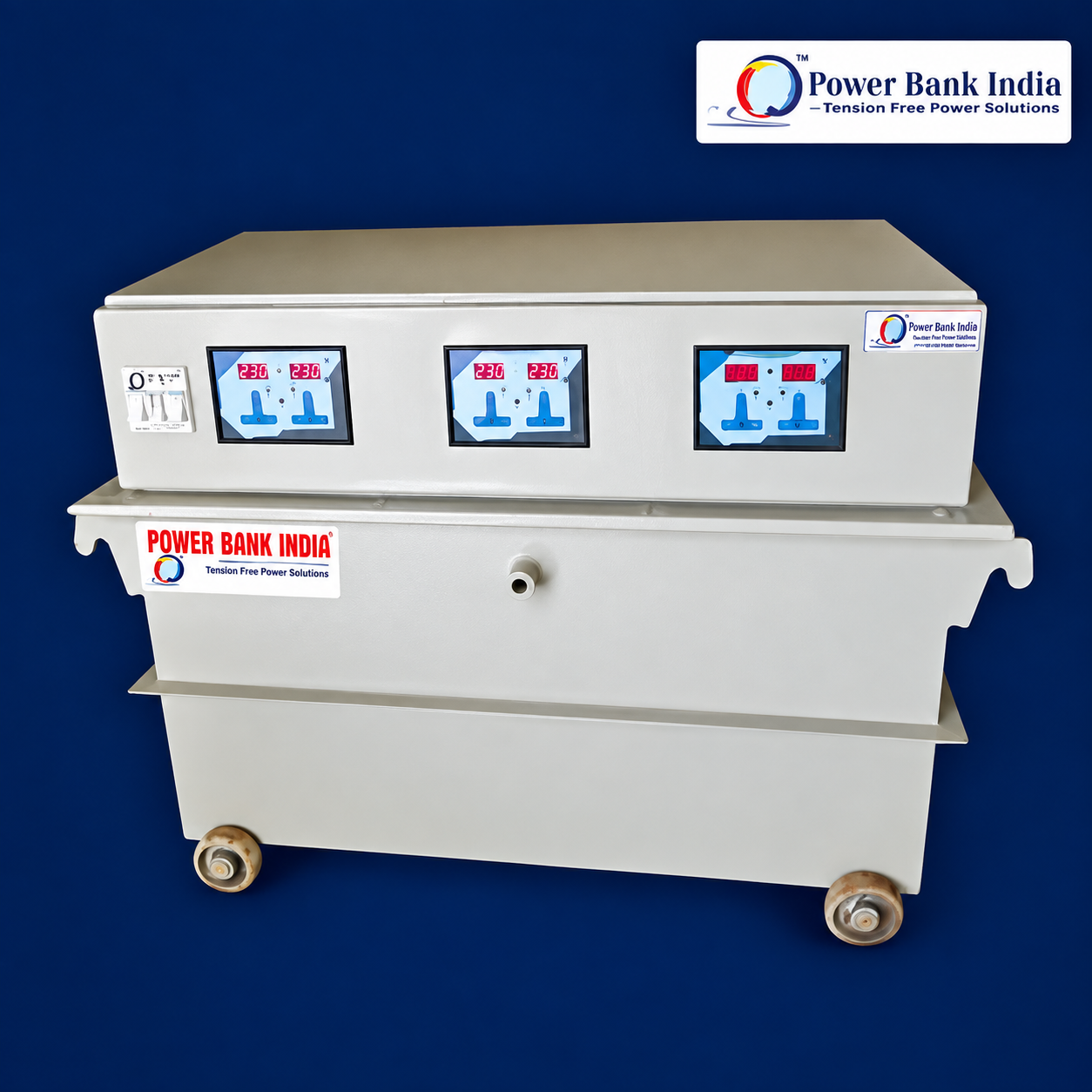
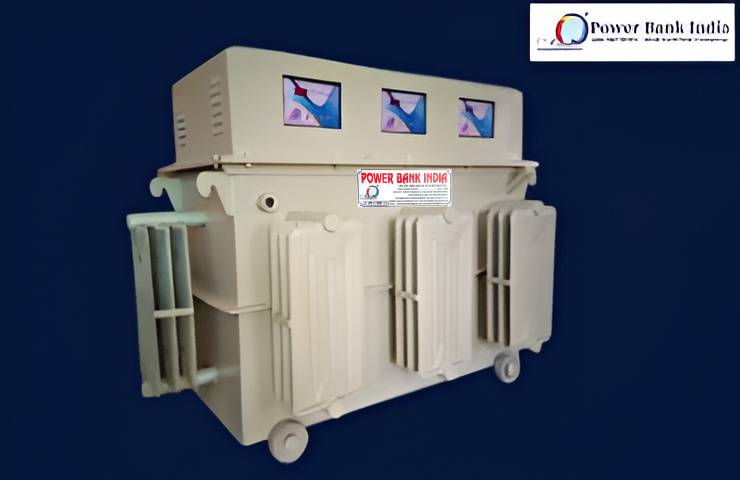
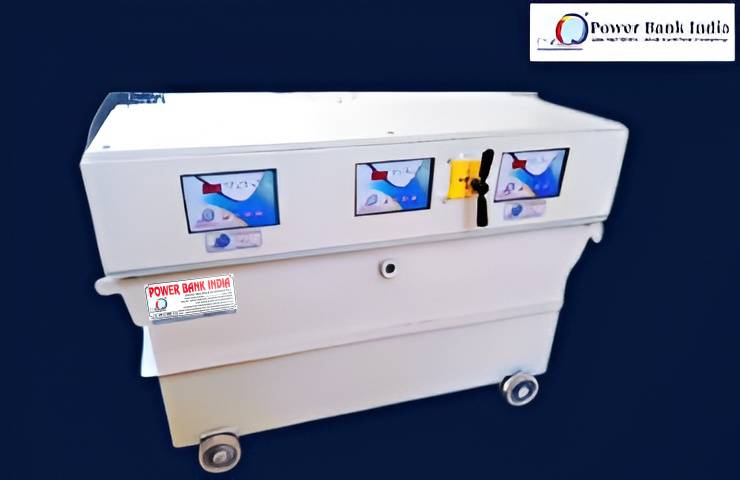
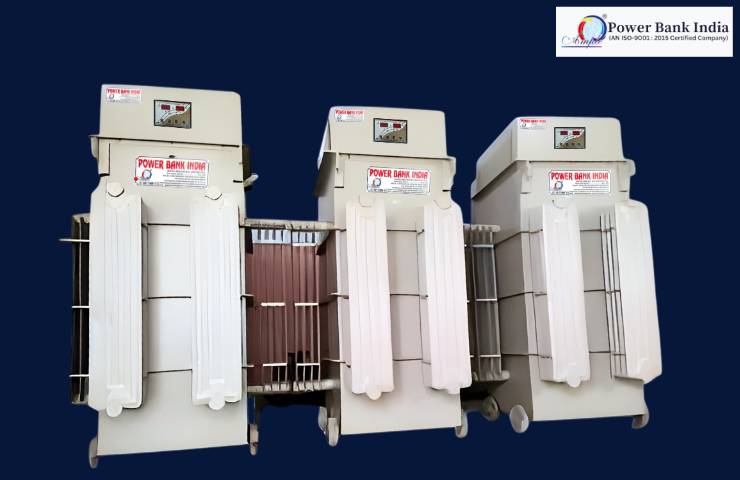
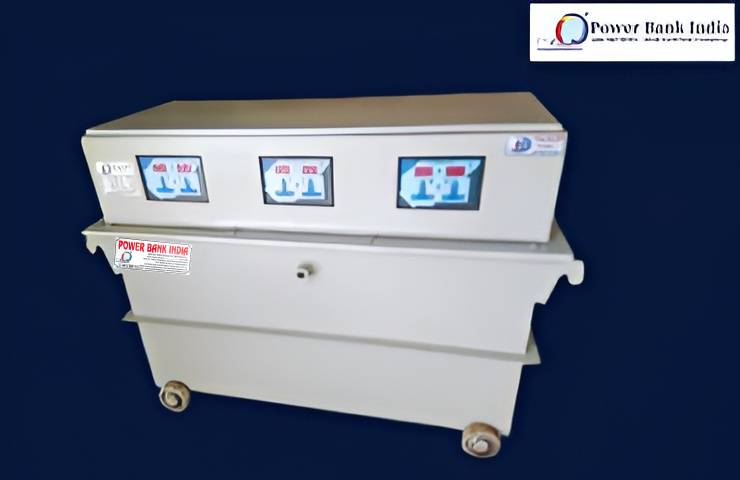
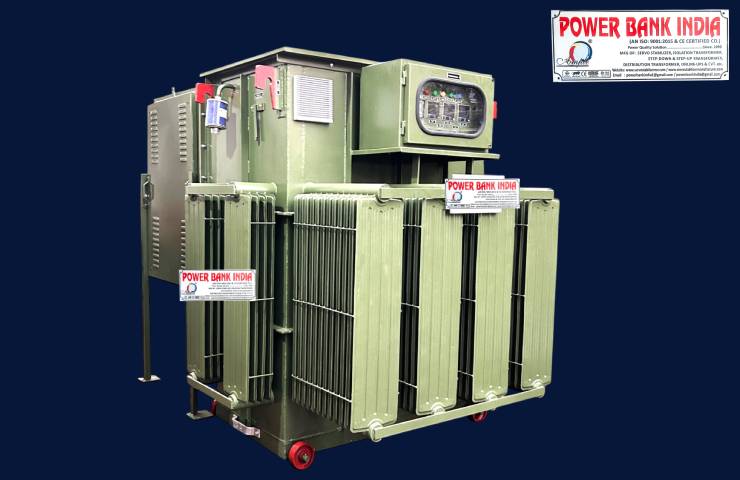
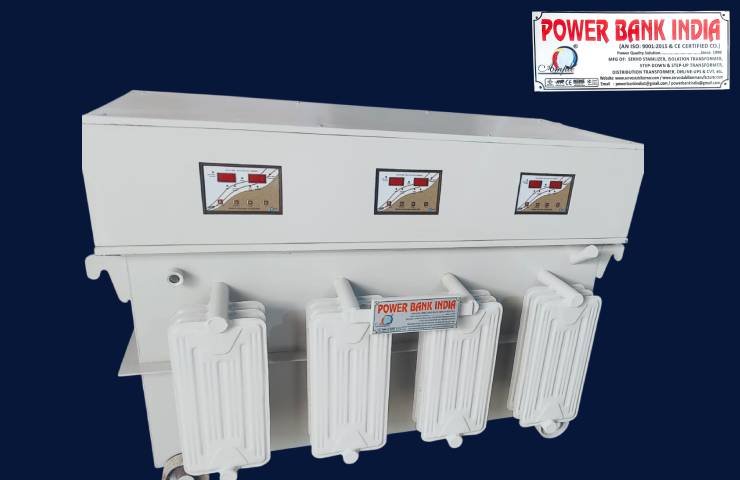
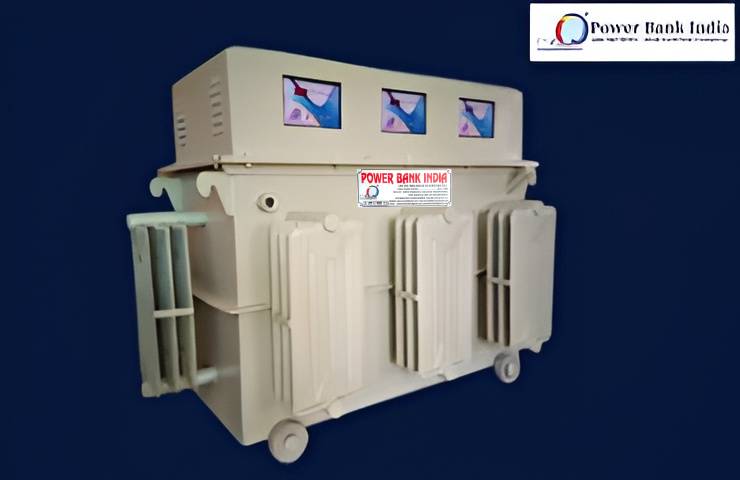
An Oil Cooled Servo Stabilizer uses insulating oil to transfer heat away from internal electrical components while also providing electrical insulation. This arrangement is commonly considered for higher-capacity and demanding industrial applications. :contentReference[oaicite:2]{index=2}
Technical Comparison at a Glance
| Parameter | Air Cooled Servo Stabilizer | Oil Cooled Servo Stabilizer |
|---|---|---|
| Cooling Medium | Air | Insulating oil |
| Heat Dissipation | Through air circulation and ventilation | Through insulating oil and heat transfer |
| Oil Requirement | No cooling oil required | Requires suitable insulating oil |
| Maintenance Consideration | Focuses on ventilation, electrical connections, and mechanical components | Includes oil condition along with electrical and mechanical inspections |
| Installation Environment | Suitable where adequate ventilation is available | Suitable for installations designed for oil-cooled equipment |
| Typical Application | Commercial facilities, offices, smaller industrial installations, and suitable machinery | Heavy industrial equipment, production plants, and higher-load applications |
| Noise Consideration | Depends on cooling and fan arrangement | Depends on transformer and overall equipment design |
| Capacity Selection | Selected according to connected load and application | Selected according to connected load and application |
| Voltage Regulation | Servo-controlled automatic regulation | Servo-controlled automatic regulation |
How Both Stabilizers Regulate Voltage
Although their cooling systems are different, both types use a servo-controlled mechanism for voltage correction.
The control system continuously monitors the incoming voltage. When the input moves above or below the required level, the servo motor operates the voltage correction mechanism. This adjusts the voltage so that the output remains within the stabilizer's specified regulation range.
The exact regulation accuracy, correction speed, input range, and output specifications depend on the individual model.
Air Cooled Servo Stabilizer: Where It Fits
An Air Cooled Servo Voltage Stabilizer can be a practical choice for installations where air-based heat dissipation is suitable and avoiding oil-based cooling is desirable.
For example, Power Bank India's 50 kVA air-cooled model is described for retail spaces, offices, educational institutions, and smaller industrial environments. The listed model uses a three-phase input range of 340V–480V and specifies output accuracy within ±1%.
Applications can include:
- Commercial buildings
- Offices
- Retail facilities
- Educational institutions
- Small and medium industrial units
- Suitable automation equipment
- Electrical machinery requiring regulated voltage
Oil Cooled Servo Stabilizer: Built Around Thermal Management
An Oil Cooled Servo Voltage Stabilizer uses insulating oil as the cooling and electrical insulation medium. The oil helps transfer heat generated by internal components during operation.
This cooling arrangement is commonly associated with demanding industrial applications and higher-capacity stabilizers. Power Bank India's current product range includes oil-cooled models such as 25 kVA, 60 kVA, 250 kVA, 500 kVA, and 750 kVA configurations, as well as larger stabilizer capacities. :contentReference[oaicite:4]{index=4}
Potential applications include:
- Manufacturing plants
- Heavy industrial machinery
- Production lines
- Large electrical installations
- Industrial automation systems
- Motors and heavy electrical loads
- Continuous industrial operations
Capacity Changes the Selection Equation
Cooling type should not be selected independently of stabilizer capacity. The total connected load, starting current, voltage fluctuation range, operating duration, and installation environment all need to be considered.
For example, a facility running several motors may have a significantly different requirement from an office containing computers and general electrical equipment. Motor starting currents and other inductive loads should be considered when calculating the required kVA capacity.
Power Bank India's product range currently includes stabilizers from 20 kVA through 2500 kVA, showing that capacity selection can vary considerably depending on the application. :contentReference[oaicite:5]{index=5}
Maintenance Differences
Maintenance is another factor worth considering before selecting between an Air Cooled Servo Stabilizer and an Oil Cooled Servo Stabilizer.
Air-cooled systems require attention to ventilation, dust accumulation, electrical connections, servo motor components, control systems, and other equipment-specific parts.
Oil-cooled systems require these types of inspections as well as checks related to the condition and level of insulating oil. Maintenance schedules should always follow the manufacturer's recommendations.
Installation Environment Matters
The physical environment can influence which cooling configuration is appropriate.
For an air-cooled stabilizer, adequate airflow and ventilation are important for effective heat dissipation. The installation area should allow sufficient clearance around the equipment.
Oil-cooled equipment requires an installation arrangement appropriate for oil-filled electrical equipment, including consideration of space, access, maintenance, and applicable safety requirements.
Protection Features to Compare
Cooling type is only one part of a servo stabilizer specification. Protection features are equally important when the equipment is being installed with valuable industrial machinery.
Depending on the model, a Servo Voltage Stabilizer may include features such as:
- Overload protection
- Short-circuit protection
- High-voltage protection
- Low-voltage protection
- Thermal protection
- Phase failure protection
- Phase sequence protection
- High and low voltage cut-off
- Digital voltage monitoring
- Manual bypass arrangements
The exact protection package varies by model and manufacturer, so the technical datasheet should be checked before making a selection. :contentReference[oaicite:6]{index=6}
Air Cooling or Oil Cooling? Start With These Questions
Instead of choosing a stabilizer solely based on the cooling method, evaluate the actual application.
- How much total electrical load will be connected?
- Are motors or compressors part of the load?
- What is the minimum and maximum input voltage?
- Is the system single-phase or three-phase?
- How many hours per day will the stabilizer operate?
- Is adequate ventilation available?
- What level of output regulation is required?
- What protection features does the equipment require?
- How much installation and maintenance space is available?
- Will the electrical load increase in the future?
Answering these questions provides a better starting point for selecting the appropriate industrial voltage stabilizer.
Applications: A Practical Comparison
| Application | Air Cooled | Oil Cooled |
|---|---|---|
| Office Equipment | Suitable for appropriate loads | May be unnecessary depending on load |
| Retail Facilities | Suitable for appropriate loads | Depends on electrical requirements |
| Small Industrial Units | Suitable for appropriate applications | Can be considered for higher loads |
| Manufacturing Plants | Suitable depending on capacity and environment | Suitable for demanding applications |
| Heavy Machinery | Depends on load and capacity | Commonly considered for demanding loads |
| Large Production Lines | Depends on required capacity and cooling conditions | Often considered for high-capacity requirements |
Neither Cooling Type Is Automatically Better
The choice between an Air Cooled Servo Voltage Stabilizer and an Oil Cooled Servo Voltage Stabilizer depends on the electrical and environmental requirements of the installation.
Air cooling can be attractive where a dry-type arrangement and straightforward maintenance are preferred. Oil cooling can be appropriate where thermal management and high-capacity industrial operation are important considerations.
The correct decision should therefore be based on load characteristics, kVA requirement, input voltage range, operating environment, installation conditions, and manufacturer specifications.
Frequently Asked Questions
1. What is the main difference between air cooled and oil cooled servo stabilizers?
The primary difference is that air cooled models use air for heat dissipation, while oil cooled models use insulating oil.
2. Which cooling type is suitable for industrial applications?
Both can be used in industry, but the appropriate choice depends on load, capacity, operating conditions, and installation requirements.
3. Does an oil cooled servo stabilizer require oil maintenance?
Yes, the condition and level of insulating oil should be checked according to the manufacturer's maintenance recommendations.
4. Do air cooled servo stabilizers use a servo motor?
Yes, servo-based voltage correction uses a servo motor-controlled mechanism to adjust the output voltage.
5. How do I select between air cooled and oil cooled stabilizers?
Compare your load, kVA requirement, input voltage range, operating environment, ventilation, and maintenance requirements.
Conclusion
Both Air Cooled Servo Voltage Stabilizer and Oil Cooled Servo Voltage Stabilizer can provide automatic voltage regulation for suitable electrical applications. Their main difference lies in thermal management, with air-cooled models using air circulation and oil-cooled models using insulating oil.
For commercial facilities and suitable industrial installations, an air-cooled configuration can provide a practical dry-type solution. For demanding industrial environments and applications requiring higher-capacity equipment, oil-cooled configurations may be considered based on the complete electrical design.
The most important step is to match the Servo Voltage Stabilizer with the actual load, voltage fluctuation range, kVA requirement, phase configuration, operating environment, and protection needs. A properly selected Industrial Servo Stabilizer can help maintain regulated voltage and support reliable operation of connected electrical equipment.