Introduction
Modern industries depend on a stable and reliable power supply to operate electrical and electronic equipment efficiently. However, voltage fluctuations, overvoltage, undervoltage, and irregular power supply can affect machinery performance and may result in equipment downtime. A three phase servo voltage stabilizer is designed to maintain a consistent output voltage even when the incoming supply fluctuates.
A three phase servo stabilizer continuously monitors the input voltage and automatically corrects variations through a servo motor-controlled voltage regulation mechanism. These stabilizers are commonly used in manufacturing plants, CNC machines, production lines, medical equipment, commercial buildings, laboratories, and other applications where stable three-phase power is important.
What Is a Three Phase Servo Voltage Stabilizer?
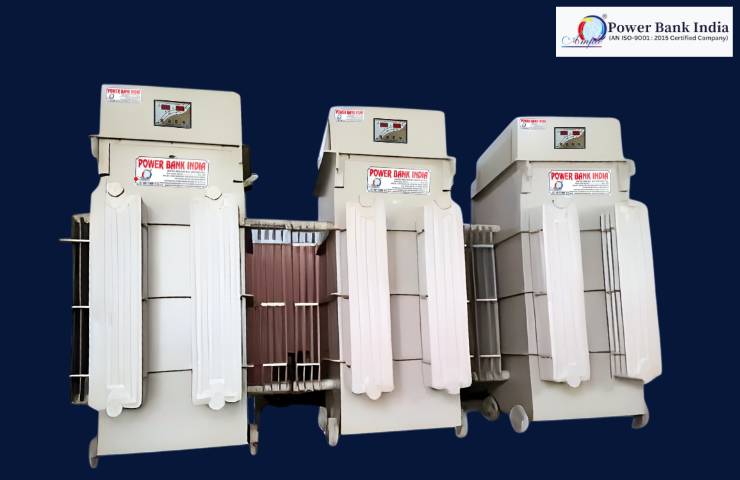
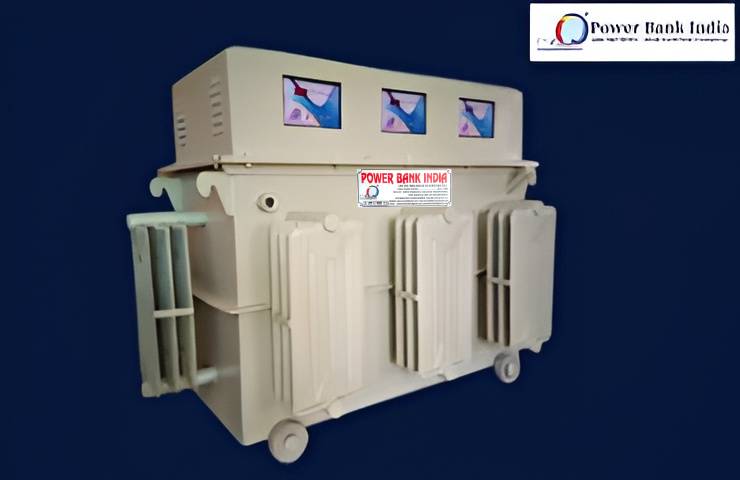
A three phase servo voltage stabilizer is an automatic electrical device used to regulate voltage supplied to three-phase equipment. It compensates for fluctuations in the incoming power supply and provides a more stable output voltage to connected loads.
Unlike basic voltage protection devices, a servo-controlled stabilizer continuously adjusts the voltage according to changing input conditions. The system uses a servo motor, control circuit, sensing mechanism, and buck-boost transformer to perform voltage correction.
The main objective of a 3 phase voltage stabilizer is to reduce the impact of voltage variations on electrical machinery and maintain a suitable voltage level for connected equipment.
Why Is Voltage Stability Important for Industrial Equipment?
Industrial electrical systems can experience different types of power-quality problems. Voltage may rise above the required level during certain periods and fall below the required level during heavy loading conditions.
These fluctuations can affect motors, compressors, CNC machines, automation systems, pumps, transformers, and other industrial equipment.
A three phase automatic voltage stabilizer helps maintain a controlled voltage supply and can provide several operational advantages, including:
- Reduction of voltage fluctuation effects
- Improved equipment operating conditions
- Better protection against voltage variations
- Reduced production interruptions caused by unstable voltage
- More consistent power supply for sensitive machinery
- Improved reliability of industrial electrical systems
How Does a Three Phase Servo Stabilizer Work?
The working principle of a servo voltage stabilizer is based on continuous voltage sensing and automatic correction.
The stabilizer first measures the incoming three-phase voltage using its sensing and control system. When the input voltage moves away from the desired level, the controller determines the required correction.
The servo motor then moves the variable transformer mechanism to increase or decrease the voltage. The corrected voltage is passed through the buck-boost transformer before being delivered to the connected load.
This process occurs automatically and continuously while the equipment is operating. The control mechanism repeatedly checks the voltage and makes adjustments whenever required.
Major Components of a Three Phase Servo Voltage Stabilizer
A three phase servo stabilizer contains several components that work together to regulate voltage accurately.
Servo Motor
The servo motor controls the movement of the variable transformer mechanism. It responds to signals from the control circuit and adjusts the voltage according to the input condition.
Variac or Variable Transformer
The variable transformer is responsible for adjusting the voltage level. Its position changes according to the correction required by the control system.
Buck-Boost Transformer
The buck-boost transformer performs the actual voltage addition or subtraction required to bring the output closer to the desired level.
Control Circuit
The control circuit continuously monitors voltage conditions and sends commands to the servo motor. Modern stabilizers may use microprocessor-based control systems for accurate monitoring and regulation.
Voltage Sensing System
The sensing mechanism measures the input and output voltage and provides information to the control system for automatic correction.
Protection System
Industrial stabilizers may include protection features such as overload protection, short-circuit protection, high-voltage protection, low-voltage protection, and time-delay protection.
Types of Three Phase Servo Voltage Stabilizers
Three phase stabilizers are available in different configurations depending on the application, installation environment, capacity, and cooling requirements.
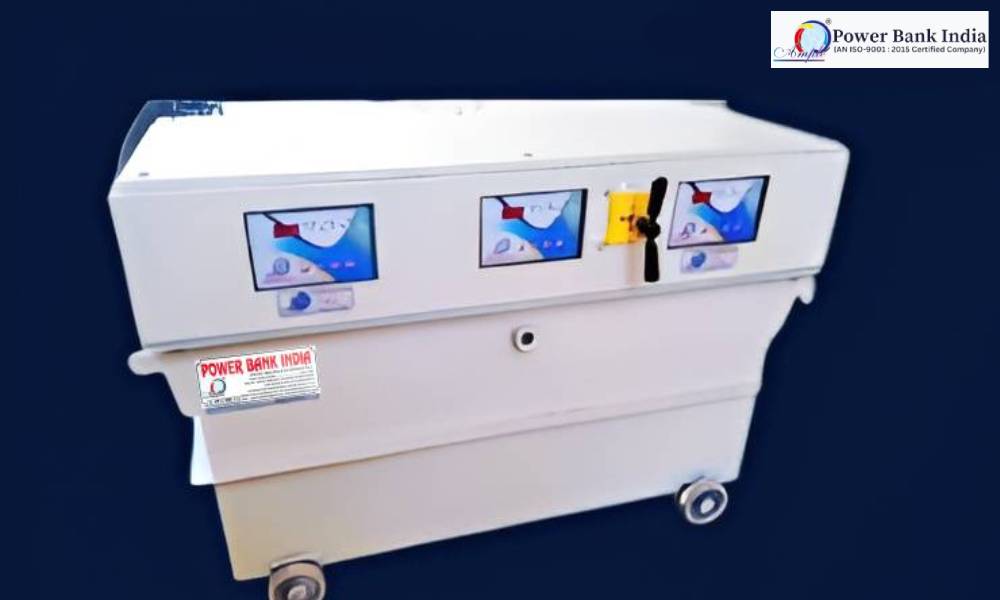
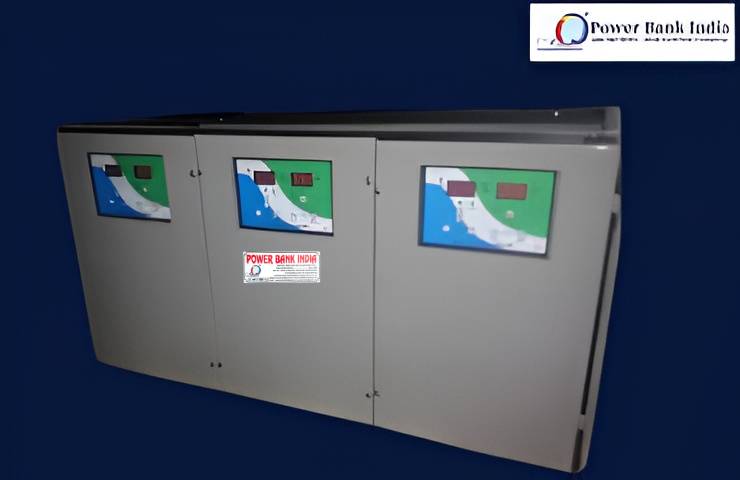
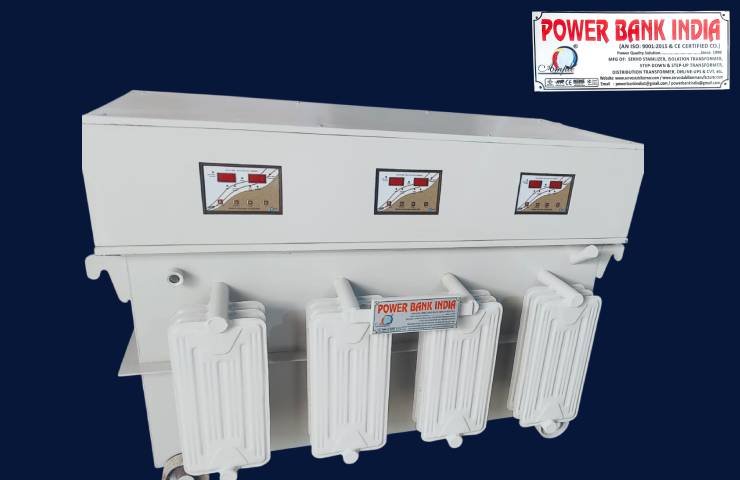
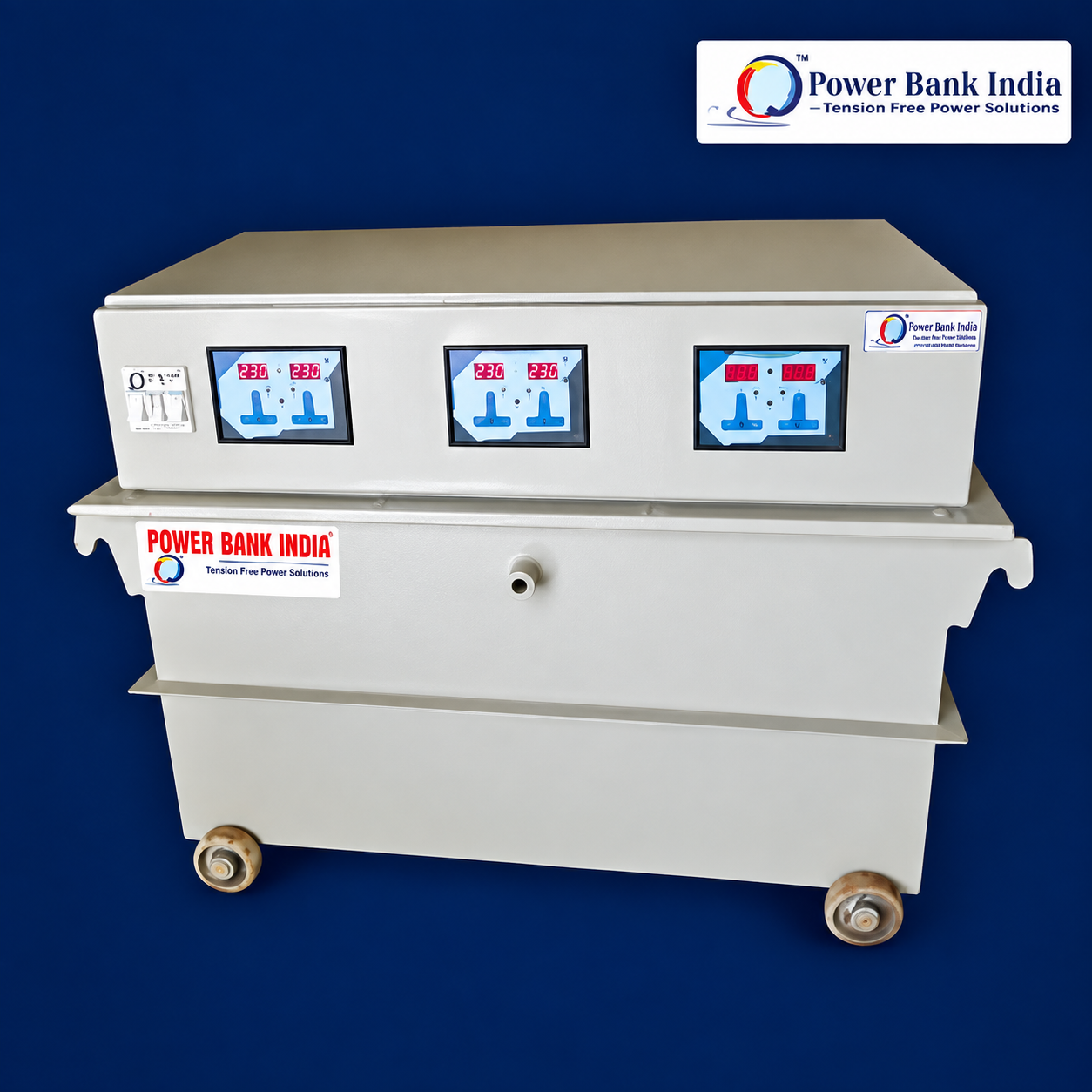
Air Cooled Three Phase Servo Stabilizer
An air cooled servo stabilizer uses air circulation to remove heat generated during operation. These systems are commonly used where the load and installation conditions allow efficient air cooling.
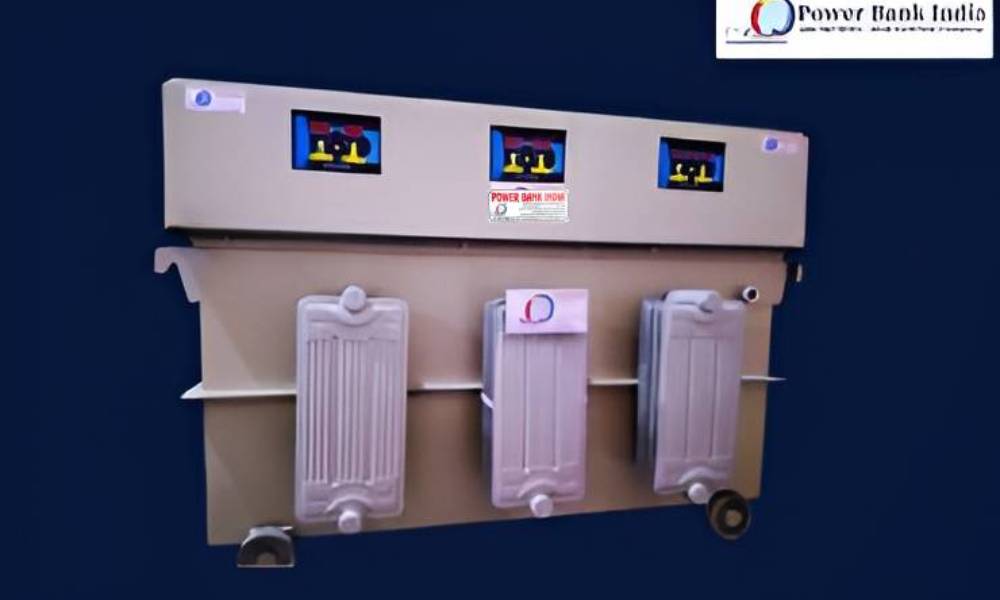
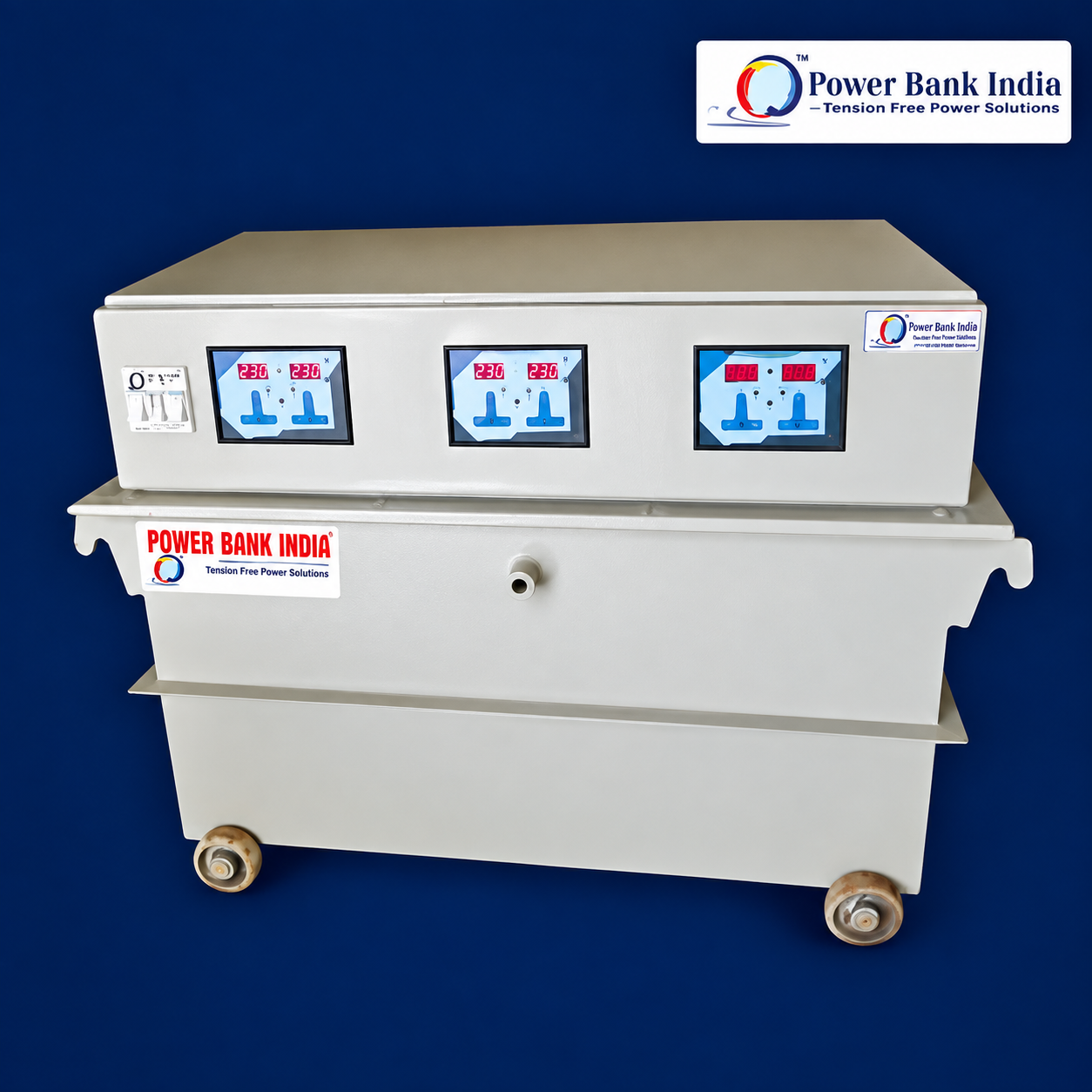
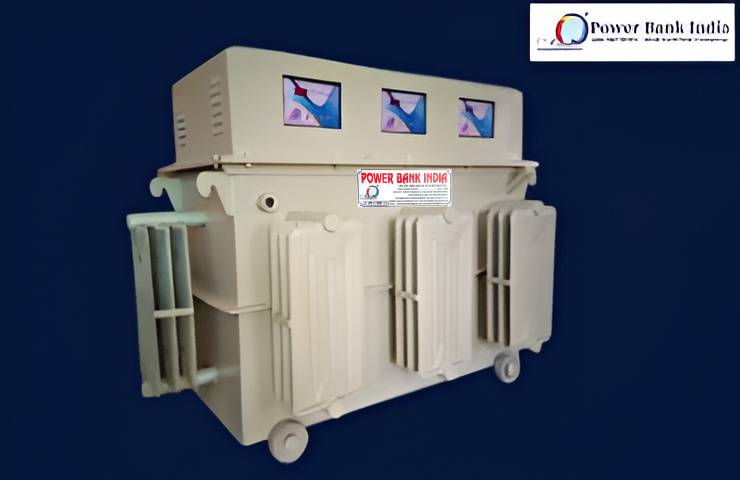
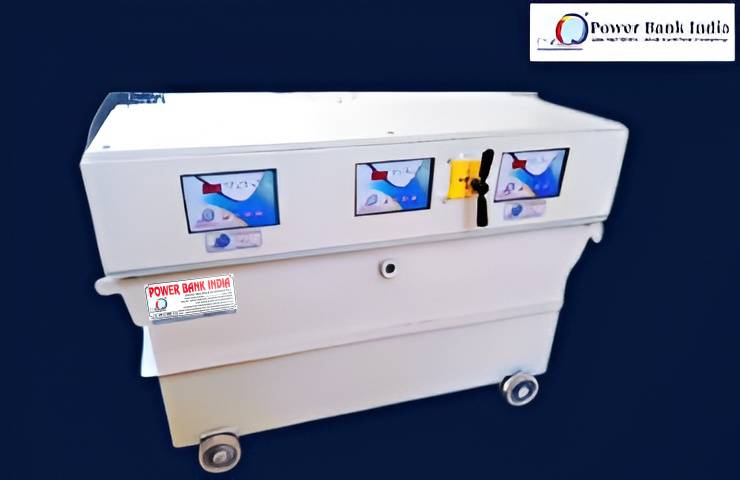
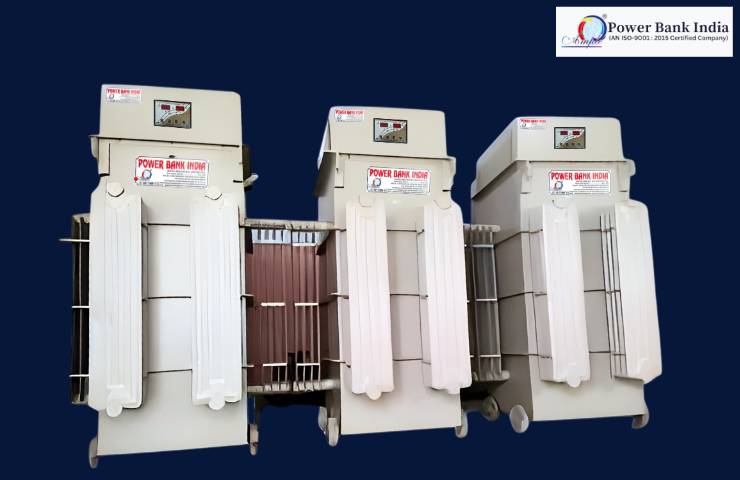
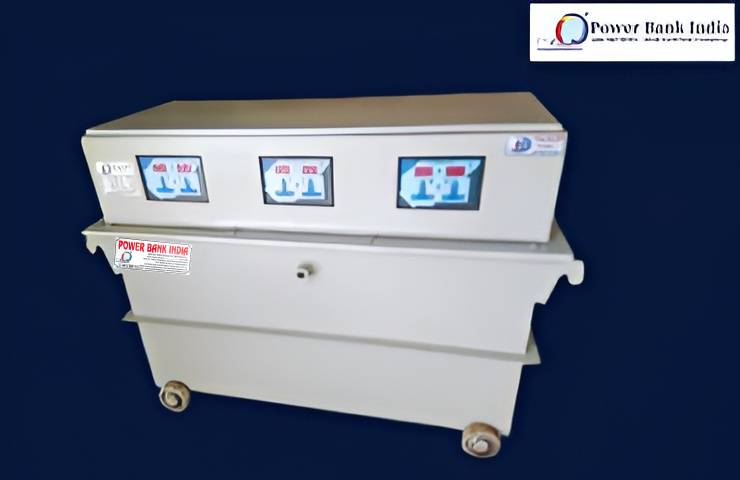
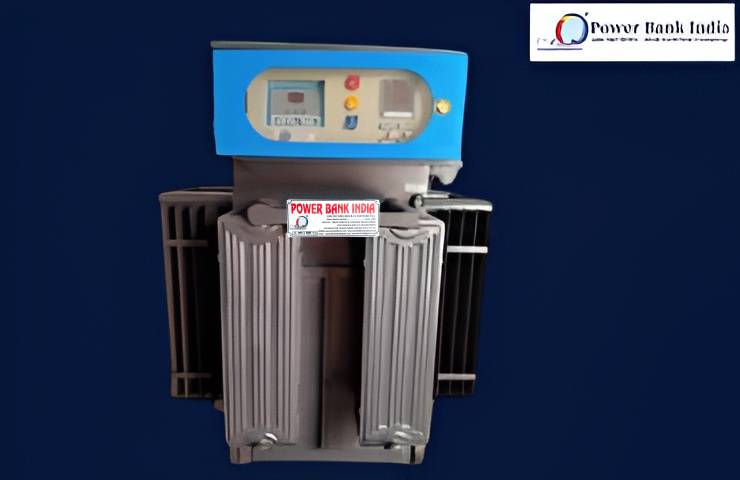
Oil Cooled Three Phase Servo Stabilizer
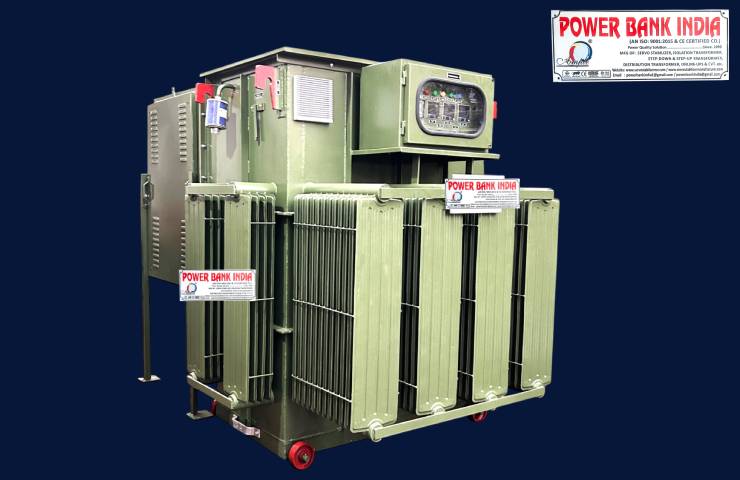
Oil cooled stabilizers use insulating oil for heat dissipation and electrical insulation. They are generally suitable for applications requiring higher capacities and continuous industrial operation.
Indoor Three Phase Servo Stabilizer
Indoor stabilizers are installed inside electrical rooms, production facilities, commercial buildings, and other protected environments.
Outdoor Three Phase Servo Stabilizer
Outdoor models are designed for installations where the stabilizer needs to operate outside a conventional electrical room. Appropriate enclosure and environmental protection are important for such installations.
Key Features of a Three Phase Servo Voltage Stabilizer
The specifications vary according to the manufacturer and model, but industrial servo voltage stabilizers can include several useful features.
- Automatic voltage correction
- Microprocessor-based control
- Digital voltage display
- Overload protection
- High and low voltage protection
- Short-circuit protection
- Phase failure protection
- Phase sequence protection
- Adjustable output voltage
- Time-delay functionality
- Manual bypass arrangement
- High efficiency operation
- Robust industrial enclosure
Three Phase Servo Stabilizer for CNC Machines
CNC machines require a dependable electrical supply for consistent operation. Voltage fluctuations can affect control electronics, drives, motors, and other electrical components associated with CNC equipment.
A servo stabilizer for CNC machines can help maintain a more stable supply voltage and reduce the effects of fluctuations on the machine's electrical system.
When selecting a stabilizer for CNC equipment, factors such as machine capacity, starting current, input voltage range, output voltage requirement, and phase configuration should be considered.
Industrial Applications of Three Phase Servo Stabilizers
Three phase servo voltage stabilizers are used across a wide range of commercial and industrial applications where consistent electrical conditions are required.
- CNC machines
- Industrial automation systems
- Manufacturing plants
- Injection molding machines
- Textile machinery
- Printing machines
- Packaging equipment
- Medical equipment
- Laboratory equipment
- HVAC systems
- Industrial pumps
- Compressors
- Production lines
- Data and communication equipment
- Commercial buildings
- Educational institutions
- Industrial control systems
How to Select the Right Three Phase Servo Stabilizer?
Selecting the correct three phase voltage stabilizer requires more than simply checking the connected load. Several electrical and environmental factors should be evaluated before purchasing a stabilizer.
Check the Connected Load
Determine the total connected load and operating load of the equipment. The stabilizer capacity should be selected according to the actual electrical requirements.
Understand the Input Voltage Range
Measure or obtain the minimum and maximum incoming voltage. A stabilizer must have a suitable input correction range for the electrical conditions at the installation site.
Consider Starting Current
Motors, compressors, pumps, and other inductive equipment can draw higher current during startup. The stabilizer should be capable of handling the operating characteristics of the connected machinery.
Check the Output Voltage
The required output voltage should match the specifications of the connected equipment. Proper phase-to-phase and phase-to-neutral requirements should also be considered.
Consider the Installation Environment
Temperature, dust, humidity, ventilation, indoor or outdoor installation, and available space can influence the suitable stabilizer design.
Advantages of Using a Three Phase Servo Voltage Stabilizer
A three phase servo voltage regulator can provide several benefits for industrial electrical systems when properly sized and installed.
Automatic Voltage Correction
The stabilizer automatically responds to changes in the incoming voltage, reducing the need for manual adjustment.
Consistent Power Supply
By correcting voltage variations, the system helps provide a more stable electrical supply to connected equipment.
Equipment Protection
Voltage outside an equipment's recommended operating range can negatively affect electrical components. Voltage regulation can reduce exposure to unsuitable voltage conditions.
Reduced Operational Interruptions
Stable voltage conditions can help reduce interruptions associated with voltage fluctuations, particularly for equipment that requires consistent electrical input.
Suitable for Industrial Loads
Three-phase servo stabilizers are available in a broad range of capacities and configurations for industrial applications.
Three Phase Servo Stabilizer vs Conventional Voltage Stabilizer
Different voltage regulation technologies are available for different applications. A servo stabilizer uses a servo-controlled mechanism to adjust voltage continuously, while conventional stabilizers may use different switching or regulation technologies.
Servo-controlled systems are particularly useful where accurate and continuous voltage correction is required. The appropriate technology depends on the load characteristics, required accuracy, input voltage variation, capacity, response requirements, and installation conditions.
Importance of Phase Balance in Three Phase Systems
Three-phase electrical systems require appropriate phase management for reliable operation. Significant phase imbalance can affect motors and other three-phase equipment.
When installing a three phase servo voltage stabilizer, the phase configuration, phase voltage, load distribution, and electrical system design should be evaluated by a qualified professional.
Proper phase balancing and suitable stabilizer configuration can contribute to reliable operation of three-phase industrial equipment.
Maintenance Tips for Three Phase Servo Stabilizers
Regular maintenance can help keep an industrial voltage stabilizer operating reliably.
- Inspect electrical connections periodically.
- Check terminals for signs of overheating.
- Keep ventilation openings clean.
- Inspect the servo motor mechanism.
- Monitor input and output voltage readings.
- Check protection devices regularly.
- Inspect cooling arrangements.
- Follow the manufacturer's maintenance schedule.
- Keep the stabilizer area clean and dry.
- Use qualified electrical personnel for servicing.
Factors Affecting Three Phase Servo Stabilizer Price
The three phase servo stabilizer price depends on several technical and installation-related factors. Capacity is one of the most important considerations because higher-capacity systems generally require larger transformers, control components, enclosures, and cooling arrangements.
Other factors that can influence the price include input voltage range, output accuracy, cooling method, protection features, enclosure design, transformer construction, control technology, and customization.
Instead of selecting a stabilizer solely based on price, buyers should compare technical specifications and choose a configuration appropriate for their electrical load.
Why Choose an Industrial Servo Voltage Stabilizer?
An industrial servo voltage stabilizer is designed for applications where electrical equipment operates continuously and voltage stability is important.
Manufacturing facilities often use several types of electrical machinery simultaneously. A properly designed three-phase stabilization system can provide controlled voltage to these loads and support reliable operation.
For industrial installations, stabilizer capacity, input range, output voltage, load type, phase configuration, protection features, and cooling method should all be evaluated before installation.
Three Phase Servo Stabilizer Manufacturer and Supplier
When purchasing from a three phase servo stabilizer manufacturer or supplier, buyers should evaluate the manufacturer's technical capabilities, product specifications, testing procedures, warranty terms, installation support, and after-sales service.
A reliable supplier should be able to provide important technical information such as kVA rating, input voltage range, output voltage, efficiency, correction speed, protection features, cooling method, dimensions, and installation requirements.
Common Industries Using Three Phase Servo Voltage Regulators
Three phase servo voltage regulators can be found in many industries where stable power is important. These include manufacturing, automotive production, pharmaceuticals, textiles, plastics, engineering, food processing, printing, packaging, healthcare, and commercial infrastructure.
The exact stabilizer specification should always be selected according to the electrical characteristics of the application rather than the industry name alone.
Frequently Asked Questions
What is a three phase servo voltage stabilizer?
A three phase servo voltage stabilizer is an automatic voltage regulation device that corrects fluctuations in a three-phase electrical supply and provides a controlled output voltage.
Where is a three phase servo stabilizer used?
It is commonly used with CNC machines, manufacturing equipment, industrial automation systems, pumps, compressors, medical equipment, production lines, and other three-phase loads.
What is the difference between a servo stabilizer and a normal stabilizer?
A servo stabilizer uses a servo motor-controlled mechanism for voltage correction. Other stabilizers may use different regulation or switching technologies. The suitable option depends on the application and electrical requirements.
How do I select a three phase servo stabilizer?
Consider the connected load, kVA requirement, input voltage range, output voltage, phase configuration, starting current, correction requirements, cooling method, and installation environment.
Is a servo stabilizer suitable for CNC machines?
Servo stabilizers are commonly used with CNC machines because they can continuously regulate voltage. The stabilizer should be correctly sized according to the CNC machine's electrical specifications.
What affects the price of a three phase servo voltage stabilizer?
Capacity, input range, output specifications, cooling method, transformer design, protection features, control system, enclosure, and customization can all affect the price.
Does a three phase servo stabilizer require maintenance?
Yes. Periodic inspection of electrical connections, cooling systems, control components, servo mechanisms, and protection systems can help maintain reliable operation.
Conclusion
A three phase servo voltage stabilizer is an important voltage regulation solution for industrial and commercial electrical systems exposed to voltage fluctuations. Its servo-controlled mechanism continuously monitors and corrects voltage variations to provide a more stable output.
From CNC machines and manufacturing plants to automation systems and commercial facilities, a properly selected 3 phase voltage stabilizer can help maintain suitable electrical conditions for connected equipment. Before purchasing, consider the load capacity, input voltage range, output requirements, starting current, phase configuration, cooling method, protection features, and installation environment.
Choosing the right three phase servo voltage regulator based on actual electrical requirements can provide a practical solution for voltage stabilization and industrial power management.