Introduction
Frequent voltage fluctuations are a common and serious problem in many factories and workshops. Machines can overheat, motors can wear out prematurely, drives can trip unexpectedly, and production can slow down.
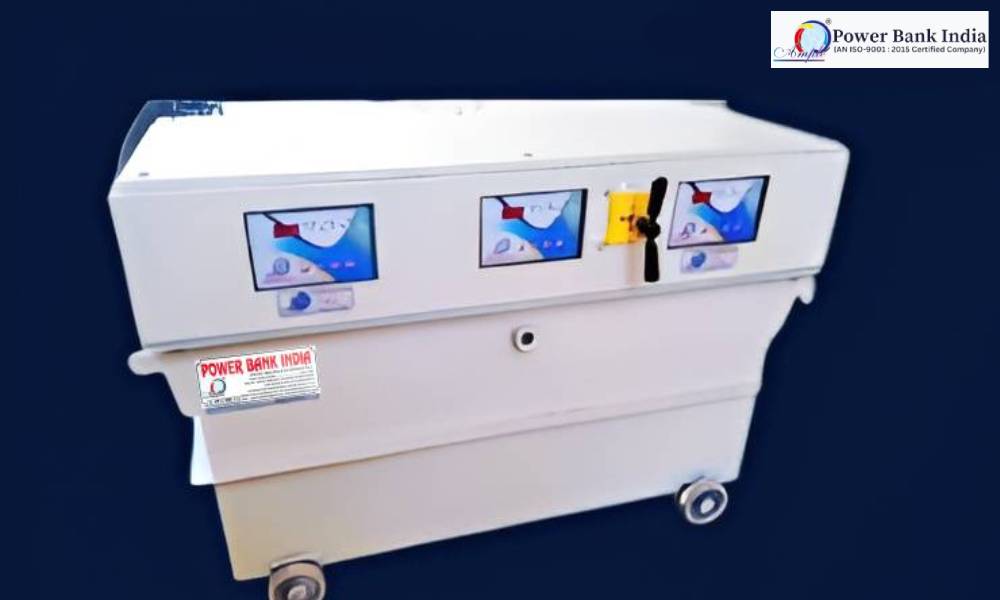
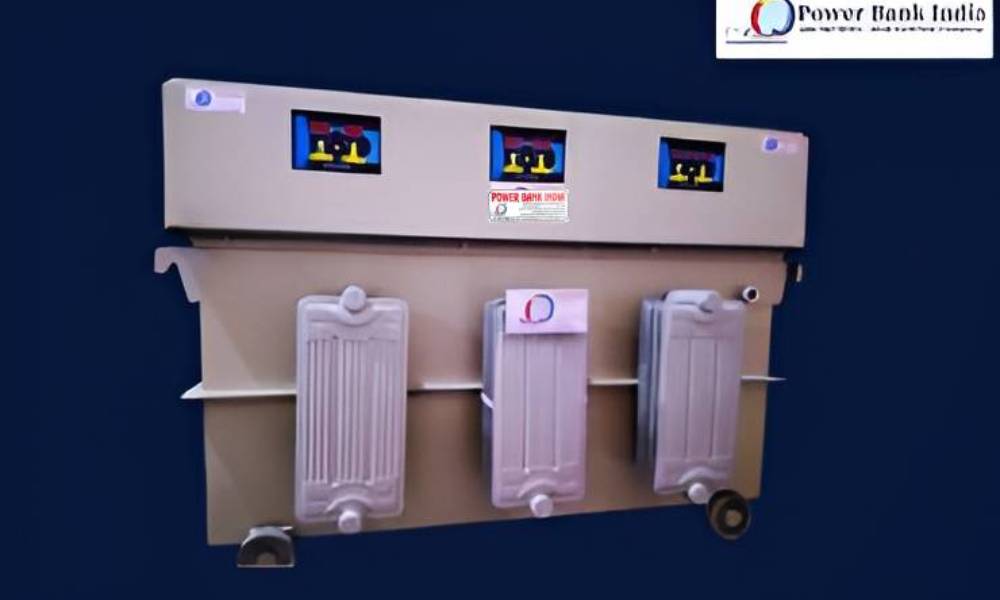
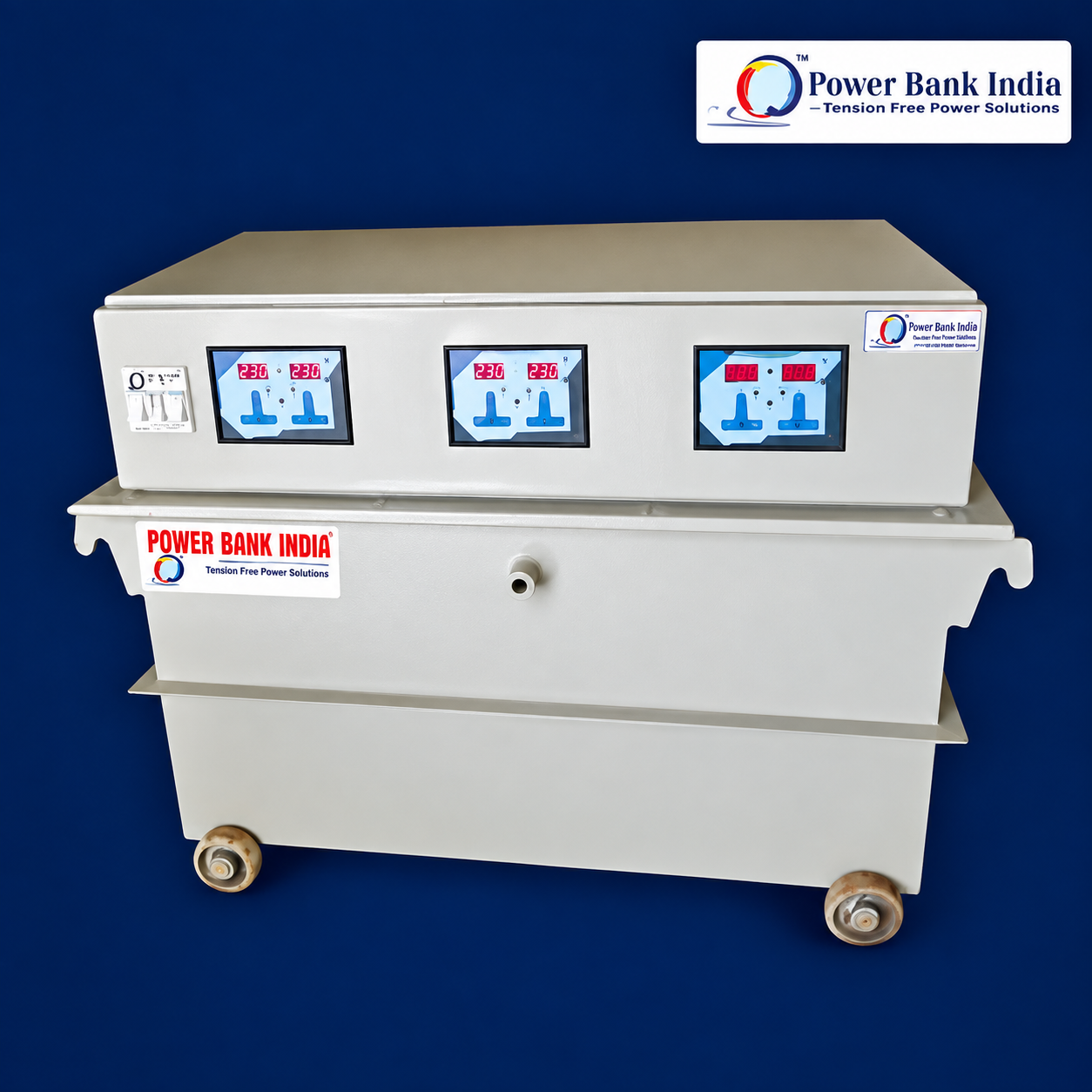
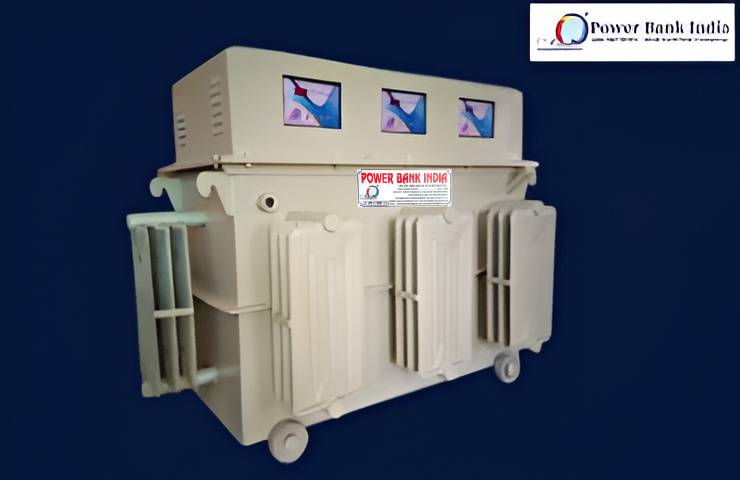
A linear type servo voltage stabilizer is designed to address these issues. It continuously monitors the supply voltage and automatically corrects variations to provide a stable output, helping protect your equipment from the effects of an unstable power supply.
In this blog, we explain how a linear servo stabilizer works, why buyers consider Power Bank India, which features to look for, and how to choose the right capacity for your industrial facility.
What Is a Linear Servo Stabilizer?
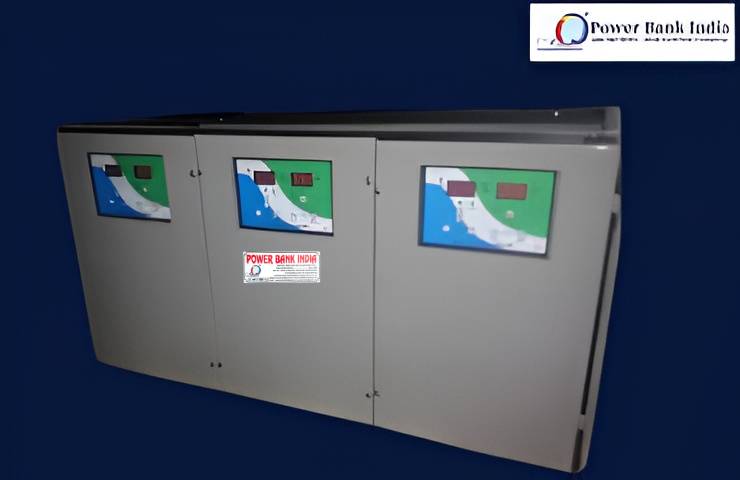
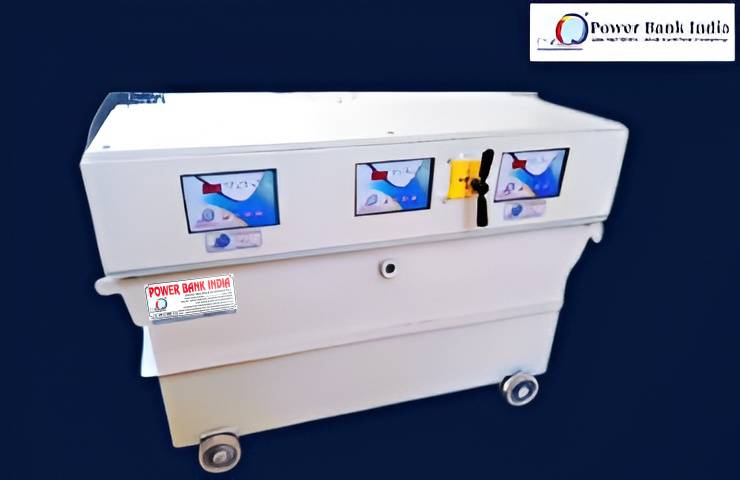
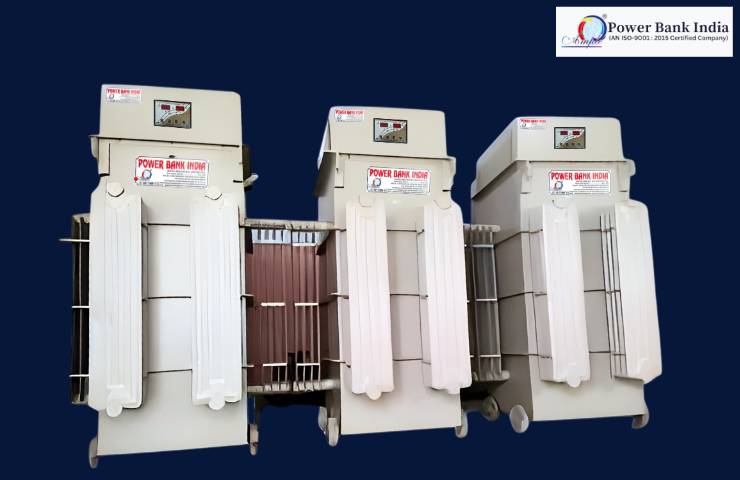
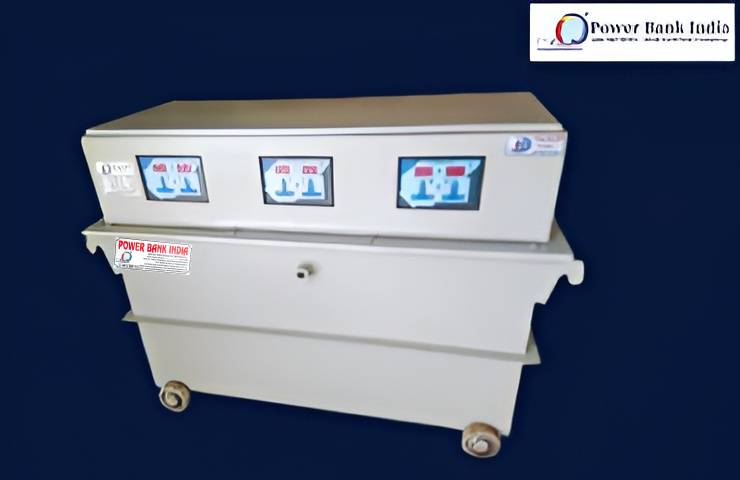
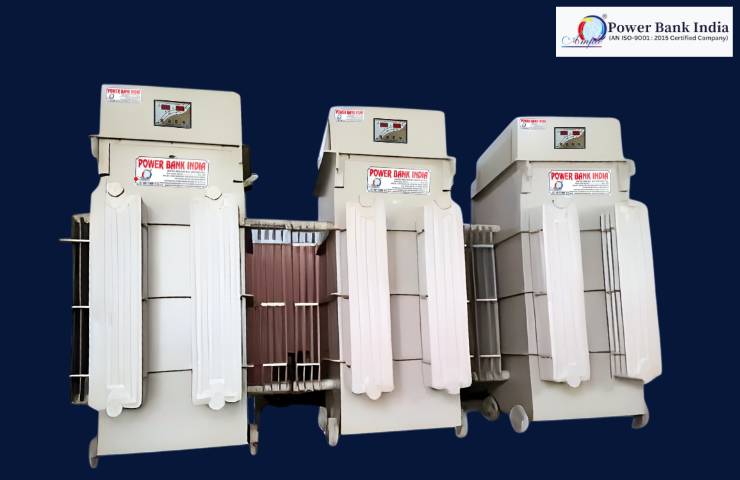
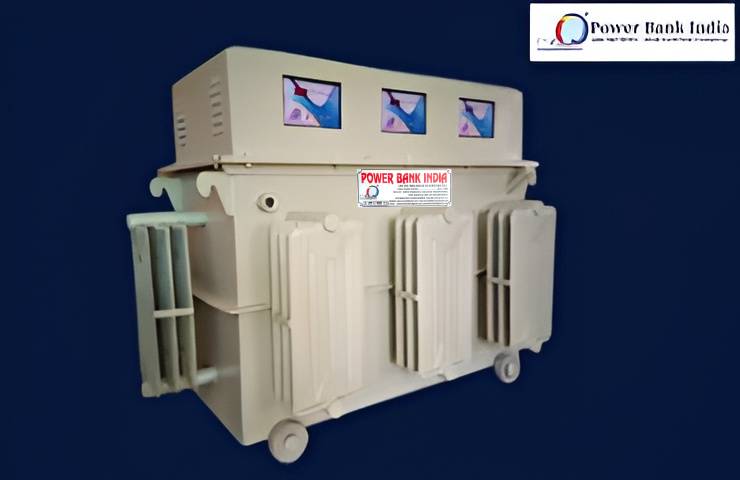
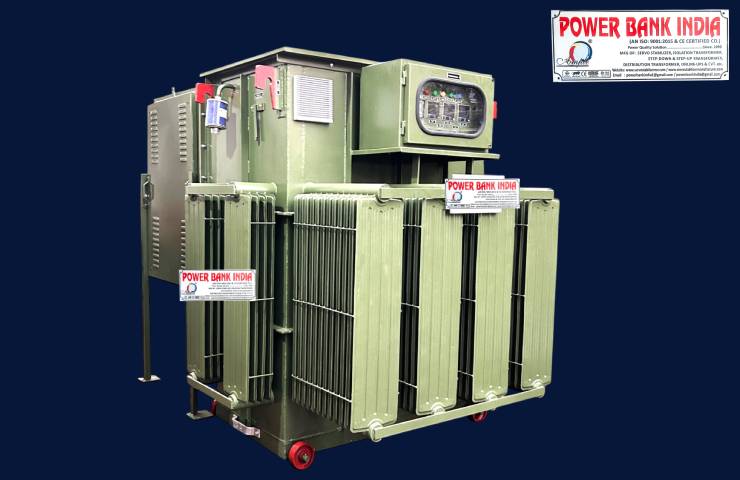
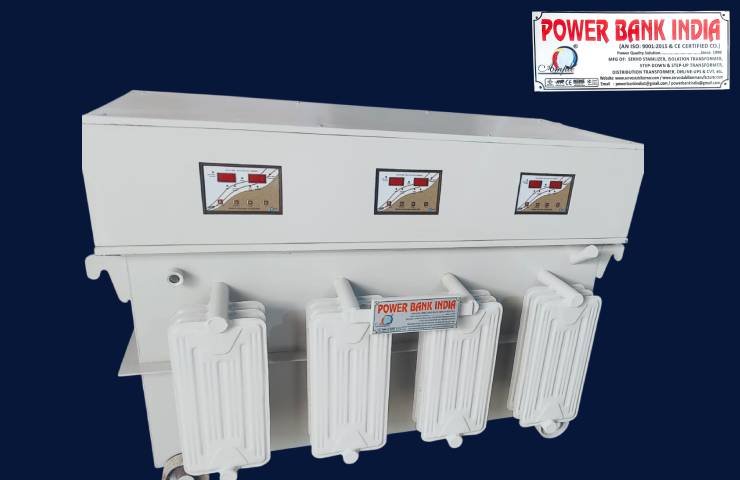
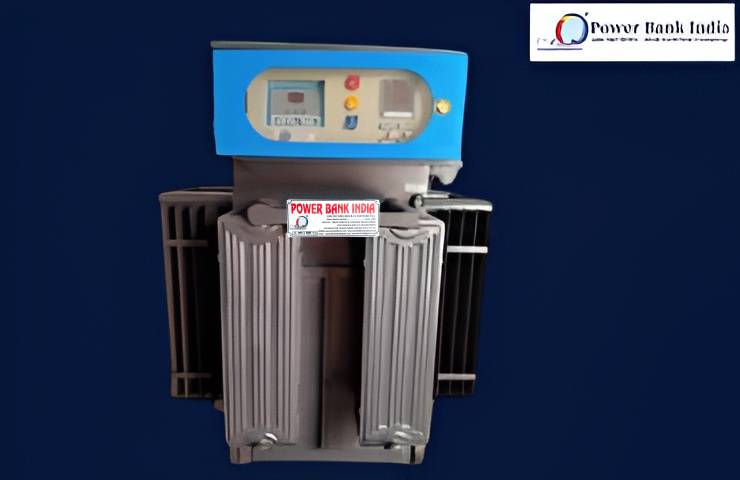
A linear servo stabilizer is an automatic voltage regulator (AVR) designed for industrial use. It contains an autotransformer with a coil arranged in a linear configuration. A roller or brush assembly moves along the coil with the help of a small servo motor.
Many designs also incorporate a booster, or buck-boost, transformer that adds or subtracts the required correction voltage.
How Does It Work?
- Sensing: The control card continuously monitors the output voltage.
- Comparing: It compares the measured voltage with the preset voltage level.
- Moving: If the voltage is too high or too low, the control card activates the servo motor, which moves the roller to the correct position on the coil.
- Correcting: The voltage is adjusted toward the required output level and maintained within the unit's specified regulation range.
As the roller moves smoothly along the coil instead of switching between fixed taps, voltage correction is continuous and step-less in operation.
Linear type servo stabilizers are generally used for medium and large industrial loads, particularly in three-phase applications.
Why Choose Power Bank India?
Power Bank India, based in Ghaziabad, offers servo voltage stabilizers for businesses that need a reliable power supply for their equipment and production processes.
1. Specialized Focus on Servo Stabilizers
Our focus is on servo voltage stabilizers. We understand the challenges industrial facilities face due to low voltage, high voltage, and frequent voltage fluctuations.
2. Solutions Based on Your Load
We consider your connected load, phase requirements, and input voltage range to help identify a stabilizer suitable for your installation instead of simply recommending a standard capacity.
3. Quality Components and Testing
Suitable components and pre-dispatch checks help ensure that the stabilizer meets its intended operating requirements before installation.
4. Practical Technical Guidance
If a different capacity or stabilizer type is better suited to your application, we can help you evaluate the available options. Correct sizing can reduce unnecessary expenditure and prevent capacity-related issues.
5. Accessible Support
We are based in Ghaziabad, within the Delhi-NCR industrial region, making it convenient for customers to contact us for product advice and service-related assistance.
Key Features of Linear Servo Stabilizers by Power Bank India
- Automatic voltage correction: Automatically corrects voltage after installation without routine manual intervention.
- Wide input voltage range: Suitable models can handle low or high incoming voltage within their specified operating limits.
- Smooth, step-less correction: Provides continuous voltage adjustment to help maintain a stable supply for sensitive equipment.
- Digital controller and display: Displays input and output voltage for easy monitoring.
- Protection system: Depending on the model, protection may be available against overloads, short circuits, and abnormal voltage conditions.
- Bypass option: Where available, bypass functionality can allow the load to receive direct supply during stabilizer servicing, subject to the installation design and operating procedure.
- Industrial-duty construction: Designed for demanding operating environments and extended working hours.
- Multiple capacity options: Different KVA ratings help match the stabilizer to the connected load.
Applications of Linear Servo Voltage Stabilizers
Linear servo voltage stabilizers are useful wherever equipment requires a stable power supply. Typical applications include:
- CNC and VMC machines.
- Injection moulding and plastic processing units.
- Textile and garment factories.
- Printing and packaging lines.
- Pharmaceutical manufacturing and food processing plants.
- Cold storage facilities.
- Hospitals and diagnostic equipment.
- Commercial buildings, lifts, and pumping systems.
- Server rooms and industrial workshops.
Linear Type vs Other Servo Stabilizers
Different stabilizer designs have different operating characteristics. The following table provides a general comparison.
| Feature | Linear Type Servo | Rolling Contact Servo | Static Stabilizer |
|---|---|---|---|
| Correction Method | Roller moves along a linear coil. | Roller moves over a circular variac coil. | Electronic switching without moving parts. |
| Typical Applications | Medium to large industrial loads. | Small to medium loads, depending on design. | Applications requiring fast electronic correction. |
| Output Correction | Smooth and step-less. | Smooth and step-less. | Fast correction, depending on design. |
| Maintenance | Periodic inspection of moving parts. | Periodic inspection of moving parts. | Generally lower mechanical maintenance. |
| Cost | Moderate, depending on capacity. | Moderate, depending on capacity. | Generally higher, depending on technology and rating. |
The right choice depends on your load, input voltage conditions, required correction speed, and budget. If you are unsure, share your application details with a supplier who can help evaluate the available options.
How to Choose the Right Linear Servo Voltage Stabilizer
Before purchasing a stabilizer, consider the following factors.
1. Total Load Capacity (KVA)
Add up the connected load of all machines that will operate through the stabilizer. As a general guideline, consider around 20–25% additional capacity to provide an operating margin and accommodate possible future expansion. Motor starting current must also be considered.
2. Phase Requirements
Confirm whether your incoming power supply is single-phase or three-phase. Choose a stabilizer compatible with your electrical installation.
3. Input Voltage Range
Identify the lowest and highest input voltages at your site. Monitoring the supply over several days can help establish the actual operating range and determine the appropriate stabilizer specification.
4. Balanced or Unbalanced Load
If the load differs between phases in a three-phase installation, ask whether a model with independent phase correction is suitable for your equipment.
5. Cooling Type
Choose between air-cooled and oil-cooled designs according to the stabilizer's capacity, installation environment, ventilation, and operating conditions.
6. Operating Hours
For facilities operating 24 hours a day, seven days a week, choose equipment designed for continuous operation under the expected load and environmental conditions.
7. Protection and Display Features
Ensure the stabilizer includes the protection features, voltage display, and monitoring functions required for your industrial application.
Frequently Asked Questions (FAQs)
Q1. What is a linear servo stabilizer used for?
It maintains stable voltage for industrial machines, motors, drives, and control panels despite input fluctuations.
Q2. How is a servo stabilizer different from a normal stabilizer?
A servo stabilizer uses a motor-driven mechanism for smooth correction, while basic relay-type stabilizers adjust voltage in fixed steps.
Q3. How do I choose the right KVA capacity?
Calculate the total load, consider motor starting current, and allow a suitable capacity margin. A 20–25% margin is a starting guideline, not a substitute for load assessment.
Q4. Does a linear servo stabilizer need maintenance?
Yes. Periodically inspect the roller, coil surface, electrical connections, and control system to maintain reliable operation.
Q5. Can it be used for single-phase loads?
Some configurations may support single-phase applications, but linear servo stabilizers are commonly used for three-phase industrial loads. Confirm compatibility before purchasing.
Conclusion
Unstable voltage can cost a business more than expected through equipment damage, unexpected downtime, and lost production hours. A linear type servo voltage stabilizer helps address these issues by automatically correcting input voltage variations and providing a more stable power supply.